Zambia has more SIM cards than people. The regulator, ZICTA, counted 26.2 million mobile subscriptions in 2025, in a country of roughly 22 million. The network now reaches more than 92% of the population. And yet, according to the government's own figures, fewer than one in three Zambians aged ten and above say they have internet access.
So where is everyone?
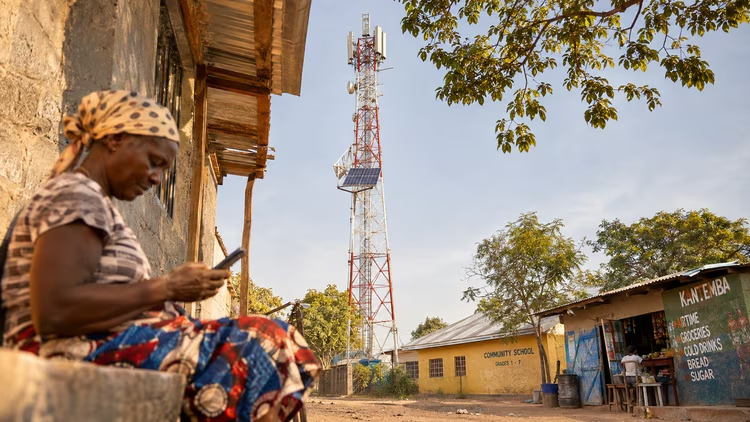
Drive far enough out of any Zambian city, and you'll find part of the answer. A steel mast, sometimes with a solar panel bolted to its side, standing over a handful of homes, a school and a row of kantembas. Not so long ago, places like this had no signal at all. Today, the phone bars are full.
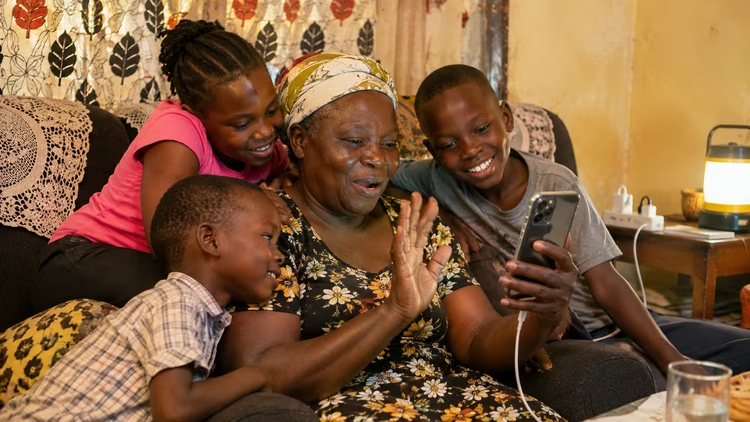
But look at the phones themselves, and the picture changes. Plenty of them are still the small, tough handsets with physical keypads and batteries that last for days. They're perfect for a call, an SMS, or dialling a USSD code to buy bundles or send money. What they can't do is open a website, run an app, or stream a lesson. The signal has arrived. For a lot of people, the device to make proper use of it hasn't.
In early November, Airtel Zambia put a number on that gap. In a meeting with the Minister of Technology and Science, Hon. Felix Mutati, the company said the country needs 10 million smartphones in the hands of its citizens over the next five years if the Grow Zambia Agenda is going to deliver. That's two million phones a year. Roughly 5,500 every single day, in every province, for half a decade.
But the target is a direct investment in the national economy. Every 10 percentage point increase in mobile broadband penetration lifts GDP by up to 2.8% in Sub-Saharan African economies. Applied to Zambia's $28.9 billion GDP, closing this smartphone gap could generate roughly $809 million in new economic output every year.
It's an unusual push from a company that doesn't make its money selling phones. Airtel's business is the network and what runs on it: calls, data, and Airtel Money. But network infrastructure is only as useful as the devices connected to it, and right now that's where Zambia is stuck.
Why signal isn't the same as being online
Coverage tells you where the signal reaches, while usage tells you how many people actually go online. The industry has a name for the difference: the usage gap, and across Africa it keeps growing, especially as technology advances and networks expand.
The GSMA, which represents mobile operators worldwide, has tracked it for a decade. Across sub-Saharan Africa, more than nine in ten people now live under a mobile broadband signal, yet only about one in four owns a smartphone. Nearly two in three people in the region live within reach of mobile internet but don't use it.
Why a smartphone counts as infrastructure
Airtel's Managing Director, Hussam Baday, framed the problem in terms that would have sounded odd ten years ago. “Smartphone access must be recognised as a fundamental component of national infrastructure, much like roads and electricity,” he said.
A road is useless without something to drive on it, and a power line does nothing for a house that isn't wired. For years, most of the money spent on connecting Zambia has gone into the network itself: towers, fibre, and spectrum. Zambia's fibre network alone has tripled to about 45,000km, according to Minister Mutati. Airtel has been among the biggest spenders. In December 2025, Airtel Zambia announced US$107 million for 407 new network sites to lift its population coverage from 91.6% to 93%. All of them are now live, and another 277 sites are planned for the financial year ending March 2027, with 94 already switched on. Having helped build the road, the company is now pointing at what’s missing on it.
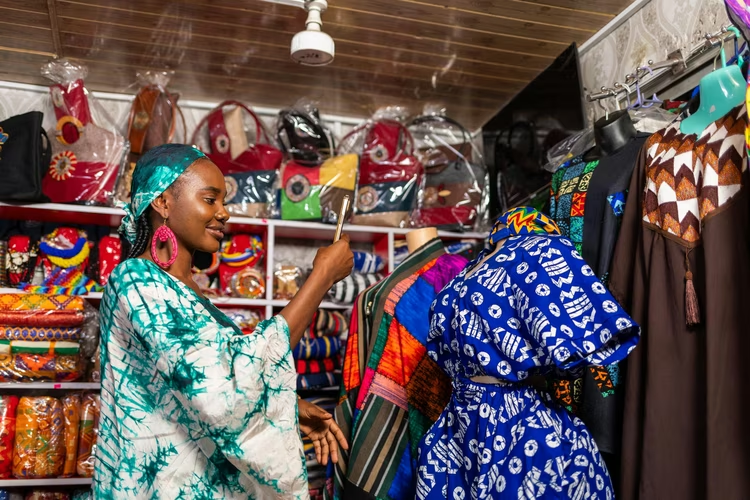
Think about what changes when that keypad phone becomes a smartphone. Airtel provides an app alongside the USSD menu, with exclusive bundles, savings, loans, and payments a tap away. A marketeer at Soweto Market takes orders and sends photos of new stock on WhatsApp, a farmer in Mkushi checks maize prices before loading the truck, a student in Mongu follows a lesson their school can't offer, and a family in Kasama video-calls a son working at a Copperbelt mine.
The biggest shift might be in how Zambians deal with government. In his October address to Parliament, President Hakainde Hichilema said every ministry and government service must go digital, with more services moving onto ZamPortal. He also wants the national digital ID system up and running. The fewer people who have to queue at an office, the faster government can serve everyone else. If the country is building a digital identity for every citizen, putting a smartphone in every citizen's hand is the other half of the same idea.
What it costs to get online
Getting online isn't a one-off purchase. There's the phone itself, the data to make it useful and, in many homes, the electricity to keep it charged.
The phone is still the biggest hurdle. In September, the GSMA reported that for the poorest fifth of people in sub-Saharan Africa, a basic smartphone costs about three-quarters of a month's income.
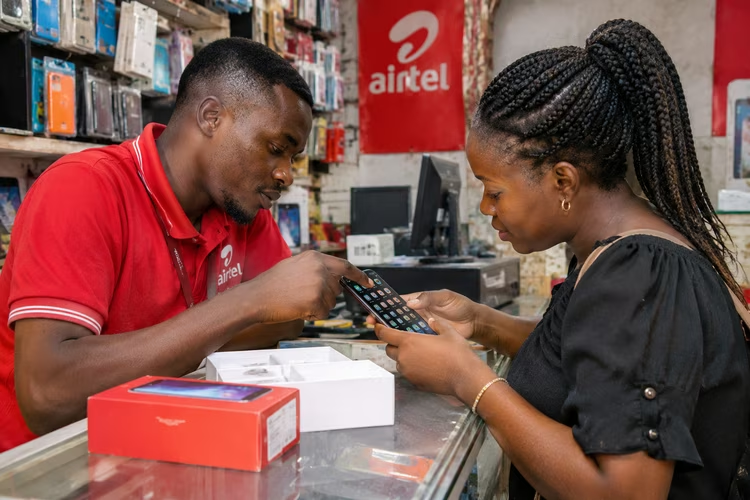
That’s the problem Airtel’s Smartphone Pankongole programme addresses. The name borrows the everyday Zambian way of saying ‘on credit’, and that’s how it works. Instead of paying for a phone all at once, customers move from a basic handset to a 4G smartphone and pay it off over four or six months, from about K417 a month. They also get 100MB of data a day while they pay, so the phone is useful from day one.
There has been movement elsewhere too. The government has already waived taxes on some ICT equipment and gadgets. Across Africa, Airtel Africa, Airtel Zambia's parent company, is one of six operators working with the GSMA on a 4G smartphone that could sell for around K800, a price the industry believes most people could afford.
Why 10 million smartphones will take more than one company
Airtel is the first to say it can't get to 10 million smartphones on its own, and it doesn't want to. The call is for others to come in too: government, other operators, banks, device makers, and development partners, all pushing in the same direction. The payoff makes the collaboration worthwhile: with an estimate that’s roughly 20% of this new GDP, about $160 million a year will flow back to the Treasury as tax revenue, providing a direct return on investment for the Grow Zambia Agenda. On this, the company and the government are saying the same thing. Minister Mutati welcomed the target as practical and transformative, and said it will take government, regulators, phone makers, banks, and mobile operators working together to put smartphones within reach of every Zambian.
That's what makes Airtel's number useful. It turns a vague ambition about the digital economy into something you can count and track, year by year.
Zambia already has more SIM cards than people. The milestone that will matter more is the day it has more people online than off.