Zambia's Job Market in 2026: What Job Seekers Need to Know
Finding a job in Zambia in 2026 can feel like a full-time job in itself. You can have a degree, send out dozens of applications and still hear nothing back. The challenge is not simply that there are fewer jobs available. Competition is high, informal employment remains widespread, and employers are increasingly looking for candidates who can demonstrate practical skills, experience and measurable results.

According to Zambia's 2024 Labour Force Survey, the national unemployment rate stood at 12.9%, while unemployment among young people aged 19–34 was 18.4%. The survey also found that 71.2% of employed people were in informal employment, highlighting how difficult it can be to secure stable formal employment. Among employed young people aged 19–34, 65.6% worked in the informal sector.
For many job seekers, competition is particularly intense in major employment hubs such as Lusaka, Ndola and Kitwe. Academic qualifications alone do not guarantee employment, making it increasingly important for graduates and other job seekers to demonstrate practical skills, relevant experience and what they can contribute to an organisation.
For mid-career professionals, competition remains strong, but specialised and technical skills can help candidates distinguish themselves in the market.
How to Make Your CV Stand Out in Zambia
Tailoring your job application means matching your experience directly to the employer's requirements.
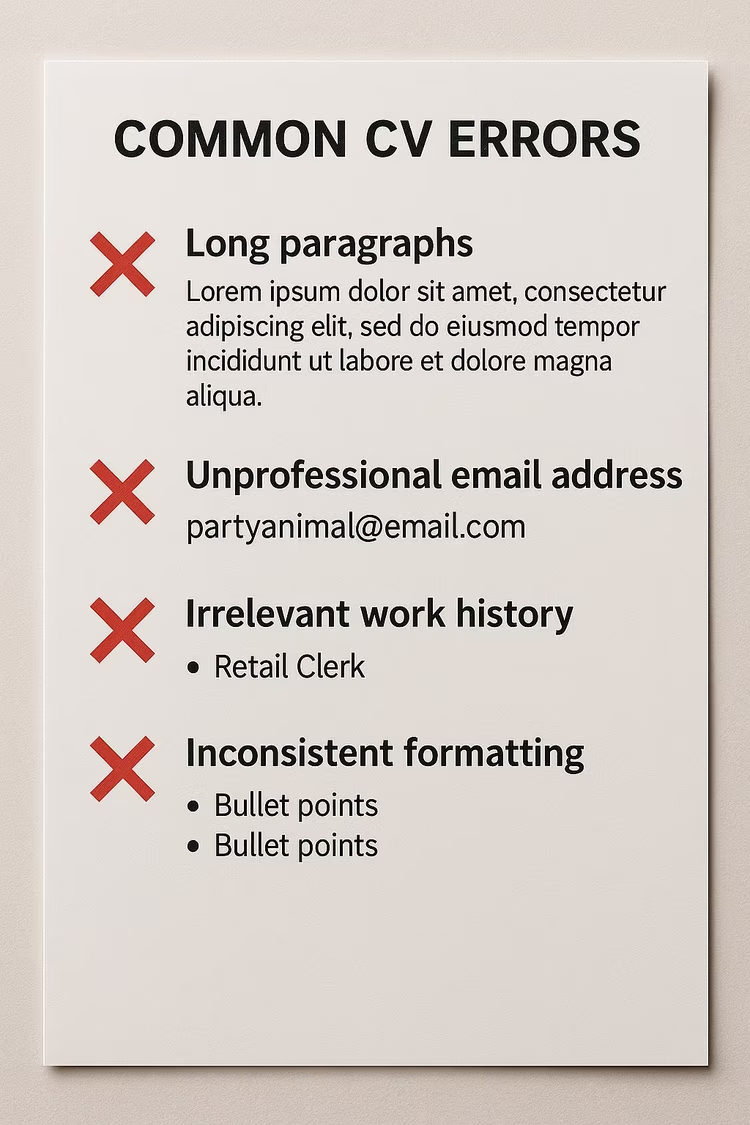
Instead of sending a single generic CV for every opening, reframe your experience to address the needs, keywords and skills listed in the job description. Some employers use Applicant Tracking Systems (ATS), software that helps recruiters manage and screen large numbers of applications. To make your CV easier for both ATS software and recruiters to process, use a clean, single-column layout, standard headings and readable fonts such as Arial or Calibri. Avoid complex graphics or unusual templates that may make your CV difficult to read.
Where possible, apply early rather than waiting until the closing date, while still taking time to tailor and proofread your application. Platforms such as GoZambiaJobs, Ukhani and LinkedIn can help job seekers find opportunities. Read the application instructions carefully and check your application for spelling and grammatical errors. Ensure essential details, such as employment dates, job titles and educational credentials, are complete and accurate.
Build Skills Employers Can Actually See
Focus on activities at school or work that produce verifiable evidence of your capabilities. Alongside soft skills such as communication, adaptability, problem-solving and critical thinking, gain practical technical skills in areas such as Excel, data analysis, digital marketing, coding, project management or industry-specific software.
Where relevant, strengthen these skills through reputable courses, certifications, projects or practical experience. Freelancing for real clients can also help. Even small paid projects can provide evidence that you can apply your skills to real-world problems.
How to Quantify Your CV Achievements
To quantify your achievements, replace vague lists of job duties with specific figures that demonstrate your contribution. Use numbers, percentages and timeframes to show revenue generated, budgets managed, costs reduced, hours saved, turnaround times shortened or errors reduced.
If you do not have access to official company figures, avoid presenting estimates as confirmed results. Instead, describe the scale of your work using figures you can genuinely verify, such as the number of clients handled, projects completed, posts produced or people served.
For example, instead of writing that you were “responsible for social media”, you could explain how many platforms you managed, how frequently you published content or how much engagement your work generated, provided those figures can be verified.

How Networking Can Help You Find a Job
When it comes to networking, remember that it is a two-way street. Find subtle ways to support your professional contacts before asking for favours. Follow up after meetings or informational interviews to express your thanks and share your progress. Avoid sending long walls of text or asking contacts to review your CV immediately after connecting.
When reaching out directly to a hiring manager, start with a specific observation about the organisation, such as a recent product launch, article, campaign or business development, to show genuine interest.
Should You Contact a Hiring Manager Directly?
Reaching out directly to a hiring manager can help a candidate stand out and create a personal connection, particularly when the message is relevant and personalised. It can also complement a formal application rather than replacing it.
Do not immediately ask for a job or CV feedback. Start with a specific observation about the company or organisation to demonstrate that you have taken the time to understand what it does and why you are interested.
How to Prepare for a Job Interview in Zambia
Once you land an interview, research the company, study the job description carefully and practise answers to common interview questions.
Go beyond memorising answers. Think about examples from your education, work experience, volunteering, freelancing or other activities that demonstrate how you have solved problems, worked with others, handled challenges or achieved results.
How to Avoid Fake Job Adverts and Recruitment Scams in Zambia
As you venture into your job search, remember that legitimate employers should not ask job applicants to pay money to secure a job, interview or employment offer.
Never send money, pay mobile-money processing fees or share sensitive personal information such as banking credentials or passwords with anyone offering you employment.
Always verify job listings by visiting the company's official website or verified social media pages directly. If you spot a fraudulent job post, report it to the host platform or the relevant authorities.
Finding a job in Zambia's competitive labour market requires more than sending out as many applications as possible. A tailored CV, practical skills, meaningful professional connections and careful interview preparation can help you present yourself as a stronger candidate. Most importantly, focus on showing employers what you can do, not simply telling them what qualifications you have.