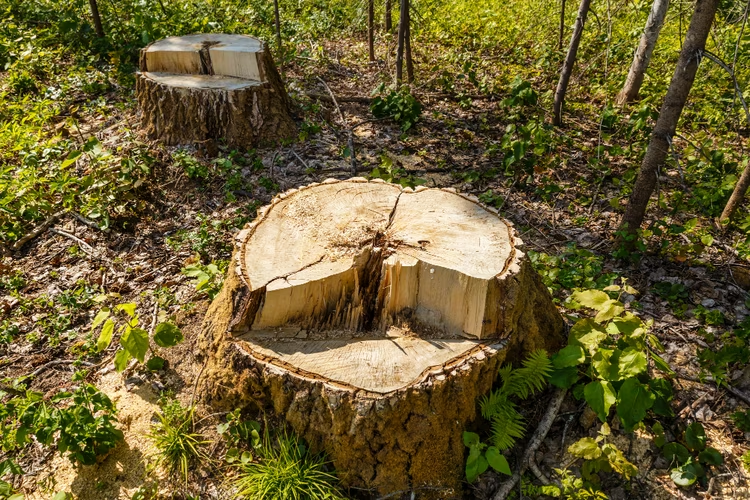
The last stump still leaks fresh sap from where its trunk was cut. Its concentric rings are exposed to a forest that now has a few fewer Mukula trees. But the story of that tree does not end in the forest. Once cut, Mukula can begin a journey through a complex chain of buyers, transporters, warehouses, documents and borders before reaching an international market.
What Is the Mukula Tree and Why Is It So Valuable?
Known locally as Mukula, Pterocarpus tinctorius is a valuable hardwood tree species found in parts of central and southern Africa, including Zambia. It grows in the region's miombo woodlands, which are characterised by tree species including Brachystegia, from which the name “miombo” is derived.
Mukula is traded internationally as a rosewood-type timber and is prized in Asian markets, particularly for furniture and other high-value wood products. The species and related timber trade have also been subject to international controls under the Convention on International Trade in Endangered Species of Wild Fauna and Flora (CITES), which regulates the cross-border trade of listed species.
From Zambia's Miombo Woodlands to International Markets
Like many valuable natural resources, Mukula moves through a supply chain that can stretch from rural forests to international markets.
At one end is the person with an axe. At the other is the foreign buyer. Between them are transporters, timber merchants, intermediaries, companies, documents, border posts, warehouses and ports. Somewhere along that chain, questions about the origin and legality of the timber can arise.
From Stump to Commodity: Who Profits from Mukula?
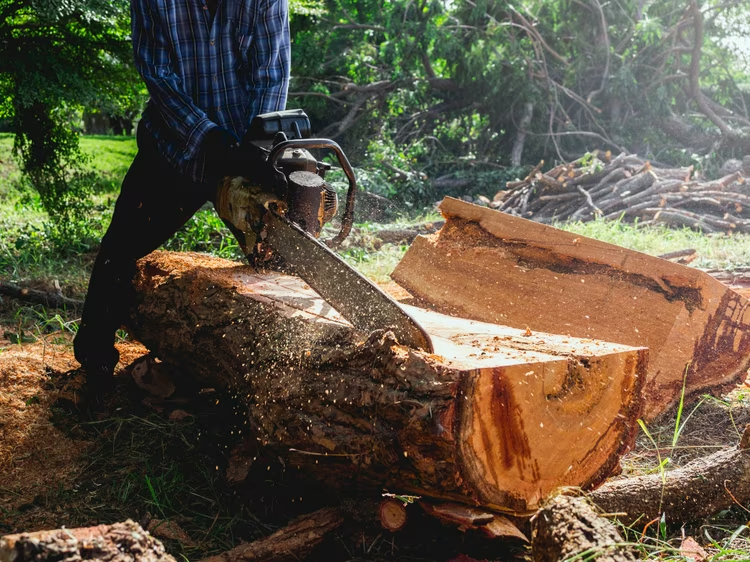
The first link in the chain is the person bringing down the tree. Rural villagers and small-scale cutters operating around the miombo woodlands can become part of a supply chain that eventually connects local timber to foreign investors and traders.
The chain can begin with a cutter or rural household earning relatively little and end in an international market where the timber may be worth many times more than the amount paid at harvest.
A World Bank assessment of Zambia's forest sector reported significant differences between the amounts received by people involved in Mukula harvesting and the values associated with the timber further along the supply chain. The assessment reported figures of around US$23 per cubic metre at the harvesting end of the trade, while prices further along the chain exceeded US$1,000 per cubic metre.
The same assessment estimated that Mukula production may have reached as much as 110,000 cubic metres annually during the height of the trade and highlighted discrepancies between official Zambian and Chinese trade figures.
These figures reflect an earlier period of the trade and should not be treated as a measure of the current market. They do, however, illustrate a central problem: the people closest to the forest may receive the smallest share of the timber's eventual value.
The Mukula Supply Chain: From Cutters to Exporters
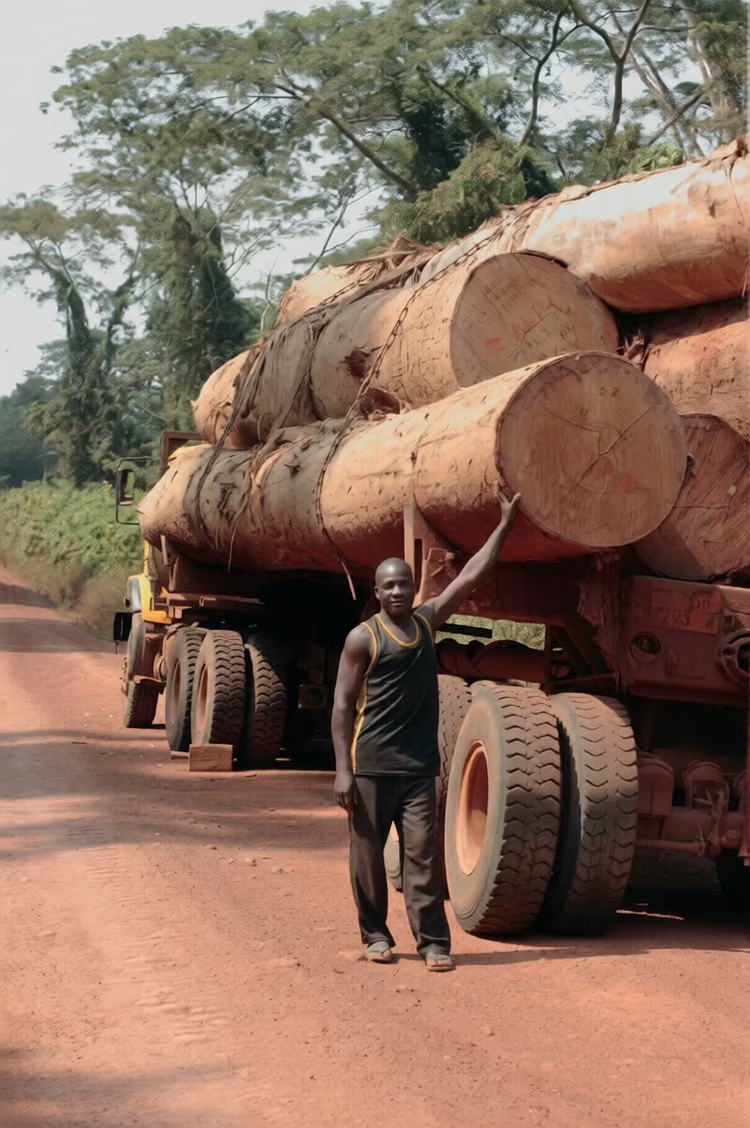
A cutter may sell a tree to a local buyer. That buyer can consolidate timber from several sources, while a transporter moves it towards a commercial centre, border or processing facility. An intermediary may then connect the timber to an overseas buyer.
As the timber changes hands and increases in value, the forest is left with the physical cost: freshly cut stumps and fewer mature trees.
Who Is Allowed to Harvest Mukula in Zambia?
Zambia does not allow just anyone to enter a forest and cut down valuable trees. Under the Forests Act No. 4 of 2015, different forestry activities require different forms of authorisation and regulation.
For timber exports, the Zambia Trade Information Portal sets out permit requirements and documentation that may include a valid concession licence, production licence, conveyance licence, technical report, invoice and packing list, depending on the nature of the timber and the transaction.
Another important issue is Zambia's regulation of timber exports from natural forests. Mukula has faced particularly tight restrictions, with the government repeatedly imposing bans and controls on its harvesting, movement and trade.
In December 2023, the Zambian government confirmed that the ban imposed in October 2021 on the harvesting, trading and export of Mukula logs remained in force. Parliamentary discussions in 2024 also indicated that questions surrounding the future of the Mukula trade ban remained unresolved.
The current legal position should, however, be confirmed with the relevant forestry authorities before publication, as regulations and government directives can change.
This creates an important distinction for any investigation: a timber business having a licence does not automatically mean that every piece of timber in its possession was legally sourced.
Can Legal Documents Hide Illegal Timber?
The investigation therefore begins with two fundamental questions: who is moving the timber, and where did it come from?
Illegal timber does not arrive with a label identifying it as illegal. A consignment can contain timber from different sources, and documents may describe a legal concession even when questions remain about the origin of individual logs.
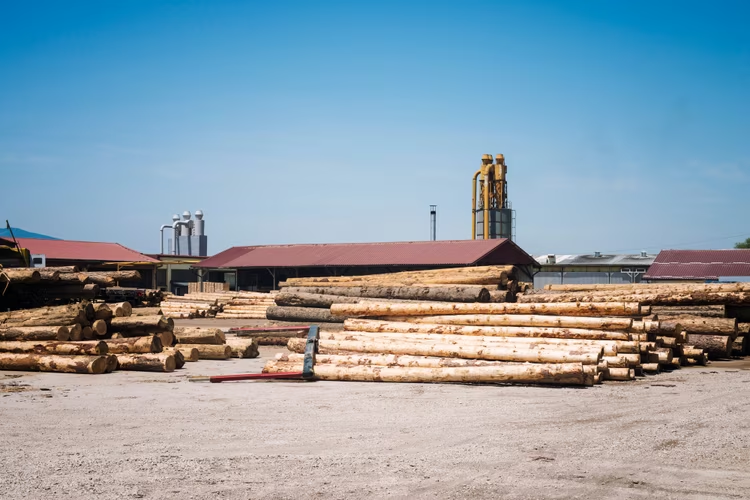
Timber can also be moved, processed or consolidated before reaching an exporter. Research into Zambia's Mukula trade has raised concerns about weaknesses in the systems used to trace timber from the point of harvest to export.
Investigations Into Zambia's Mukula Trade
In a 2019 investigation, the Environmental Investigation Agency alleged that Mukula logs harvested in Zambia had entered export channels through arrangements involving the Zambia Forestry and Forest Industries Corporation (ZAFFICO). The findings were allegations made by the organisation and should not be presented as independently verified fact.
Parliamentary reporting has also documented concerns about illegal Mukula harvesting and the seizure of timber. A parliamentary committee reported that 3,550 cubic metres of Mukula were illegally harvested and exported in 2017, while approximately 8,000 cubic metres were reported confiscated in 2018.
These historical figures should be read within the context of the reports in which they appeared and should not automatically be treated as an indication of the current scale of illegal harvesting.
While the allegations and investigations surrounding the Mukula trade were serious and involved political and business interests, allegations should not be treated as fact unless independently proven or confirmed through official findings.
The investigation therefore turns to the trucks, the paperwork accompanying them, and a central question: do the documents accurately reflect the timber being transported and the people authorised to move it?
Can Zambia Make Mukula Timber Traceable?
The Mukula trade is ultimately a story of value. Who creates it? Who captures it? Who pays the cost?
A tree can move from a rural forest to an international market through a chain of cutters, traders, transporters and exporters, with its value increasing at every stage. Yet the communities living alongside the forests may receive only a fraction of that value while bearing the long-term cost of losing a resource that can take decades to regenerate.
Zambia's repeated bans, seizures and investigations illustrate the difficulty of preventing illegally harvested timber from entering the supply chain. The challenge is to make every tree traceable, from the forest where it was cut to the market where it is sold, and to close the gaps that allow illegally harvested timber to enter legitimate supply chains.
The question, therefore, is where each tree came from, who profited from it, and what was left behind when it was gone.