Zambia is producing more copper than it has in years, with output rising as the country works towards a target of 3 million tonnes annually by 2031. Investment is returning to existing mines, new projects are moving ahead, and demand for goods and services across the mining sector is increasing.
Most discussions focus on production figures, exports and investment announcements. Less attention is given to the businesses that make mining possible every day.
Every mine depends on transport companies, engineering firms, equipment repairers, catering businesses, security providers, landlords, training institutions and suppliers of personal protective equipment (PPE). Together, these businesses employ thousands of people and create opportunities that extend well beyond the mine gate.
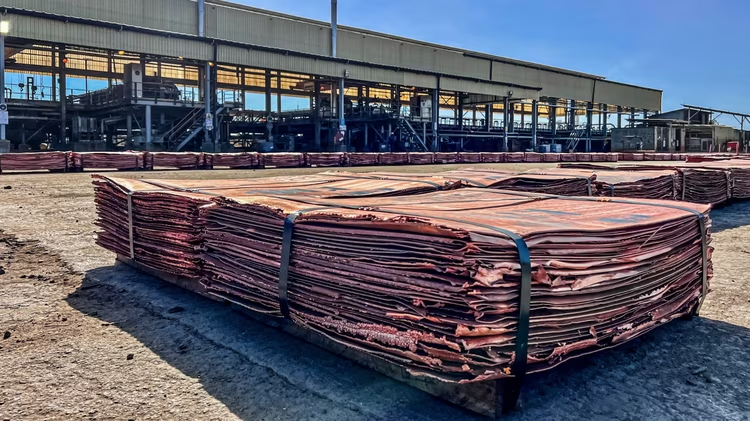
As Zambia expands copper production while also balancing policies such as temporary export-duty waivers on copper concentrates to keep operations moving, another question becomes increasingly important: is the mining boom helping to build competitive local businesses, or is it mainly creating contracts that disappear when mining activity slows?
The Mining Supply Chain Extends Far Beyond the Mine
The mining industry supports a much larger business ecosystem than many people realise.
Every stage of mining requires specialised services. Exploration teams need accommodation and transport. Construction projects require engineering contractors and equipment suppliers. Operating mines depend on maintenance companies, security firms, fuel suppliers, catering businesses, waste management companies and logistics providers.
Many of these businesses may never extract a single tonne of copper, yet they remain essential to keeping mines operating safely and efficiently.
For Zambia, the strength of this wider supply chain will play an important role in determining how much value the country captures from future mining growth.
Transport and Logistics Keep Copper Moving
Transport is one of the largest industries connected to mining.
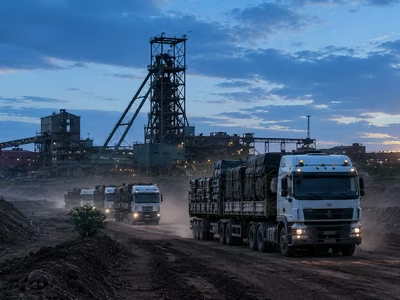
Copper must be moved between mines, processing plants and export routes. Heavy equipment, fuel and consumables also need to reach mining operations on schedule. This creates opportunities for haulage companies, freight forwarders, customs clearing agents and vehicle maintenance businesses.
Some Zambian transport companies have expanded significantly by serving the mining industry.
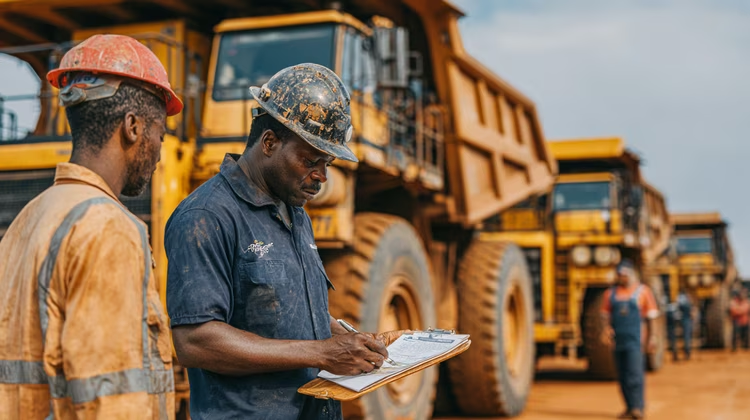
However, dependence on one customer creates risk. Businesses whose income comes almost entirely from a single mine can face serious financial pressure if production slows or contracts end. The strongest logistics companies are those that gradually diversify into other industries and customers while maintaining mining as an important part of their business.
Catering, Accommodation and Local Services
Mining also creates demand for everyday services.
Large operations require catering, housekeeping, laundry, waste management and accommodation services for employees and contractors. Local entrepreneurs have increasingly participated in these areas because the barriers to entry are generally lower than in highly specialised engineering services.
These contracts create employment and allow businesses to develop operational experience that can also be applied in sectors such as hospitality, healthcare and education.
The challenge is ensuring that companies continue growing beyond individual mining contracts rather than relying on a single client indefinitely.
PPE Suppliers Face Opportunities and Challenges
Mining companies purchase large volumes of personal protective equipment, including helmets, safety boots, gloves, eyewear and specialised clothing.
This creates opportunities for Zambian distributors and wholesalers.
However, much of the PPE used by the mining industry is still manufactured overseas. While local companies often handle distribution, a significant share of the manufacturing value remains outside Zambia.
Expanding local manufacturing capacity where commercially viable would allow more value to remain within the domestic economy while supporting jobs beyond the mining sector.
Engineering and Equipment Repair Build Long-Term Capability
Engineering services represent one of the most valuable parts of the mining supply chain.
Mines rely on contractors to maintain processing plants, repair heavy machinery, install equipment and solve technical problems that require specialised expertise.
Businesses operating in this space develop skills that can be applied across multiple industries, including manufacturing, construction and energy.
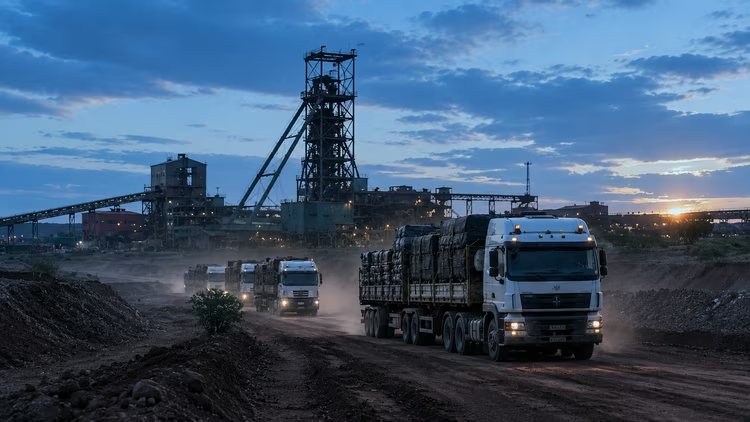
Some engineering firms operating in Zambia are locally owned, while others are international companies with local operations. Both contribute expertise, employment and investment, although strengthening the capabilities of Zambian-owned engineering firms remains an important objective for long-term industrial development.
Security Companies Have Expanded Beyond Mining
Mining operations require extensive security because they protect valuable equipment, infrastructure and minerals.
Many security companies have grown by serving mining clients before expanding into commercial property, retail, financial institutions and residential security.
This is one example of how mining demand can help businesses establish themselves before diversifying into wider markets.
Training Institutions Help Develop the Workforce
Perhaps the most important long-term opportunity lies in skills development.
Mining companies require electricians, welders, heavy equipment operators, geologists, engineers, environmental specialists and safety professionals. This creates sustained demand for technical colleges, vocational training centres and professional development providers.
Investment in training benefits both the mining industry and the wider economy because skilled workers can apply their expertise across multiple sectors throughout their careers.
Are Local Businesses Winning Enough Mining Contracts?
Despite decades of mining, many high-value goods and specialised services continue to be supplied by international companies or multinational contractors.
There are several reasons for this.
Large mining contracts often require significant capital, internationally recognised quality standards, specialised equipment and proven experience. Many small and medium-sized Zambian businesses still face challenges accessing finance, investing in technology and meeting procurement requirements.
Mining companies also operate in highly regulated environments where reliability, safety and technical performance are critical. Procurement decisions therefore prioritise suppliers that can consistently meet these standards.
This does not mean local businesses cannot compete. It highlights the importance of building capacity, improving access to finance and strengthening technical skills so more Zambian firms can participate in higher-value parts of the supply chain.
Local Content Policies Aim to Increase Participation
Government has introduced local content measures designed to increase the participation of Zambian businesses in mining procurement.
These initiatives encourage mining companies to source more goods and services locally where competitive suppliers exist, while also supporting supplier development through training, mentorship and enterprise development programmes.
Success will depend not only on policy, but also on whether local businesses continue investing in quality, productivity and technical capability.
Copper Concentrate Export Policy Reflects a Growing Industry
Recent temporary waivers on export duty for copper concentrates illustrate the complexity of developing the mining industry.
The long-term objective remains increasing local processing and value addition so that more economic activity takes place within Zambia.
However, temporary policy adjustments may sometimes be necessary while new processing capacity is developed or existing facilities undergo maintenance.
Rather than representing conflicting objectives, these decisions highlight the balance between supporting current mining production and building stronger domestic industrial capacity over time.
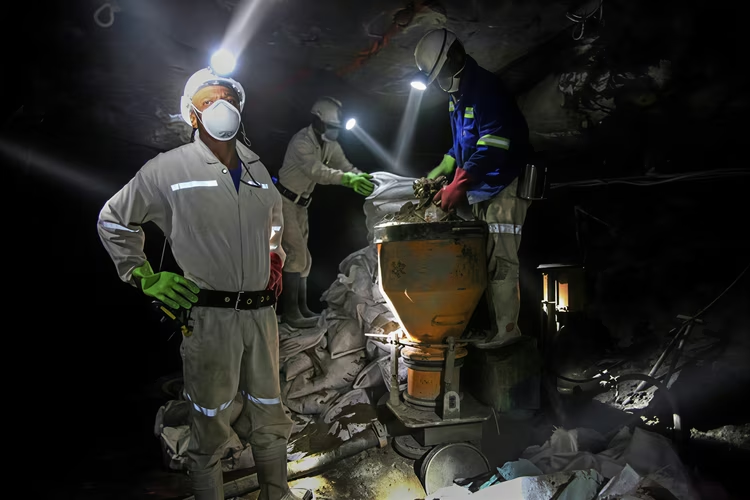
Building Businesses That Last Beyond Mining Cycles
The businesses most likely to succeed over the long term share similar characteristics.
They invest in specialised skills, maintain high operating standards, build experienced workforces and gradually diversify beyond a single mining customer.
Whether they provide engineering services, transport, catering or technical training, companies that continue improving their capabilities are better positioned to withstand changes in commodity prices and mining investment cycles.
For Zambia, this may be one of the most important measures of success. Higher copper production is valuable, but the wider impact becomes much greater if it also creates competitive businesses that continue generating jobs, skills and investment long after individual mining contracts have ended.
Conclusion
Zambia's copper expansion is creating opportunities far beyond the mines themselves
Transport companies, engineering firms, PPE suppliers, security businesses, caterers, landlords and training institutions all play important roles in supporting the industry's growth. Together, they form an ecosystem that contributes to employment, skills development and wider economic activity.
As copper production continues to increase, the bigger opportunity lies in strengthening these businesses so they become competitive, resilient and capable of serving markets beyond mining alone.
The mining industry will remain central to Zambia's economy, but the businesses that grow alongside it may ultimately determine how much lasting value the current copper expansion leaves behind.