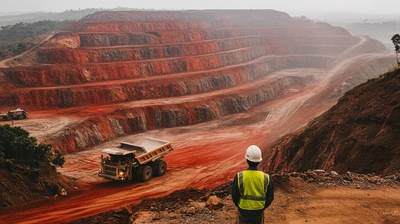
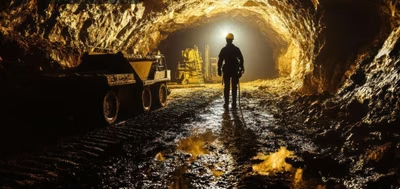
Nickel may not get the same attention as copper in Zambia, where copper dominates national speeches and economic plans. As a matter of fact, few Zambians would name it among their country’s exports. Despite that, nickel is everywhere in modern life. You can find it tucked away almost invisibly in stainless steel, industrial machinery, aircraft components, and, of course, some electric vehicle batteries.
Its range of uses is what makes the metal so much more interesting. It is not just the metal of a greener future; its most notable use remains stainless steel. Yes, the same material in your kitchen knives, hospital operating theatres, factories and construction sites. Added to steel, nickel makes it tougher and far more corrosion-resistant. It may seem an obscure metal, but just like salt, it is one of those things daily life and industry would struggle to do without.

Although copper outshines it, nickel matters, adding diversity to a mining sector that depends heavily on copper. Nickel deposits in Zambia give the country a place, however small, in an increasingly important, highly competitive market. Today, Zambia has just one operating nickel mine: Enterprise, in North-Western Province. The country’s only other nickel mine, Munali in Mazabuka District, has been non-operational since mid-2025.
Both mines have contended with a difficult market. Nickel prices rose through 2021 on strong demand expectations, then spiked in March 2022 when Russia’s invasion of Ukraine triggered a trading crisis on the London Metal Exchange. In 2023, prices weakened as Indonesia rapidly expanded its production and processing capacity, pushing the market into surplus. By 2025, Indonesia was producing about 2.6 million tonnes a year, more than 70% of the world’s nickel. The result was a highly competitive environment for producers around the world.
Elsewhere, producers faced closures or losses due to weak prices. While nickel is an essential metal, mining it is not immune to the demands of profitability: grade, recovery, processing, power, and infrastructure all need to be managed.
Munali shows how unforgiving that can be. After its closure in 2011 following a fall in nickel prices, it was revived nearly a decade later, and then operations halted once again mid-2025 amid funding problems, with management pointing to low nickel prices and high operating costs. By April 2026, it was under care and maintenance with a liquidator appointed.
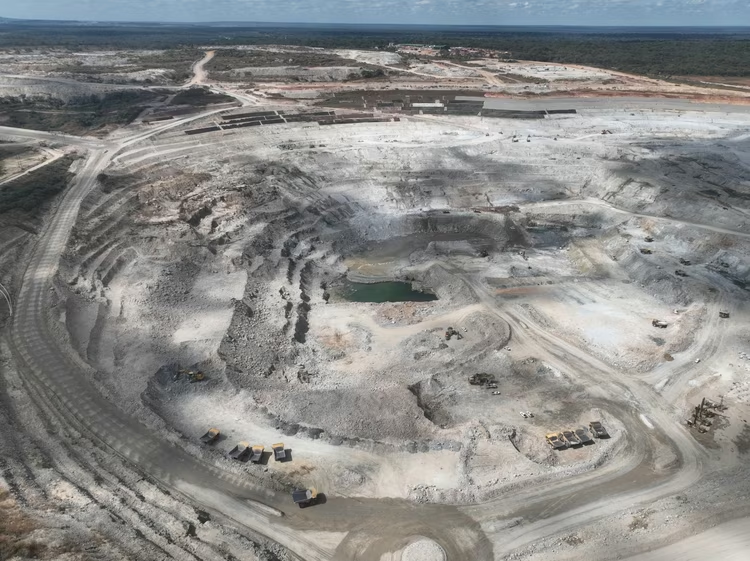
Enterprise on the other hand, declared commercial production effective 1 June 2024, right when the marketed entered its downturn, has fared very differently. Part of the reason is it location. Owned by First Quantum Minerals under FQM Trident, Enterprise is located about 12 kilometres from the Sentinel copper mine in the heart of Kalumbila, North Western Province. The proximity of these projects is more than nature’s luck. As a standalone operation, mining nickel is resource-intensive. Its proximity to Sentinel means that the two can share processing infrastructure, a common tailings storage facility and leverage roads, energy, processing facilities, logistics and supporting services, resources a mine needs before it can even begin to generate revenue. As a result, Enterprise can benefit from Trident’s existing Processing Plant infrastructure, which helps reduce the cost of establishing and running the project.
This integrated approach gives Enterprise a head start over many stand-alone nickel projects. First Quantum describes Enterprise as a low-cost operation, thanks to its operational and infrastructure relationship with Sentinel. This reduces the need to duplicate infrastructure and allows First Quantum to optimise its operating and capital costs. According to the company, the nickel circuit was considered as part of the original Sentinel complex, ensuring that the infrastructure to support the project was already in place before Enterprise began operations.
So far, the numbers support that. In 2025, First Quantum reported 23,200 tonnes of nickel production from Enterprise. In the first half of 2026, that number had already been surpassed with the production of 23,586 tonnes, with an annual guidance of 30,000 to 40,000 tonnes. Costs have held up too. The mine’s cash cost, a measure of day-to-day operating costs rather than profit, was $2.52 per pound in Q1 2026 and $2.75 in Q2, when output dipped during a planned shutdown of the Trident plant. Over the same period, First Quantum’s realised nickel price was $7.46 and $7.94 per pound.

Although the results are promising, nickel markets have been known to turn very quickly, looking steady when prices are firm, but exposed when prices weaken. Zambia’s nickel mining challenge is not solely a production challenge, but one of competitiveness.
There are risks closer to home, too. First Quantum expects lower ore grades at Enterprise in the third quarter of 2026, in line with its mine plan, and its own guidance has output easing to between 20,000 and 30,000 tonnes in 2028. Whatever happens at the mine, nickel prices will still be shaped largely by how much Indonesia chooses to produce.
Despite these risks, Enterprise may have the upper hand when it comes to carbon. First Quantum identifies Enterprise as a low-carbon-intensity producer, producing the metal with a lower greenhouse gas footprint. A metal’s carbon footprint is becoming a bigger consideration for some buyers, particularly in the battery supply chain in applications that are associated with electrification, energy storage and energy transition. Enterprise mines sulphide ore and produces a concentrate, a route that is less carbon-intensive than processing laterite ore, which is how much of Indonesia’s nickel is made, often with coal-fired power. First Quantum also draws on renewable energy for its Zambian operations, including power from the 100MW Chisamba solar plant. As the global market increasingly prioritises green and ethically produced materials, this could become a real advantage beyond production cost alone.
Enterprise suggests Zambia can produce more than copper if it implements infrastructure and operational discipline effectively. Nickel mining at Enterprise will not transform the national economy overnight, nor can it replace copper, but what it can do is broaden Zambia’s mining base, by building on its existing advantages through continued cost optimisation, improved operational efficiency and reduction of emissions. This could help build specialised jobs and technical skills, giving Zambia a larger stake in the critical minerals market. At full capacity, the mine was expected to employ more than 900 people full-time.
Zambia’s bet on nickel is not on rising prices and profitability alone. In a market dominated by Indonesia and prone to unpredictable cycles, the better bet is on how Zambia will manage its deposits, strengthen its cleaner production credentials and improve its overall mine performance.
Enterprise has built a solid foundation. The real test now is whether it can keep costs down, maintain ore quality and recovery, and stay competitive as nickel prices rise and fall. Munali’s troubles show how small a margin for error this market will tolerate. In nickel mining, profit lies in operational discipline: reliable ore quality, cost control, infrastructure, power reliability, and the ability to sell the right product in the right market at the right time.