From Customary Land to Colonial Control
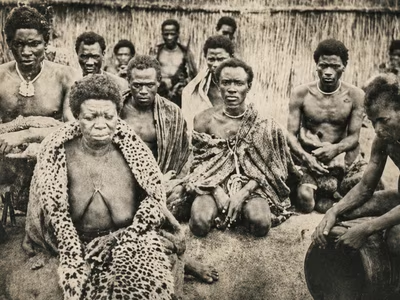
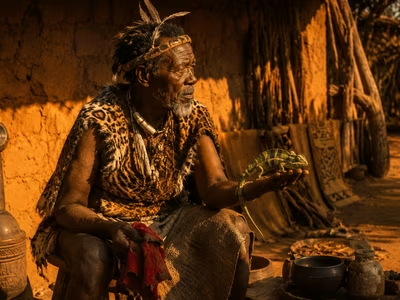
Before colonial borders and taxes, land in the region was held through custom and inheritance. Chiefs were the custodians of land, which was considered a gift from God and not a commercial entity. There was no land title, but merely a shared belief and culture that tied people to a place.
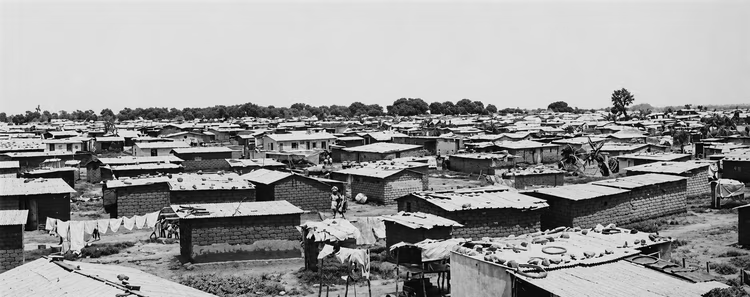
When white settlers and colonial administrators arrived, early interactions sometimes involved trade and negotiated access. The exchange seemed insignificant at the time, but behind this gesture came new laws and logics. Maps were drawn to define territory, and taxes such as the hut tax were introduced, requiring Africans to pay in cash, with punitive measures, including forced labour or arrest, used to enforce compliance. This led to what would be the first of many rural-urban migrations in the country.
The Growth of Informal Settlements into Thriving Communities
The colonial economy industrialised railways, mines, and administrative centres. However, planning did not include indigenous people. Urban planning was done with racial segregation in mind, having formal and properly serviced housing reserved for white settlers, while African workers were relegated to the outskirts or fringes of urban settlements. These settlements seldom had proper services and infrastructure, and were overcrowded. Where formal housing supply failed, people self-built, the first clusters that would become the compounds we know today. Areas like George and Chawama began as peripheral settlements and informal extensions, while places like Matero were later developed as planned African townships. This was the birth of informal settlements, a desperate yet resilient and resourceful solution to exclusion.
Why Housing and Land Ownership Remain Out of Reach
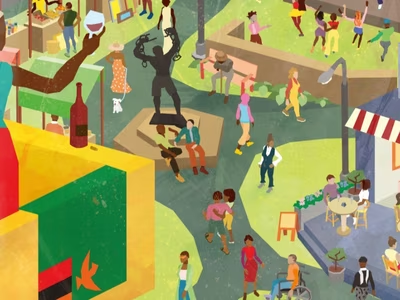
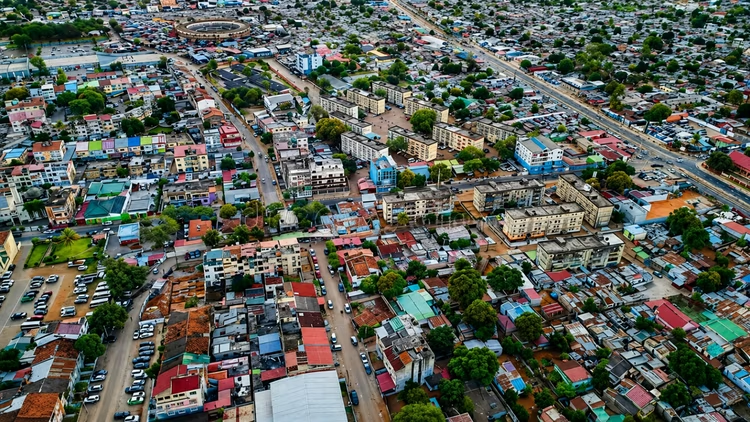
Over the years, compounds have continued to grow. A single-room council house turned into a three-bedroom home, a backyard into a shop, and a lane into a market. Families have extended upward and outward in incremental, improvised ways using whatever materials they can afford, often developing outside formal building regulations. Services have arrived intermittently, drainage is often an afterthought, and sanitation continues to lag. Yet within these constraints, dense social economies flourish; tailors, food vendors, informal transport, and networks of credit that have turned informality into functioning neighbourhoods.
Policy shifts after independence have attempted to redress some injustices but have often fallen short due to a lack of adequate funding. Formal tenure has remained out of reach for many residents due to a lack of access to housing finance. Formal methods of housing finance, such as mortgage loans, remain inaccessible to a large portion of the population who are not in formal employment and do not meet the criteria. This, coupled with lengthy procedures attached to land tenure access, deters many from attempting the formal route. Rather than vanish, compounds have adapted; some areas have received partial upgrades while others have consolidated into long‑standing, legally ambiguous communities.
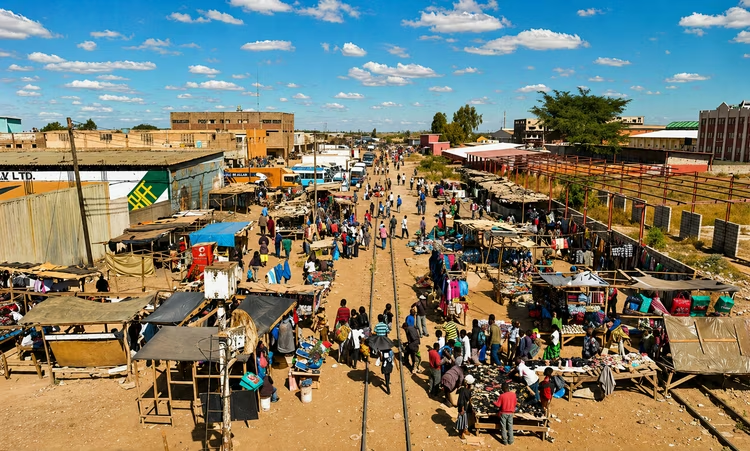
“Affordable and decent housing for all by 2030” is the resounding theme of Zambia’s National Housing Policy (2020 – 2024). This entails that all members of society are entitled to proper and dignified housing, including those in informal settlements. Compounds are not failures to be erased but cities in the making; dense, adaptive, and full of civic life. Treating them as living neighbourhoods rather than problems reframes policy from punishment to partnership. In that shift lies the chance to honour the original belief that land is a gift from God, not a commodity to be bought and sold; an inherent human right.