Their fields, fishing grounds, ancestral sites and sacred places disappeared beneath the reservoir, while many families struggled to rebuild their livelihoods in unfamiliar surroundings. Today, Kariba remains a vital source of power and a celebrated destination, but its story raises a difficult question: what happens when the price of progress is paid by the people who live closest to it?
Beneath the vast blue waters of Lake Kariba lies a landscape that once belonged to thousands of people. Villages, fields, fishing grounds, sacred sites and ancestral graves were swallowed when the Zambezi was dammed in the late 1950s. Today, Kariba is celebrated as an engineering achievement and a source of electricity for Zambia and Zimbabwe. But for the Tonga people who were displaced to create it, the lake also represents a loss that has never entirely disappeared.
The Tonga People and the Zambezi Before Kariba
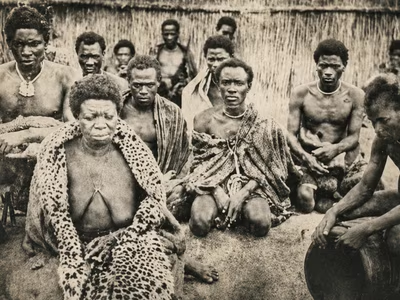
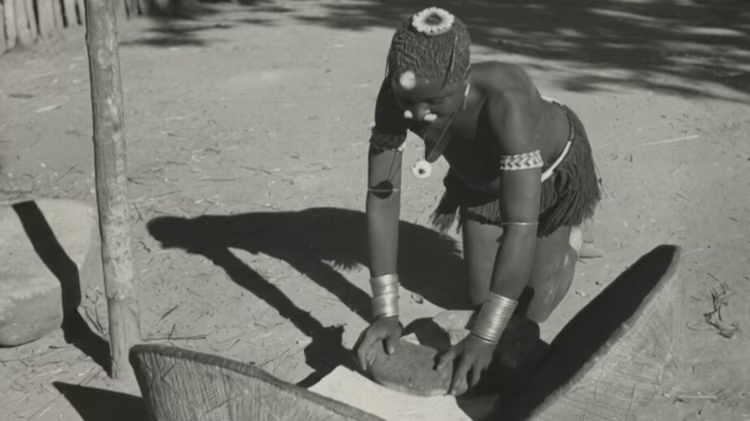
Before the dam, the Tonga lived along the banks of the Zambezi in the Gwembe Valley. They were often referred to as the Basilwizi, meaning “river people”, reflecting their close relationship with the river. Their homes, fields and fishing grounds sat close to the water, and their whole way of life was shaped by it. Farming, fishing and herding all depended on the river's rhythms.
Nyaminyami and the Tonga's Sacred River
The river was not just useful. It was sacred. Tonga traditions tell of Nyaminyami, a powerful river spirit associated with the Zambezi who was believed to protect the people and provide for them.
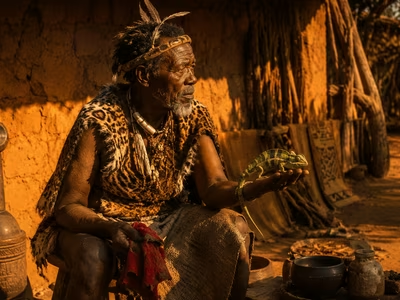
Along the riverbanks stood sacred sites known as malende, also referred to in some accounts as mpande. These places, often associated with trees such as baobabs, were used for important rituals by rainmakers known as sikatongo. A sikatongo was a spiritual leader entrusted with important religious duties, including presiding over sacred sites, performing rainmaking rites and serving as a link between the people and their ancestors.
These sites were far more than physical landmarks. They were places where communities maintained relationships with ancestors, performed important rituals and, in some cases, buried spiritual leaders.
The Displacement of the Tonga People
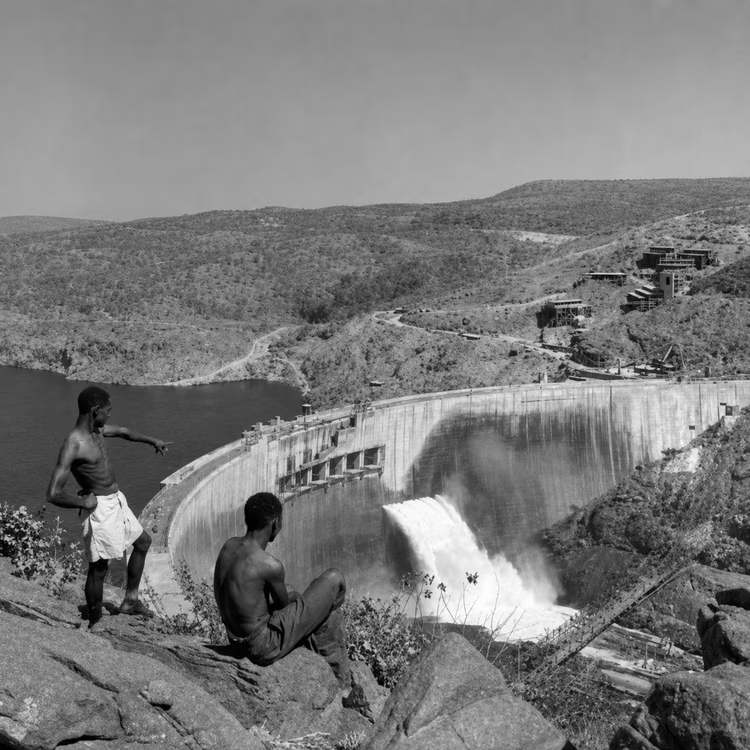
In the late 1950s, tens of thousands of Tonga people, along with members of other communities, were displaced as the valley was flooded to create Lake Kariba. Many were relocated with little meaningful consultation, while compensation and resettlement support were widely criticised as inadequate. Entire villages were submerged as the rising waters filled the valley. So were ancestral graves, sacred pools, caves and malende shrines.
This was not simply a loss of land. For the Tonga, it disrupted a spiritual link between the living and their ancestors. In some Tonga traditions, the flooding was understood through the story of Nyaminyami, the river spirit who was said to have been separated from his mate when the dam was built.
Tonga songs and oral histories have carried the grief of the displacement across generations, keeping alive memories of communities and ancestral sites lost beneath the lake.
What the Kariba Dam Took With It
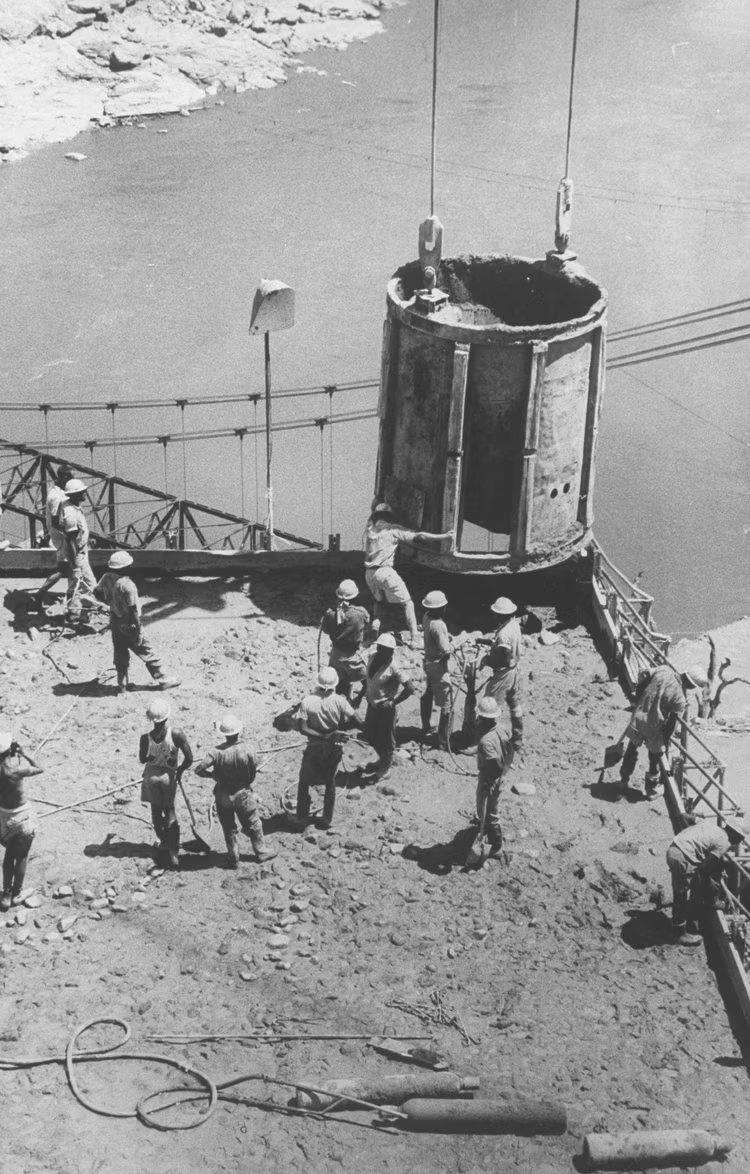
The people were resettled in higher, drier areas where the soils and rainfall patterns differed sharply from those of the fertile valley. Unlike the river valley, these new areas made it much harder to maintain the farming and livestock practices on which families had depended. Decades later, many descendants of those displaced still live in poverty.
Ironically, communities that were forced to move to make way for a hydroelectric dam remain, in many cases, without electricity themselves. In some communities, electricity generated from the Zambezi has long served distant towns and industries while nearby households have remained without reliable access to power.
The Environmental Cost of Lake Kariba
The dam did not only change human lives directly through resettlement. It also transformed the natural world that Tonga and other Zambian communities had relied on for generations, deepening the hardship of displacement itself.
As the Zambezi Valley disappeared under the rising lake, the forests, grasslands and fertile floodplain soil that had supported farming, grazing and gathering for centuries were swallowed along with the villages. Seasonal flooding had naturally replenished parts of the valley's soils, supporting agriculture and grazing. Once submerged beneath the reservoir, that land was no longer available to the communities who had farmed it.
The wild plants Tonga communities gathered for food and medicine, and the grazing land that sustained their cattle and goats, also disappeared beneath the rising waters.
Wild animals that once shared the valley with the Tonga — including elephants, antelope and countless smaller species — were displaced as the rising water transformed their habitats. For communities who had lived alongside this wildlife and drawn on it for generations, its disappearance from the valley was one more thread cut from a way of life that had depended on the whole living landscape, not just the river itself.
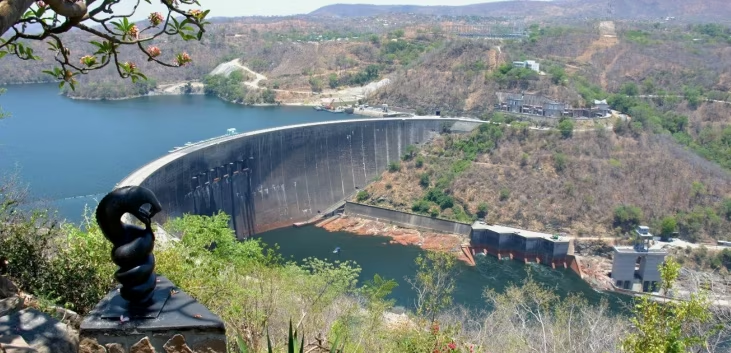
When Tonga families were resettled in the dry, rocky uplands, they found none of this richness waiting for them. The new land could not support the same crops, grazing or gathering practices as easily as the valley had. Many communities struggled, and still struggle, to rebuild the kind of self-sufficient life the valley had once given them.
The Legacy of the Kariba Dam
Today, Lake Kariba is often celebrated as a marvel of engineering and a source of clean power for Zambia and Zimbabwe alike. Tourists visit its shores for safaris and houseboat cruises, largely unaware of what lies beneath the water.
But for Tonga communities on both sides of the river, Lake Kariba is also a vast underwater memorial — to ancestors, sacred places and a river-based way of life that cannot simply be restored.
Kariba: Progress at What Cost?
The story of Kariba is really two stories at once. One is about human ingenuity and the taming of a mighty river. The other is about what gets lost when that kind of progress leaves people and ecosystems behind. Remembering both is the only way to understand the true cost, and the true legacy, of the Kariba Dam.