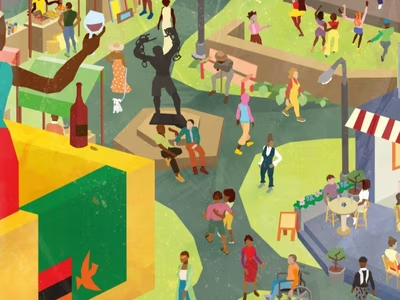
If you were to walk through the markets of Lusaka or the pathways of a rural village in Zambia on the first Tuesday of July, you would feel a distinct shift in the air. Businesses close, families gather, and a shared quiet settles over the nation.
This is Unity Day.
For an outsider, or even for a younger generation, the true weight of this day can sometimes feel lost in translation. Why does a modern nation pause every year to celebrate a concept as abstract as "unity"?
The Fragile Blueprint of a New Nation
To understand Unity Day, you have to look at what Zambia looked like just before October 1964.
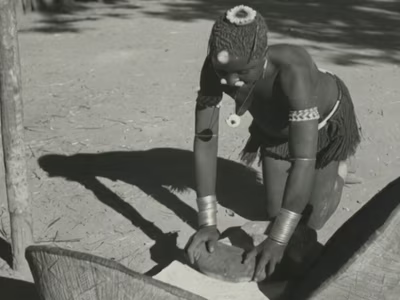
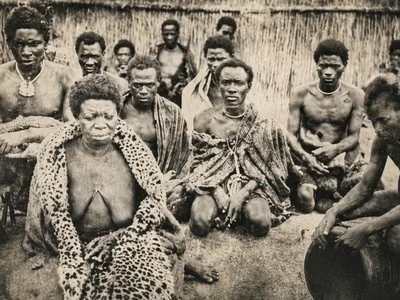
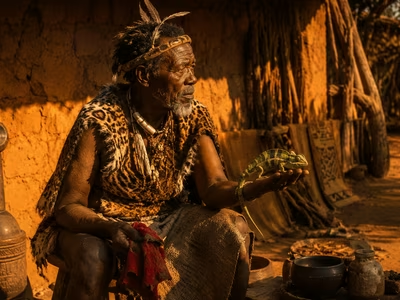
When British colonial rule ended, the newly drawn borders threw together over 70 ethnic groups speaking more than 72 local languages.
There was no guarantee this would work.
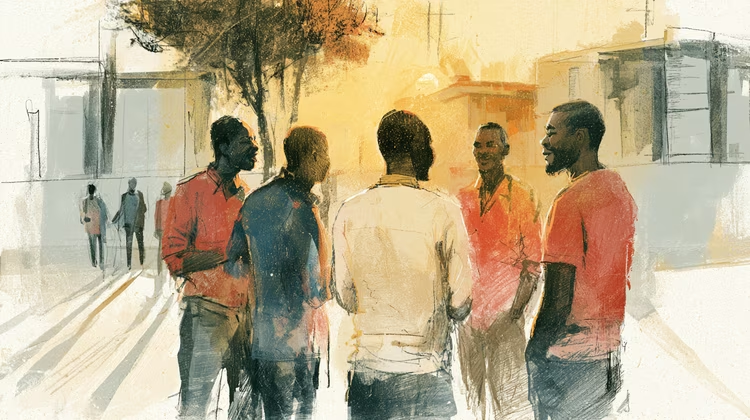
In fact, across the African continent during the mid-20th century, the departure of colonial powers frequently triggered immediate civil strife. Deep-seated regional rivalries, competing leadership styles, and ethnic differences split the newly independent apart. The potential for tribalism was incredibly high.
"One Zambia, One Nation"
Recognising this fragility, Zambia’s founding father and first president, Dr Kenneth Kaunda, introduced a foundational philosophy that would define the country's trajectory.
The national motto, "One Zambia, One Nation," became the guiding principle.
Kaunda understood that true unity could not be forced through oppression; it had to be built through integration. His government implemented deliberate policies to mix the population:
- Civil Service Rotations: Government workers from the east were deliberately stationed in the west.
- Educational Integration: Teachers from the South were sent to schools in the North.
- Intermarriage Encouragement: The state fostered an environment in which interethnic marriage was celebrated.
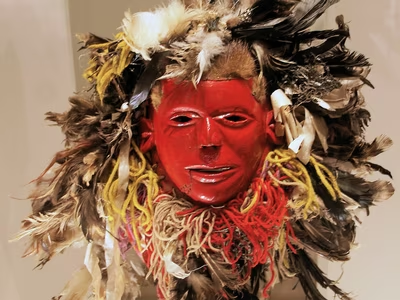
Because of this, children grew up learning languages outside their ancestral heritage. The major linguistic blocks, such as Bemba, Nyanja/Chewa, Tonga, Lozi, Kaonde, Luvale, and Lunda, began to coexist as a shared cultural tapestry.
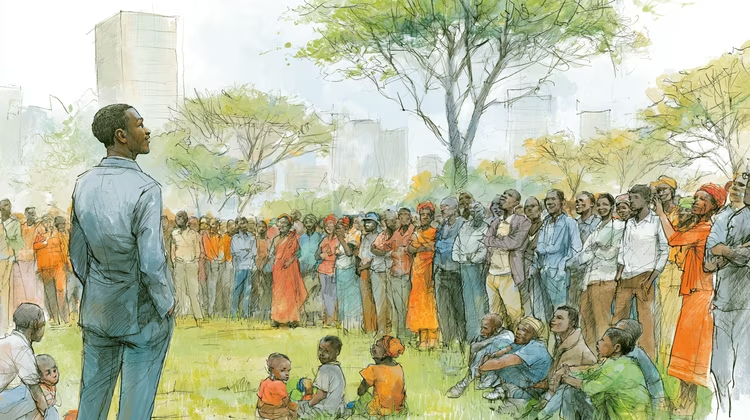
Unity Day, celebrated annually on the first Tuesday of July, is the formal commemoration of this hard-won social cohesion. But why do Zambians still celebrate it today?
It is a Shield Against Tribalism
In a world where political and social divisions are widening, Unity Day serves as a critical annual reset. It reminds citizens that ethnic diversity is a source of cultural wealth. It reinforces the idea that being Zambian comes before any tribal affiliation.
A Tribute to Predecessors
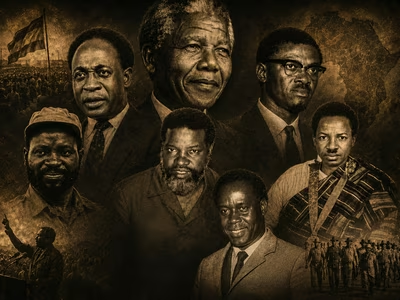
The holiday honours the sacrifices of the nationalist movements. It acknowledges the political will it took for early leaders and ordinary citizens from different backgrounds to sit at the same table and choose cooperation over conflict.
An Educational Legacy
For the youth, Unity Day is a vital history lesson. It teaches that the peace Zambia enjoys today is not an accident of history. It was a deliberate choice made by ordinary people who decided that a shared future was worth more than past divisions.
A Lesson for the World
Zambia remains one of the few countries in the region that has never experienced a civil war since its independence. Zambia's story is proof that a multi-ethnic society can thrive in harmony.
Unity Day is about celebrating the fact that over 70 different groups can look at one flag and see themselves reflected in it.