Remembering the Battle of Kavalamanja
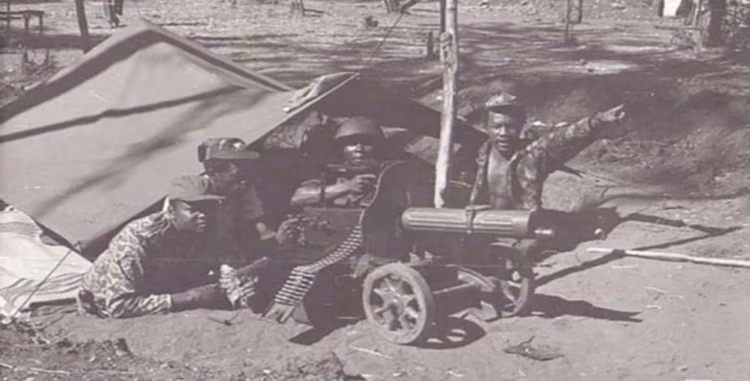
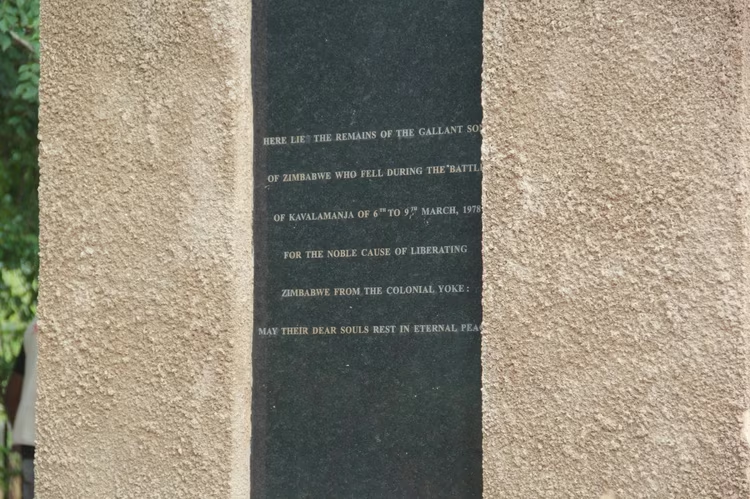
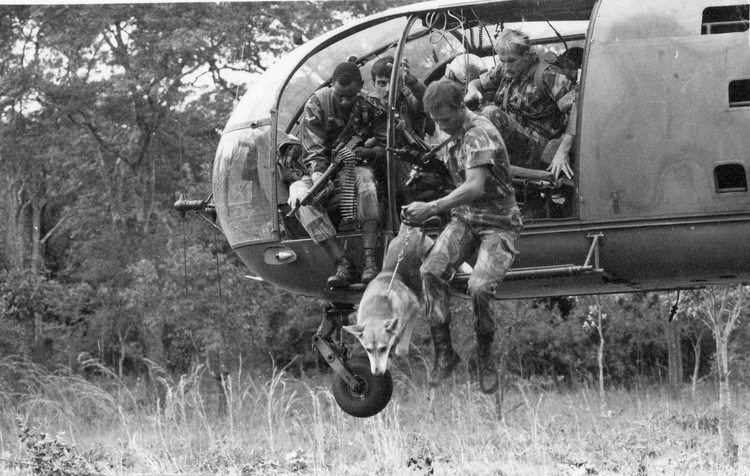
Due to their involvement in the battle against oppression across Southern Africa, Zambia and the ZIPRA (Zimbabwe People’s Revolutionary Army) freedom fighters endured three days of intense bombardment when Rhodesian security forces under Ian Smith's government launched a relentless attack on Kavalamanja and Kakaro villages in Luangwa district in March of 1978. Survivors recall that the bombardment continued for several days, making it unsafe for civilians to leave their shelters. Because of this, decomposition had left the bodies of victims almost unrecognisable. The emotionally excruciating task of attempting to identify their loved ones remains a traumatic event remembered by survivors. Today, nearly five decades later, Luangwa faces a very different battle—Though not as physically oppressive as Smith’s Rhodesian forces, still immensely harmful to the country.
How Smuggling Is Threatening the Zambia-Zimbabwe Border
Illegal activities such as the smuggling of drugs, humans, wildlife products, minerals, untaxed and/or counterfeit goods, and so much more take place at the border area between Zambia and Zimbabwe at the Luangwa transit route. These activities undermine the economies of both nations by not only causing revenue leakages but also market instability, unfair competition, reduced local sales revenue, loss of local customers and local supply chain disruptions. Additionally, this is also a security risk as undocumented individuals, medicines, and food get smuggled across the border without proper inspection. Why, then, do people continue to smuggle goods? To name a few, contributing factors to this might be weak border enforcement, corruption among officials, porous and unmonitored border lines, lack of modern surveillance infrastructure, high tariffs and tax structures that motivate the smugglers to evade them.
Why Stronger Border Cooperation Matters
However, taking control of this critical trade route would help recover the large amounts of tax revenue being lost and stabilise both the local supply of goods and their prices for domestic customers. Ultimately, improve tax revenue, strengthen economic activity, support long-term GDP growth in both countries, and improve national income.
Hence, to combat this issue in the meantime, the administrations have taken action. The Zambia Army maintains a presence in Luangwa to support border security and national defence, while the Zimbabwean authorities periodically seize smuggled goods and arrest suspected traffickers. Should the two countries work more closely together to combat this shared challenge, it would not only significantly improve border management and the GDP but also strengthen international relations for years to come.