What comes to mind when you think of Barotseland's political history? Does your recollection reach back to the early rulers remembered in Lozi oral tradition, including Mboo Mwanasilundu, or is it shaped by more recent figures such as Lewanika? Barotseland's political history stretches across centuries of indigenous rule, British colonial involvement and, later, incorporation into the modern state of Zambia. At the centre of much of this history stands the Litunga, the Lozi monarch, whose reigns have come to dominate both historical and public memory.
Instinctively, many of us imagine Barotseland as a kingdom governed almost exclusively by men. Yet a closer examination of Lozi history reveals a more intricate political tradition, in which women occupied some of the kingdom's most important offices. Far from being merely ceremonial figures, female rulers formed part of a political and cultural system in which authority was expressed through complementary institutions at Lealui and Nalolo.
The Origins of Barotseland's Dual Royal Tradition
According to Lozi oral traditions, the history of the kingdom traces its origins to Queen Mwambwa and her daughter, Queen Mbuywamwambwa, who are remembered as foundational figures in the Lozi political tradition. In these traditions, Mbuywamwambwa's son, Mboo Mwanasilundu, became the first male Litunga as the kingdom's political institutions developed. His accession did not erase female authority. Instead, Lozi tradition associates the development of the male Litunga's office with the continued existence of a female counterpart, the Litunga la Mbowela, based at Nalolo.
This relationship between the institutions at Lealui and Nalolo became an enduring feature of Lozi political tradition and was particularly significant during periods of political transition.
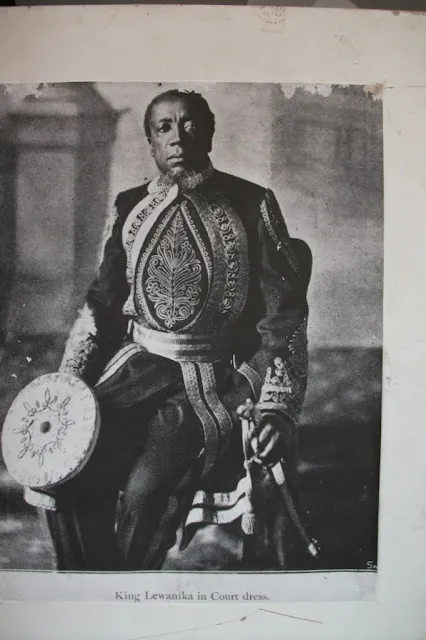
Following the civil conflict of 1884 and the overthrow of the rebel Tatila Akufuna, Lubosi Lewanika I reclaimed the throne in 1885. Restoring political order required more than military victory. It demanded the reunification of a kingdom that had been deeply divided.
Who Was Matauka, the Litunga la Mbowela?
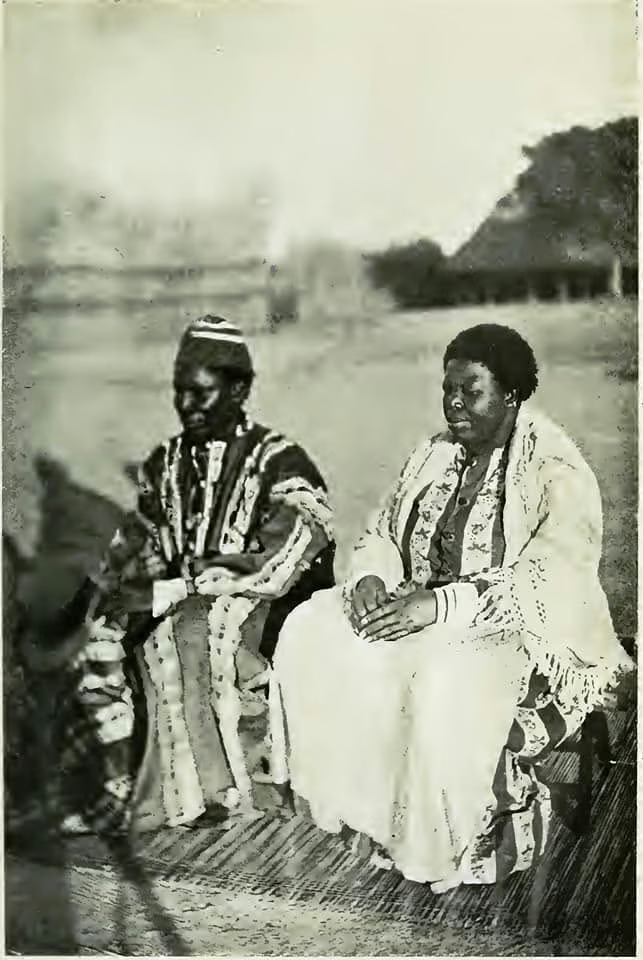
As part of this reconstruction, Lewanika appointed his twin sister, Matauka, as Litunga la Mbowela at Nalolo. The appointment was more than an act of familial trust. It reaffirmed an established constitutional tradition that balanced authority between the northern and southern courts. Matauka herself had survived the turmoil of the civil war, and her elevation reinforced both the legitimacy of Lewanika's restored rule and the continuity of Lozi political institutions.
Matauka was born during one of the most consequential periods in Lozi history. Captured during the civil conflict and later restored alongside her brother, she embodied the resilience of the kingdom itself. Her appointment was therefore both personal and constitutional, signalling that the restoration of the monarchy required the restoration of its female counterpart.
Rather than creating a new office, Lewanika revived one whose origins were deeply rooted in Lozi political philosophy. Matauka's appointment reflected an understanding that political authority rested not solely in the person of the Litunga but within a broader institutional framework that recognised complementary centres of power.
The relationship between Lealui and Nalolo extended beyond geography. The two courts fulfilled different political and ceremonial functions that together maintained the stability of the kingdom. While the Litunga served as the supreme political leader, the court at Nalolo exercised its own recognised authority within the governance of Barotseland. Lozi tradition presents these institutions not as rivals but as complementary pillars of the state, each contributing to the kingdom's continuity and legitimacy.
Why Barotseland's Female Rulers Are Often Forgotten
Despite this long tradition, modern accounts of Barotseland often place far greater emphasis on male rulers than on the women who shared in governing the kingdom.
Part of this imbalance reflects the nature of the historical record. During the colonial period, British administrators conducted official business primarily with Lewanika and his male successors. Their reports, correspondence and administrative records naturally centred on these interactions, producing an archive that privileged male leadership while giving comparatively little attention to the institutions of Nalolo.
Colonial rule also reshaped political and economic life within Barotseland. Colonial administration, mission education and the changing economic structures of the period also altered existing patterns of political and social authority. These changes affected the institutions through which women exercised influence, although the extent and nature of that transformation varied over time.
Following Zambia's independence, another shift occurred. National histories understandably focused on the story of a unified state emerging from colonial rule. In the process, the constitutional complexity of Barotseland, including its tradition of shared male and female governance, received relatively little attention. School curricula and popular histories tended to highlight singular monarchs whose leadership was easier to reconcile with the centralised structures of the modern nation-state.
Recovering the history of figures such as Matauka is therefore about more than recognising overlooked women. It invites a broader reconsideration of how political authority functioned in Barotseland. The kingdom's history was never solely the story of kings. It was also shaped by queens whose offices formed an integral part of one of southern Africa's most enduring systems of governance.