Netagrow co-founder Nchimunya Munyama is a problem solver at heart. He grew up in Southern Province, moving between Monze, Choma and Livingstone with his parents. Throughout his primary and secondary school years, Nchimunya spent countless hours on his grandparents’ farm in Monze, where he regularly helped out. His parents, who were teachers, also owned a farm, making agriculture an integral part of his upbringing.
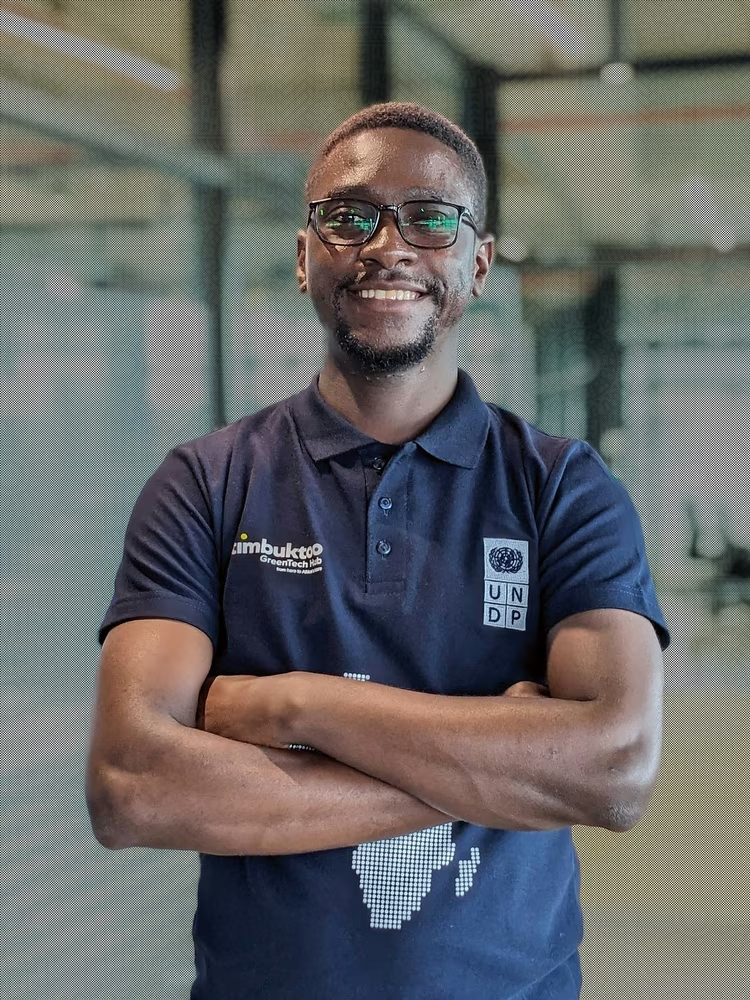
It was during this time, Nchimunya shares, that solving his grandfather’s problems on the farm became his hobby. He recalls fixing a broken watering can using rubber and wire. Finding ways to repair tools such as hoes, axes and wheelbarrows rather than replacing them became something he enjoyed immensely as a child. He fondly recalls that farm routines were not always predictable, with weather shifts or unexpected crop issues forcing quick, sometimes difficult decisions. This early instinct to fix things and respond to uncertainty would later lead him into agritech entrepreneurship and the founding of his own start-up. He just did not know it at the time.
Today, Netagrow, a start-up launched in 2023, positions itself at the intersection of agriculture, data and commerce. Its starting point is a simple and persistent problem: how to reduce uncertainty in farming enough to make agricultural participation more predictable and economically viable.
After secondary school, he initially hoped to study mechanical engineering, but a lack of funding made that impossible. In 2015, he secured a bursary to pursue a Bachelor of Science in Forestry at Copperbelt University. Midway through his degree, he earned a scholarship to study in Israel through an exchange programme. There, he completed a year-long diploma in applied agriculture and interned at a company that produces agricultural equipment.
Armed with his forestry degree and practical agricultural training, he began to rethink his path. The typical next step after earning a forestry degree would be to work in the Forestry Department at the Ministry of Green Economy and Environment, but Nchimunya didn’t feel that this was his calling. During his studies, he founded a youth-focused NGO called Passion for Greens, promoting conservation and environmental rights. However, he felt he could do more and have a greater impact. To this end, he began supplying farmers with inputs such as irrigation kits. It was also around the same time that he began teaching himself software development and eventually pursued a computer science degree in 2023.
Even as he moved among agriculture, entrepreneurship and technology, he could not shake the question from his mind: why do some farmers still struggle to make confident decisions, even when they are experienced and hardworking?
While he continued to think through what to do next, he kept thinking back to his grandfather’s farm in Monze and the kinds of challenges he had grown up around. As a child, he closely observed his grandfather and asked many questions. Over time, he realised the biggest constraints were not always equipment or inputs but decision-making under uncertainty. Farmers were often forced to make important choices without enough information, especially when weather, timing and costs were all shifting at once. This insight became the foundation of Netagrow. And unlike during his childhood on the farm, this time Nchimunya was better equipped to help his grandfather and tens of thousands of other farmers.
Netagrow officially launched in 2023, but unsurprisingly, Nchimunya had some anxieties about whether this new venture would succeed and whether the idea was viable. Early on, he shared the idea with a friend who encouraged him to apply to speak on his vision at TEDx Lusaka in 2021. Being selected helped validate the idea, and he considers this his first success in the Netagrow journey. Later that year, he secured seed funding from UNDP, another pivotal step toward an official launch, giving him confidence that he was on the right track. He was also selected for the Mandela Washington Fellowship for Young African Leaders in 2022, where he studied Business Leadership at Purdue University. Along the way, Netagrow and its small team participated in several accelerator programmes. They received recognition, including the Best Agritech Startup in Southern Africa award from the Southern Africa Startup Awards, part of the Global Startup Awards network.
Nchimunya describes this period as important not just for funding or visibility, but for growing his confidence. Growing up, he was a shy, introverted child. He sometimes broke out of his shell at school, playing the class clown, but he was mostly reserved. Now he found himself speaking on local and international stages. He was on the cusp of impacting more lives than he ever imagined. Each milestone, he says, helped confirm that the challenges he had seen on his grandfather’s farm were not isolated, but part of a much wider problem affecting farmers across Africa.
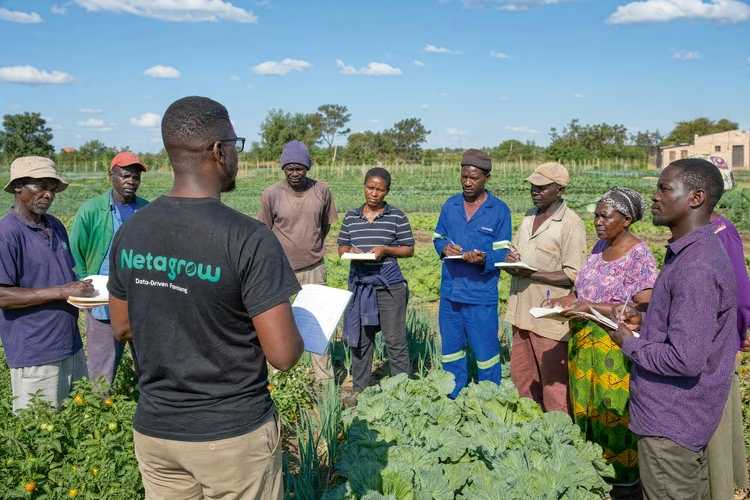
Netagrow says it has since grown to work with more than 10,000 farmers across Zambia. One of them is Peter, a small-scale farmer from Mkushi who grows maize and soybeans. Before using Netagrow, he relied mainly on past experience and instinct, often making decisions based on what had worked in previous seasons.
Through the platform, Peter received recommendations based on soil conditions, weather patterns and crop needs. Over time, he started adjusting planting times and input use more precisely. According to Nchimunya, Peter reported healthier crops, reduced input waste and yield increases of nearly 30 per cent within a single season. More importantly, he says, the uncertainty that used to come with each season lessened as he gained a clearer sense of timing and risk.
Another farmer, Mary from Chisamba, was struggling with rising production costs and increased water use. She had been farming for several years but found it increasingly difficult to balance productivity with efficiency, especially during dry periods. With guidance from Netagrow’s tools, Mary adjusted her irrigation practices, reportedly reducing water consumption by around 25 per cent while maintaining strong yields.
Both farmers, according to Nchimunya, represent a broader shift in smallholder agriculture. Farmers are not abandoning experience, but they are beginning to combine it with data and digital systems to make decisions more deliberate and less dependent on guesswork.
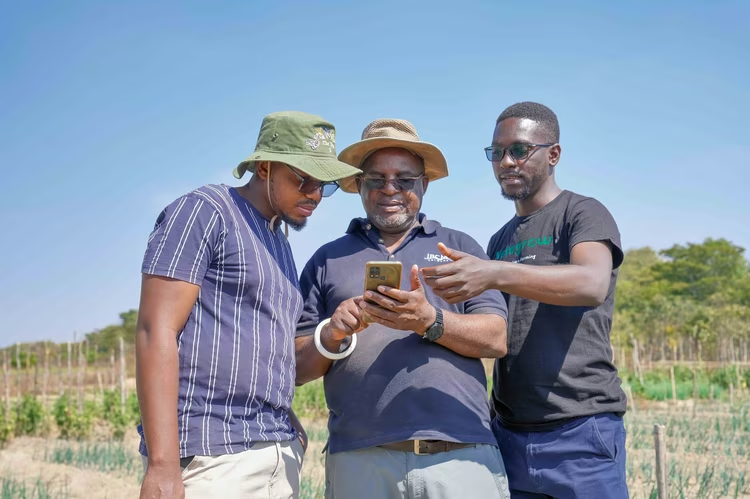
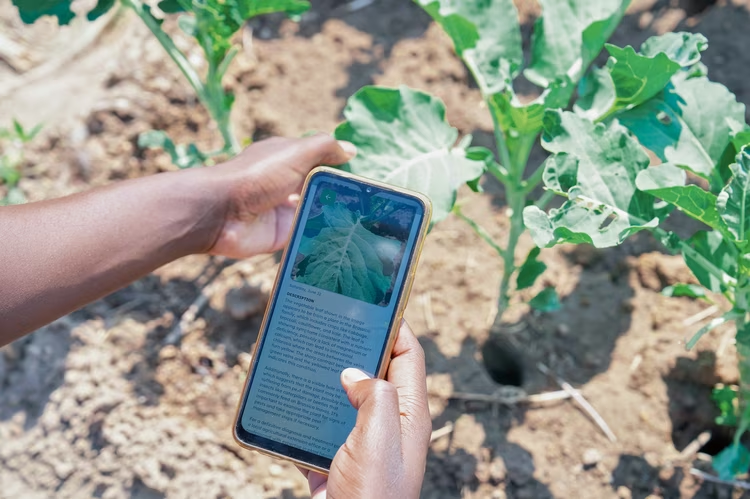
Netagrow brings together several tools into one platform to support farmers, from small-scale producers to commercial operators, across the various stages of production. Farmers can take pictures of leaves, roots or soil, which the system analyses to identify potential pests, diseases or nutrient gaps. It also uses weather and soil data to guide decisions on planting, irrigation and fertiliser use, helping farmers respond more accurately to changing conditions. Alongside this, the platform includes financial management tools. Farmers can access most of the platform’s features at no cost, while premium features such as soil testing and advanced diagnostics are paid services.
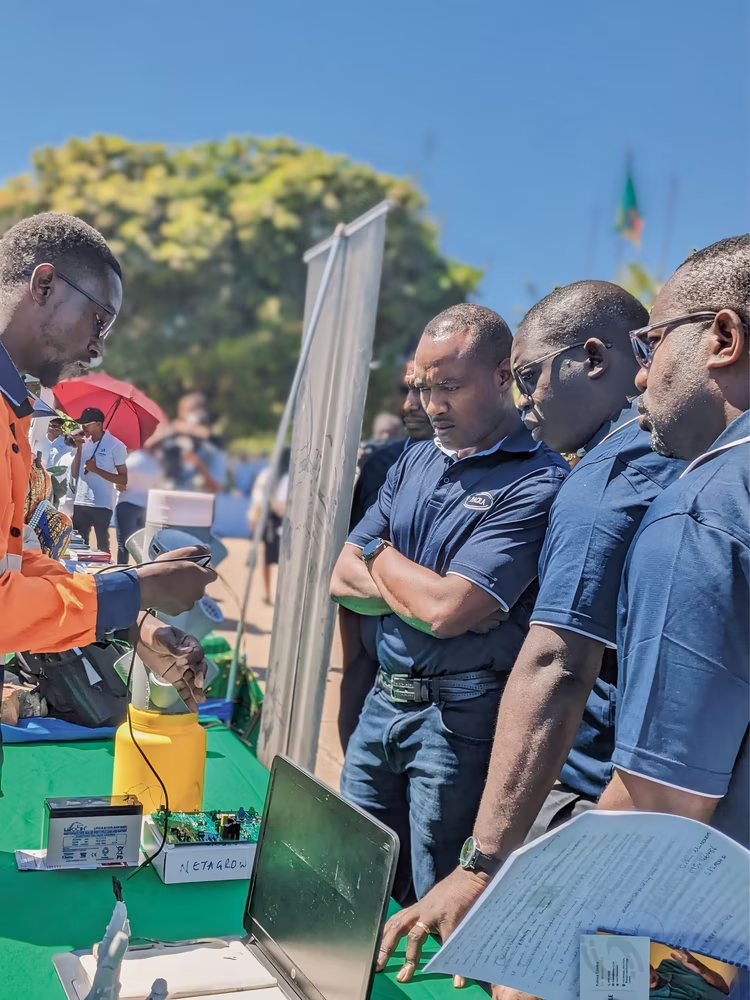
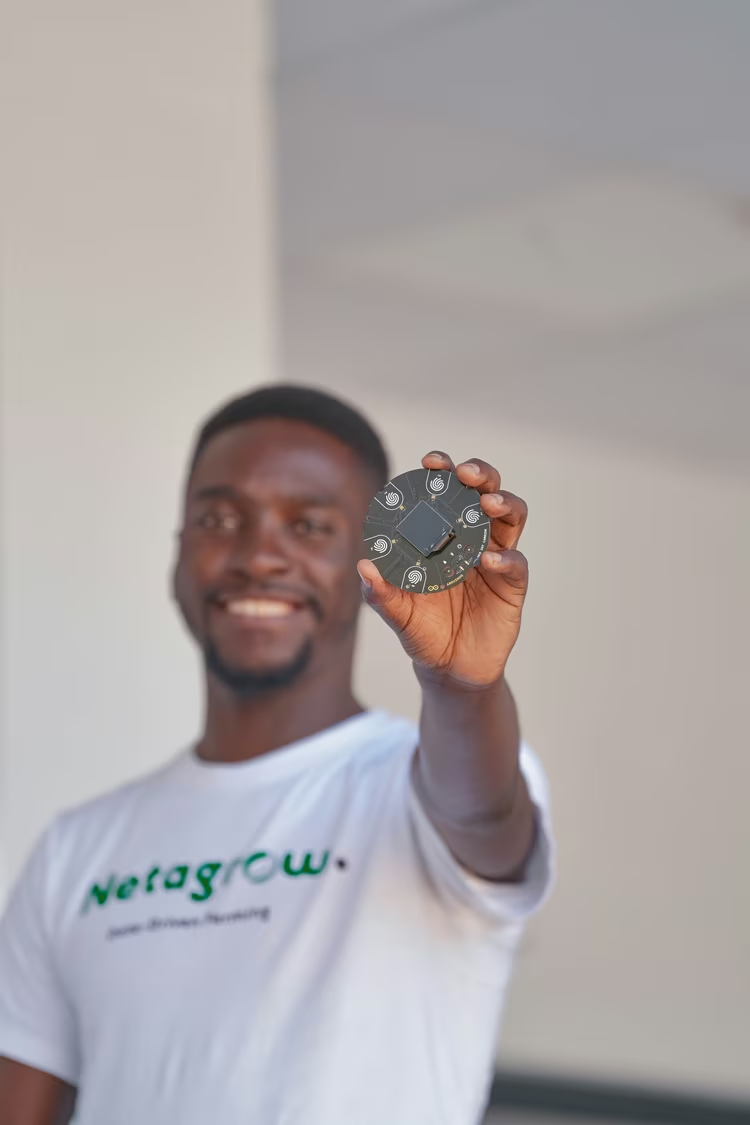
One of the early challenges was internet connectivity. Initial versions of the system required stable internet access, which proved inefficient for many farmers in areas with limited access. The team realised early on that requiring constant connectivity would exclude many of the farmers they wanted to reach. To address this, the platform was rebuilt with an offline-first approach. Data from field sensors can be transmitted via Bluetooth to a mobile phone, stored locally, and accessed without an internet connection. Once connectivity is available, the system synchronises with the cloud for deeper analysis and AI-driven recommendations.
For Nchimunya, this reflects a broader principle about technology and inclusion. Innovation, he says, only matters if it reaches the people it is meant to serve.
The platform also works alongside traditional farming knowledge rather than replacing it. Furthermore, it includes local language support for Bemba and Lozi, with more languages to be added in the near future.
Today, Netagrow is most commonly used in Southern Province and the Copperbelt, but its ambitions extend beyond Zambia. The company aims to reach at least 500,000 farmers across Southern and East Africa by 2030. And while Nchimunya sets his sights beyond Zambia, his thoughts always go back to Monze and his grandfather. Farmers today still face the same problem as his grandfather. However, the available solutions have expanded significantly, helping farmers make better decisions and improving their everyday lives.