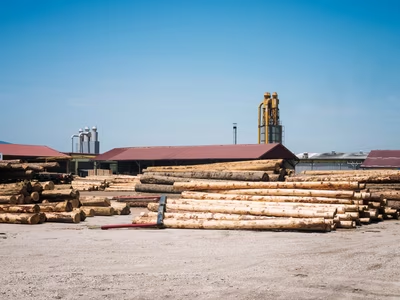
Zambia’s Changing Economy
What does it take to stay relevant in Zambia’s fast-changing economy? As the country looks beyond traditional career paths, new opportunities are emerging in sectors such as mining tech, renewable energy, digital finance, and logistics. Understanding where growth is happening and how to position yourself within it may be the difference between staying stagnant and building a resilient career.

Zambia’s Economic Backbone
Zambia is rich in minerals critical to the global green energy transition, including copper, cobalt, nickel, manganese, lithium, graphite, and rare earth elements. Copper mining alone accounts for over 70% of the country’s foreign exchange earnings and contributes around 15% to GDP, making it central to Zambia’s economy.
As global demand for these minerals continues to rise, driven by electric vehicles, renewable energy systems, and modern technologies, Zambia is positioning itself to maximise value across the entire mining chain. This has led to increased focus not just on extraction, but on efficiency, sustainability, and innovation.
Key Skills for Mining Tech Careers in Zambia
- Proficiency in digital mining tools such as data analytics, remote operations, AI, and geological modelling software.
- Understanding of sustainability, climate change, and environmental impact.
- Project management skills, including certifications and knowledge of tendering processes.
- Policy awareness to anticipate opportunities linked to reforms and incentives.
- Entrepreneurial thinking, particularly in logistics and value addition.
- Adaptability and commitment to continuous learning.
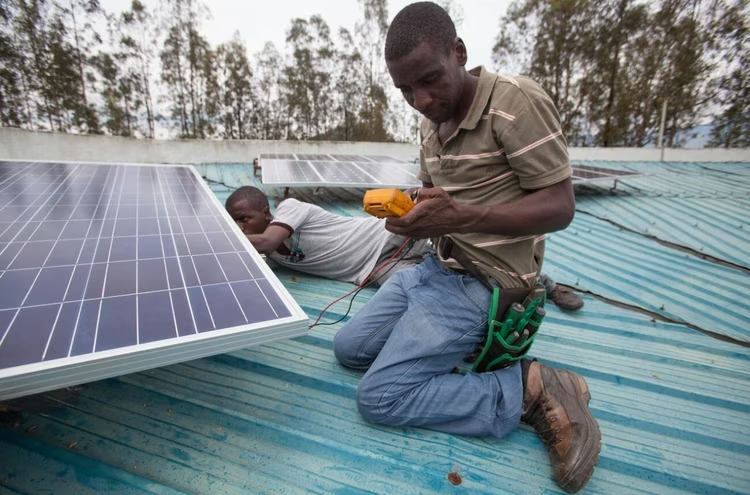
Powering Zambia’s Future
The demand for renewable energy has grown significantly, with increased interest in solar, wind, and biofuels as alternatives to traditional energy sources.
Zambia has strong solar potential, with an average of 2,000 to 3,000 sunshine hours per year. However, adoption remains limited due to high initial investment costs. Wind energy is also underutilised, although regions such as Western Province show promising wind speeds of around 6 metres per second. Additionally, Zambia’s more than 80 hot springs present untapped geothermal potential.
Skills Needed for Renewable Energy Jobs
- Geographic Information Systems (GIS) and remote sensing.
- Data analytics and energy modelling.
- Environmental engineering for sustainable system design.
- Project management and financial planning for long-term viability.
Zambia’s Fastest-Growing Sector
Zambia’s fintech sector has expanded rapidly, with a 128% increase in operating companies between 2018 and 2023. These companies largely operate across three areas:
- Digital tools for financial institutions.
- Mobile money and digital payments (e.g. Airtel Money, Zoona, Izwe Pay).
- Digital lending platforms (e.g. Lupiya, Zamcash).
Mobile money continues to anchor financial services in Zambia, evolving beyond simple transfers into savings, credit, insurance, and merchant payments.
In-Demand Fintech Skills in Zambia
- Cybersecurity and fraud prevention.
- User experience (UX) design for apps and platforms.
- Financial literacy advocacy and user education.

Logistics and Delivery Services
The growth of delivery platforms such as Yango Deli, Mercury, Platinum, and Afri Delivery reflects a shift in consumer behaviour towards convenience and speed. These platforms are not only transforming how goods move but also creating new employment opportunities.
For young professionals, logistics offers entry points into operations management, supply chain coordination, customer service, and platform innovation—skills that are increasingly valuable in a digitally driven economy.
The Skills That Cut Across Every Sector
Across all these industries, certain skills stand out: project management, data analytics, adaptability, and customer-focused thinking. Their value lies in their transferability.
As Zambia’s economy continues to evolve, the ability to move across sectors and apply your skills in different contexts will become one of your greatest advantages. Future-proofing your career is no longer about choosing one path—it is about building the capacity to navigate many.