Mob Justice in Zambia
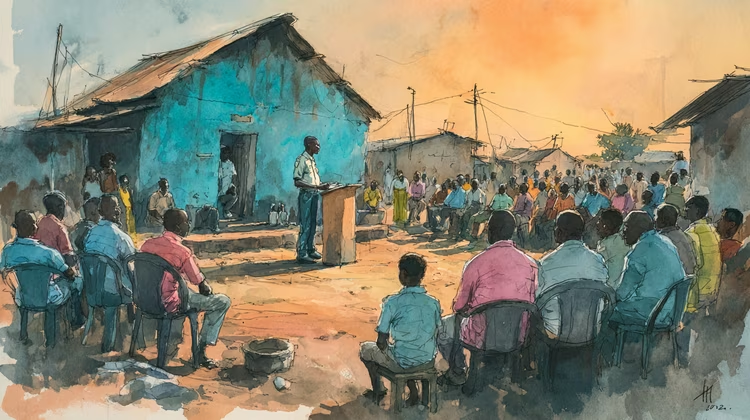
Sixty-eight people lost their lives within two months during the gassing incidents of March 2020. These deaths were of instant mob justice punishment carried out by angry crowds acting on suspicion, fear, or belief.
Mob justice is often described as a form of community enforcement, but in reality, it is rarely just. What begins as an attempt to protect communities can quickly spiral into violence, leaving irreversible consequences.

At its core, Zambia has always been a community-centred society. In the 1990s, suspected thieves were often caught, reprimanded, and handed over to the police. In some cases, this helped deter crime and maintain order.
However, this same system also revealed its darker side. Minor issues, such as women being perceived as underdressed, sometimes led to public harassment, beatings, and humiliation. What began as community protection slowly blurred into unchecked power.
When Rumours and Fear Take Control
Over time, mob justice became less about maintaining order and more about reacting to fear, rumours, and misinformation.
When people act without verifying facts, the results can be tragic. Accusations spread quickly, especially in tightly connected communities, and once a crowd forms, reason often disappears.
Traditional Beliefs and Mob Violence
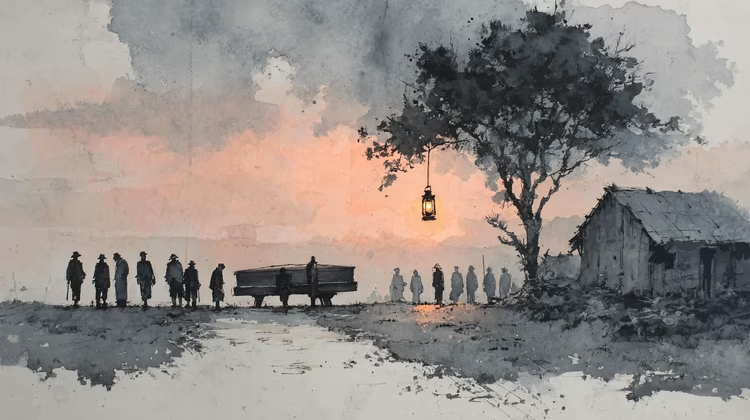
In some instances, mob justice is tied to traditional beliefs. One example is the practice of kikondo, where a coffin is believed to be guided by spiritual forces to identify the person responsible for a death.
Those accused through such practices are often attacked immediately, without evidence or due process. While these beliefs may hold cultural significance, the violence that follows raises serious concerns about justice and human rights.
When Mobs Turn Against the Law
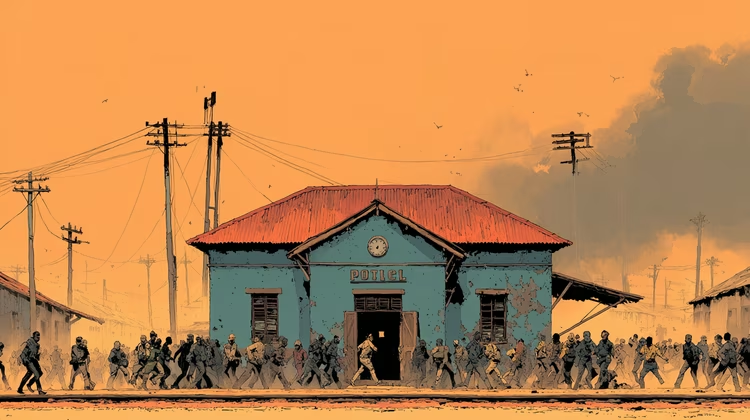
Mob justice not only targets suspects but also undermines law enforcement itself. This was evident in a 2025 incident at Mununga Police Post, where a suspect accused of murdering his wife was being held in custody. An angry mob stormed the station, assaulted officers, damaged property, and dragged the suspect out of his cell, beating him severely.
Incidents like this show how quickly public anger can override trust in the legal system.
Recent Cases That Highlight the Crisis
Recent events continue to reflect the dangers of mob justice. In Kalumbila District, a woman named Eneless Kamatubwe was brutally killed by a mob after being accused of stealing someone’s private parts, an allegation with no verified evidence. The incident, widely shared on social media, exposed the speed at which misinformation can lead to violence.
Similarly, there have been cases where individuals were attacked based on suspicions of witchcraft, such as a man accused after an Ottoman storage bench at the feet of his bed was mistaken for a coffin. These incidents highlight how easily misunderstanding can escalate into fatal action.
Why Mob Justice Is Dangerous
Mob justice places life-and-death decisions in the hands of crowds rather than the law. People are attacked based on suspicion, fear, or false accusations, with no opportunity to defend themselves.
Whether someone is guilty or not, justice should never be decided in the streets. When mobs act as judge, jury, and executioner, the line between justice and injustice disappears.
How Zambia Can Address Mob Justice
Reducing mob justice requires both community and institutional action:
- Ask before you act: Campaigns can encourage communities to verify information before reacting. Local leaders can play a role in mediating situations before they escalate.
- Community sensitisation: Law enforcement and community outreach programmes can educate the public on legal processes and the dangers of mob justice.
- Strengthen accountability: Individuals involved in mob violence must be arrested and prosecuted to deter future incidents.
- Legal reform: Clear laws defining mob justice as a serious criminal offence can strengthen enforcement.
- Combat misinformation: Address rumours quickly through trusted community channels and public education.
Justice Must Remain, Justice
Mob justice reflects both the strength and the vulnerability of community life in Zambia. While communities have historically played a role in maintaining order, the risks of acting without evidence are too great. The same collective power that once protected can also destroy when driven by fear and misinformation. Justice must remain in the hands of the law, not the crowd. Because when justice becomes violent, it stops being justice at all.