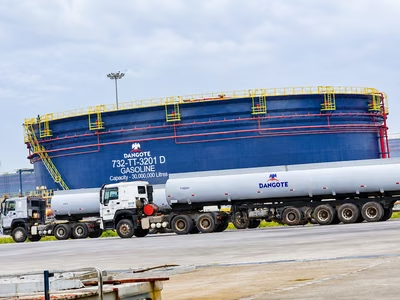
At about 4 am on 13 January 2026, a truck carrying copper cathodes valued at K8.64 million went missing while travelling through Zambia’s Central Province. A security officer escorting the consignment had stepped away to charge his phone. When he returned, the truck was gone.
The vehicle was later found abandoned near Mpula, about 35 kilometres from Kapiri Mposhi, with the copper offloaded. Police had made no immediate arrests or recovered the copper.
The truck had entered Zambia from the Democratic Republic of Congo two days earlier and was travelling towards the port of Dar es Salaam in Tanzania. Its Tanzanian driver was reportedly being sought as a person of interest. These details did not establish who organised the theft or whether the driver acted alone.
The central question was simple: where had more than K8 million worth of copper gone?
The loss, equivalent to approximately US$444,000, highlighted a vulnerability along a commercial corridor used to move valuable exports. The truck was travelling on a route linking Zambia’s Copperbelt to international markets, where tracking systems and security escorts are intended to help protect consignments.
A trade moving through a narrow set of routes
Copper is one of Zambia’s most important exports, and getting it to international markets depends on a network of roads and regional transport corridors. The scale of this movement means that the security of cargo is an important consideration for mining companies, transporters, insurers and authorities.
According to the World Bank’s 2025 report, Zambia and the Democratic Republic of Congo moved approximately 2.215 million tonnes of copper concentrates and products through export corridors in 2023. Of this volume, about 1.018 million tonnes moved through Durban and 859,000 tonnes through Dar es Salaam. Road transport accounted for approximately 81 per cent of the movement.
These figures cover different forms of copper freight, including concentrates, anodes, cathodes and blisters, rather than copper cathodes alone.
The World Bank identifies the T3 road between Ndola and Kapiri Mposhi as a key section of the export network, connecting freight to routes towards Dar es Salaam, Beira and Durban. Shipments travelling to Dar es Salaam pass through the Nakonde-Tunduma border crossing, while cargo moving towards Durban travels south through neighbouring countries. Beira and Walvis Bay also serve the regional transport network.
The report also points to challenges affecting transport along these corridors, including road conditions, checkpoints, weighbridges and border delays. These conditions do not, by themselves, establish a cause of theft. However, they make reliable communication, journey monitoring and coordination between transporters and security teams important throughout a shipment’s journey.
What happens when the copper disappears?
The January incident is not the only reported case involving valuable copper cargo in the region.
In March 2025, South African police and a private-security company recovered a hijacked truck carrying copper plates valued at approximately R6 million on a farm in Ventersdorp, North West province. According to the South African Government, the truck had allegedly been hijacked near Estcourt, KwaZulu-Natal, while travelling towards Durban harbour.
The recovery illustrates how a stolen consignment can be located far from the point where it was reportedly hijacked. It also shows why investigations into cargo theft may need to follow the movement of vehicles and goods beyond the location where an incident was first reported.
In June 2026, South African authorities seized suspected stolen copper worth R12.68 million at City Deep in Johannesburg, following intelligence from Zambian authorities. Two trucks carrying approximately 121 tonnes of copper slabs had allegedly entered South Africa through Beitbridge on 10 June using fraudulent customs documents. The identifying serial numbers on the copper had reportedly been filed off. No arrests had been announced when the seizure was reported.
The case illustrates how cross-border intelligence can help investigators locate suspected stolen cargo. It also raises a question that roadside security alone cannot answer: how can stolen metal be traced after it has been moved, its documentation falsified or its identifying marks removed?
Recovering a shipment, however, is not the same as establishing who stole it or proving how the goods entered the supply chain. Those questions depend on evidence gathered during an investigation.
Technology can only go so far
Cargo-security measures can include vehicle tracking, electronic seals, driver check-ins, secure parking, security escorts and the verification of transport and customs documentation. These measures are intended to help operators monitor a shipment and identify irregularities during transit.
However, a tracking system may flag an unexpected stop without establishing what has happened to the driver or cargo. An escort does not guarantee security, as the January incident demonstrates. Technology is most useful when alerts trigger timely action, and operators can coordinate with authorities able to respond.
The challenge is therefore not simply whether a truck has a tracking device, but whether the wider security system can respond effectively when something goes wrong. Communication between transporters, security providers and law-enforcement agencies remains important, particularly when cargo crosses national borders.
Infrastructure at border crossings also forms part of the wider picture. In March 2026, Zambia commissioned the first phase of the upgraded Nakonde One-Stop Border Post. The upgrade includes a modern cargo scanner and improved facilities intended to support cargo inspection and trade efficiency along the Dar es Salaam corridor.
The upgrade is an important infrastructure development, although the available sources do not establish how much it has reduced copper theft. Improved scanning and inspection facilities can support the examination of freight, but their effectiveness also depends on how information is used and how suspicious shipments are followed up.
The June seizure in Johannesburg offers an example of the role that information sharing can play in cross-border investigations. When intelligence is shared between authorities, it can help direct attention towards shipments that may otherwise move through several jurisdictions before concerns are identified.
What remains hidden
The reported cases illustrate the potential financial losses associated with copper theft, the use of hijacked vehicles and the cross-border nature of some investigations. However, they do not establish the full scale of the problem across Southern Africa.
There is no comprehensive picture in the sources examined here of the total value of copper stolen annually along the region’s trade corridors, the proportion of stolen cargo recovered or the overall cost to transporters, mining companies and insurers. Individual reports provide useful details about specific incidents, but they cannot, on their own, establish a regional trend or show whether theft is increasing or decreasing.
More consistent reporting could help clarify the scale of the challenge. Aggregated information on reported thefts, the value and type of cargo involved, recoveries, charges and convictions would give industry players and authorities a stronger basis for assessing risks. Customs information and cooperation between countries could also help investigators identify suspicious movements and establish how cargo travels between jurisdictions.
Without this wider picture, it is difficult to measure the effectiveness of individual security measures or determine where additional resources would have the greatest impact.
The published cases also demonstrate why care is needed when drawing conclusions from an incident. A missing truck, a recovered consignment and a seizure of suspected stolen copper represent different stages of an investigation. None automatically establishes the identity or guilt of those responsible.
Securing copper shipments across Southern Africa requires more than one intervention. Tracking systems, security escorts, cargo inspections and cross-border intelligence all have a role to play, but the available cases do not prove that any single measure can eliminate theft or reduce losses across the entire network.
For Zambia and its regional trading partners, the challenge is to protect valuable cargo while ensuring that investigations can follow shipments across borders and establish what happened when security fails. Until more comprehensive data is available, the true scale of the losses will remain difficult to determine.