As Zambia looks to formalise its artisanal and small-scale mining sector and unlock billions of dollars in gold value, Ghana offers a useful case study in what can happen when licensing, regulation, financing and gold trading are brought into a more formal system.
Zambia does not rank among Africa's top 10 gold producers in 2026, but gold mining and trading have existed in the country for centuries. For instance, excavations during the construction of the Kariba Dam in the 1960s revealed evidence of gold and other traded materials in the region dating back centuries.
Earlier this month, Bloomberg reported that Zambia's official total gold export figure of US$127.5 million for 2023 was significantly lower than the amount of gold recorded as imports by the United Arab Emirates (UAE) and Hong Kong from the country. According to the World Integrated Trade Solution (WITS), the UAE and Hong Kong imported gold worth US$1.788 billion and US$107.6 million from Zambia in 2023, respectively. The obvious question, then, is: what is the reason for this enormous discrepancy? The gap has raised concerns about under-reporting, informal trade and the scale of illegal gold mining and trading in Zambia.
What Is Artisanal and Small-Scale Mining in Zambia?
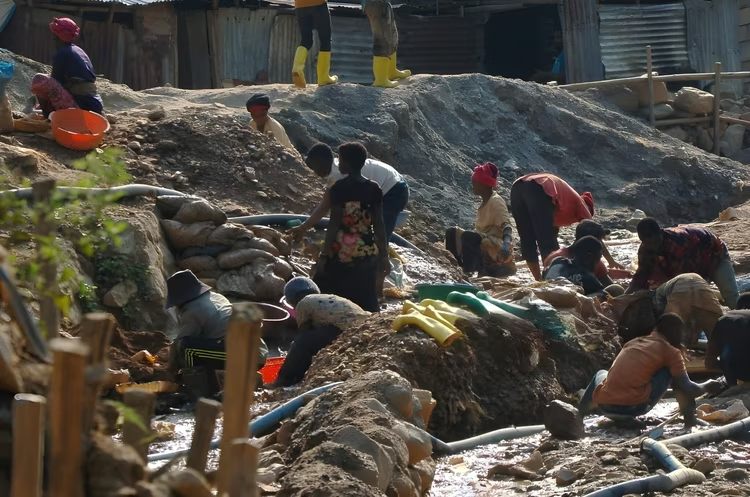
Artisanal and small-scale mining (ASM) refers to mining carried out by individuals, families, cooperatives or small groups using relatively limited capital, technology and mechanisation. ASM can operate legally when miners have the required licences and comply with regulations, but much of the sector in developing countries remains informal or unregulated.
Men and women, especially in rural areas where job opportunities are limited, turn to informal or illegal mining as a source of income, or are employed by groups of people who hold no licences for such operations. The Extractive Industries Transparency Initiative (EITI) contends that more than 40 million people around the world, most of them in developing countries, work in the ASM sector, and the number could be significantly higher, as many informal mining operations are unreported. In Zambia, about 30,000 people work in the ASM sector.
Why Is Small-Scale Mining Growing in Zambia?
Growing demand for minerals used in the energy transition, electronics and other technologies has increased interest in resource-rich countries such as Zambia. At the same time, elevated gold prices have made gold mining increasingly attractive to people seeking livelihoods in areas where formal employment opportunities are limited.
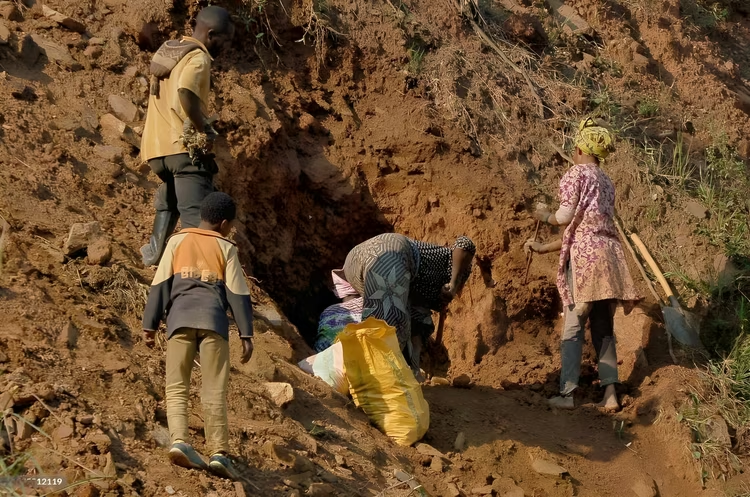
In addition, expensive and bureaucratic licensing systems, limited access to finance and gaps in regulatory enforcement can push citizens to cut corners and engage in informal or illegal mining and trading, depriving countries of much-needed tax revenues. The International Institute for Sustainable Development (IISD) estimates that ASM accounts for about 20 per cent of global gold and diamond production.
How Zambia Plans to Formalise Small-Scale Gold Mining
Despite its relatively small gold output in comparison with other African countries, Zambia is not deterred. The country is determined to increase production and capitalise on expected growth in demand and prices for the commodity in the coming years.
The price of gold could reach US$6,000 per troy ounce, according to a forecast by J.P. Morgan Global Research, although the outlook remains subject to market conditions. ZCCM-IH, the state mining company, has set its sights on generating more than US$1.8 billion in value from Zambia's small-scale gold sector through formalisation. The plan? Look to Ghana for lessons on how to reduce illegal ASM, formalise the sector and increase gold production.
What Zambia Can Learn From Ghana's Gold Mining Reforms
Like most gold-producing countries in Africa, Ghana has been plagued by smuggling, violence, environmental degradation, and numerous mining accidents and deaths associated with illegal gold mining. In the last ten years, the country has embarked on several reforms to tackle the problems in the ASM sector and transform the mining industry at large. Some of the reforms included:
- Enacting the amended Minerals and Mining Act in 2019, which strengthened penalties for illegal mining and unlicensed mineral trading, including substantial fines and lengthy prison terms, particularly for foreign nationals involved in prohibited mining activities.
- Introducing the Minerals and Mining (Local Content & Local Participation) Regulations, 2020 to spur job creation through the use of local goods and services in the mining industry value chain.
- Creating the National Alternative Employment and Livelihood Program (NAELP) to provide skills to former illegal miners to enable them to find employment in alternative sectors, or to become self-employed.
- Establishing the Ghana Landscape Restoration and Small-Scale Mining Project (GLRSSMP) to formalise ASM, encourage sustainable mining practices in the industry, and restore landscapes degraded by illegal mining activities.
- Creating the Ghana Gold Board (GoldBod) in 2025 to centralise the purchase and trading of gold, particularly from the artisanal and small-scale mining sector, with the aim of curbing smuggling, formalising ASM and increasing revenue from gold exports.
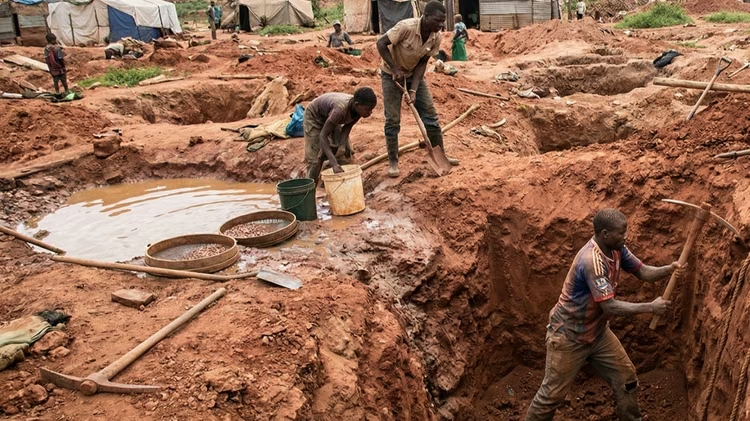
Has Ghana's Gold Formalisation Strategy Worked?
Ghana's reforms have coincided with a significant increase in gold production and formal gold trade. In the late 2010s, the country overtook South Africa to become Africa's largest gold producer, and in 2025, Ghana recorded about US$20 billion in gold export earnings, more than twice the previous year's figure, according to Ghana Gold Board data.
The results from Ghana's reforms indicate that Zambia does not need to reinvent the wheel in order to transform its ASM sector and subsequently improve gold production. However, Ghana continues to face challenges linked to illegal mining and environmental degradation, showing that formalisation is an ongoing process rather than a problem that can be solved by a single policy.
Can Zambia Close the Gold Export Gap?
Adopting aggressive policies to discourage and heavily penalise illegal mining operations in the ASM industry, streamlining licensing and other administrative procedures to eliminate bureaucracy, providing training and financing opportunities for individuals and small-scale miners to participate in the mining value chain, and toughening and enforcing regulations concerning illegal mining could help Zambia move towards its ambitious US$1.8 billion target for value generated from the small-scale gold sector.
If successfully implemented, such measures could also help improve traceability, reduce illegal gold trading and ensure that more revenue from Zambia's gold resources reaches the formal economy.