The broader argument is that lasting kwacha stability requires economic diversification, and that the current appreciation, while genuinely encouraging, is only as durable as the reforms and conditions sustaining it.
From K28 to K18
Not long ago, a dollar was buying more than K28. Today, it is trading around K19, and for the first time in years, the conversation has shifted from how to survive the exchange rate to what it actually means that the kwacha is one of the world's strongest-performing currencies. That is not a small thing for a country that watched its currency lose more than 40 per cent of its value in 2023 alone. So what changed?
Copper: The Foundation Everything Else Is Built On
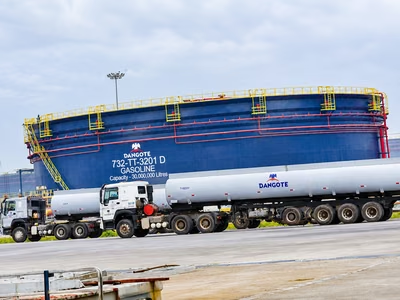
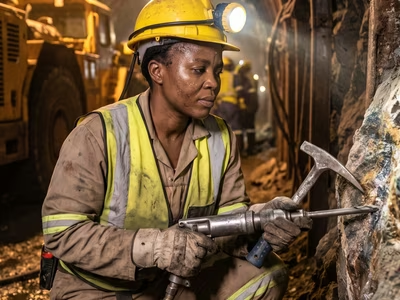
As Africa's second-largest copper producer, Zambia's economy has always moved with the copper price. When it rises, dollars flow in, and the kwacha tends to firm up. When it falls, the reverse happens with painful speed.
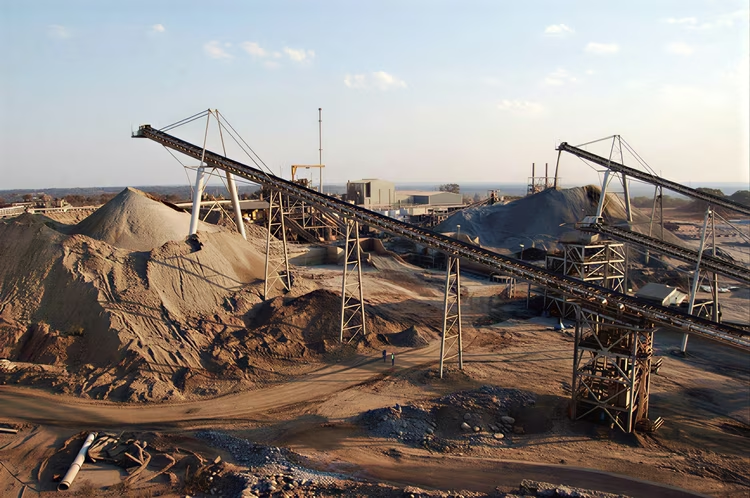
Elevated global copper prices, driven by electrification trends, energy-transition investment, and AI-related infrastructure demand, have significantly boosted Zambia's export receipts. The production ramp-up at mines has added volume to strong prices.
The Bank of Zambia's De-dollarisation Push
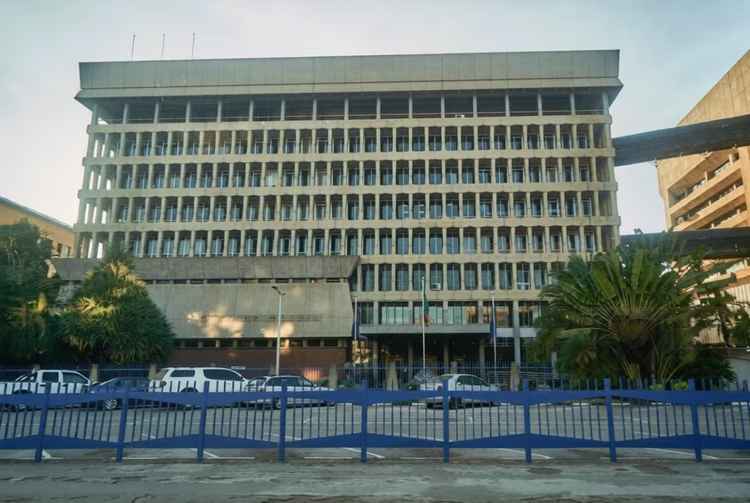
A significant part of the kwacha's strength in late 2025 and early 2026 stemmed from a deliberate regulatory shift by the Bank of Zambia. The Bank of Zambia's directive of 26 December 2025 tightened the use of foreign currency in domestic transactions, and the effect on market behaviour was immediate. Dollar holders rushed to sell, corporates converted foreign exchange reserves into kwacha to meet tax obligations.
This sits within a broader de-dollarisation strategy — a measure that requires exporters to repatriate foreign-currency earnings and conduct more domestic transactions in kwacha. By reducing the demand for dollars within the local economy, the framework directly strengthens the kwacha's position.
Since October 2025, Chinese mining firms have begun paying mining taxes in renminbi, making Zambia the first African country to collect mineral taxes in Chinese currency.
The effect is that Zambia is diversifying its foreign exchange inflows and reducing its dependence on any single currency channel, a practical step with real consequences for currency stability.
Debt Restructuring
Zambia spent years under the shadow of a debt crisis that made investors nervous. That chapter is not entirely closed, but the country is now in the final stages of a historic debt restructuring process, backed by IMF support. What that has done is restore some confidence in how Zambia manages its finances.
When investors believe a country is heading in the right direction, they buy into it. That includes buying Zambian government bonds, which means more foreign money coming in, greater demand for kwacha-denominated assets, and a stronger currency.
Zambia's improved credit outlook and lower inflation have also helped it be added to global bond indices, increasing foreign appetite for those securities. That kind of institutional interest was not on the table a few years ago.
The Bigger Picture
The kwacha's appreciation is copper earnings, regulatory discipline, debt resolution, investor confidence, and de-dollarisation — all pushing in the same direction at the same time. That kind of alignment is rare.
The dream of $1 = K10 is still some distance away. But the direction is clear, and for once, the fundamentals behind it are more solid than they have been in a long time.