If you were to choose how you would meet your “best before date”, would you prefer a missile or starvation that gets the deed done? With the alleged third world war threatening the global economy, prices of everything might skyrocket. I still want my comfort food because I used to be Judge Judy over comfort food devourers until my last episode of depression. Depression has a way of saying:
“You, you thought you were clever ai?”
Life Before Refrigeration in Zambia
The land of work and joy has a rich, deeply-rooted food culture of sun-dried vegetables and fish, pickles, chutneys, and traditional home-made alcohol. This culture has been passed down for several generations.
Gourds, clay, and baskets have long been instrumental in food preservation and what they grow and brew. In recent times, glass jars and bottles have progressively become the storage containers in Zambian homes and food businesses. This has added safer, more reusable containers to some of Zambia’s most ancient food traditions. Now, more than ever, we need to borrow food preservation methods from our predecessors.
Sun-Drying: Zambia’s Oldest Preservation Method
Before the widespread use of refrigeration, our approach to food preservation was always dependent on the warmth of our climate and a desire to make seasonal ingredients last by sun-drying.
Sun-drying turned seasonal vegetables, fruits, and fish into lightweight, shelf-stable ingredients that were only to be rehydrated and eaten long after the fruiting ended.
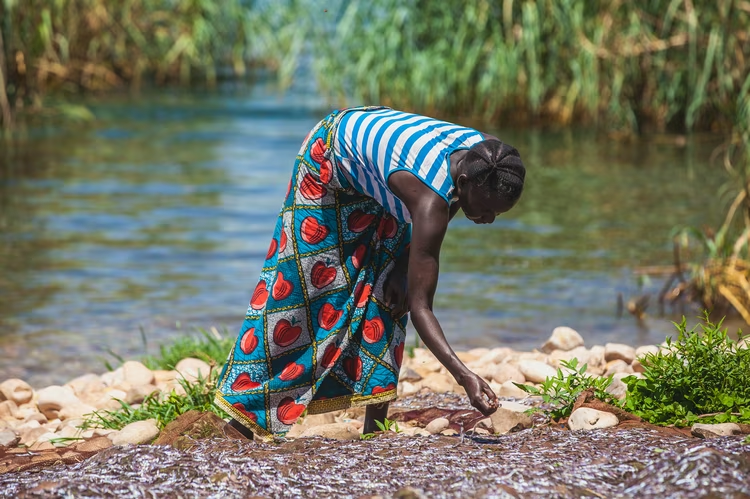
Implemented even today, sun-drying food items such as pumpkin leaves (it may not sound appealing, but it works), okra, mushrooms, and even small fish (popularly known as Kapenta) are spread out under the selfless Zambian sun for one to three days. When drying food, especially if the produce is for entrepreneurial purposes, it is vital that it is kept as clean as possible.
Cleanliness is essential; hands, tools, and surfaces must be kept as clean as possible, especially when the food is for sale. All equipment involved ought to be clean and dry. Throughout the process, flies must be kept very far from the food. This will work well in a scorching sun and humidity that is not too high. Using fuel becomes an option when humidity, sunlight, or both are unfavourable.
Once moisture-free, they are kept in woven baskets, sacks, or clay containers to get rehydrated and cooked later. These dried foods are a major part of many Zambian meals served alongside nshima, Zambia’s staple food. While these gourds, baskets, and clay pots are traditional, they are permeable, problematic to clean thoroughly, and can absorb odours or harbour bacteria.
Cibwa Salt: Zambia’s Unique Indigenous Innovation
Rock salt, sea salt, and table salt are things we’re familiar with. But have you ever heard of Cibwa salt, from the Mpika district in Northern Province of Zambia? What makes Cibwa salt exclusive is that it comes from grass.
The villagers living near Cibwa swamp made a unique mineral-extraction process using tall grass that grows close to the Lwitikila River. The grass is harvested from August through October. Immediately the rains start, the grass does not produce any salt.
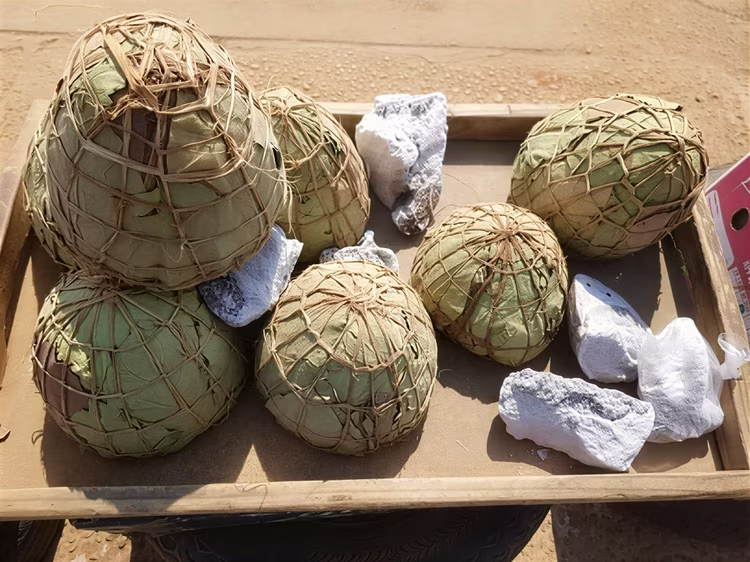
After drying and cutting, it is charred to remove the organic components, but salt does not burn. Water is poured through the ash-filled calabash, dissolving the salt and filtering it through small holes at the bottom. The saltwater is collected for the next step, which is evaporation.
Six hours of direct heat evaporation removes the water. To do this, the saltwater is first poured into a clay pot and boiled on an open fire. More is added as the water evaporates. The pot now turns into a casting mould. When it is released from the fire and then broken apart, a ball of salt remains.
I don’t know who invented the process, but I know it’s been around for generations. Nonetheless, it’s impressive that the same basic science behind modern salt processing is found in this isolated part of rural Zambia.
Salting: Preserving Meat and Fish
Meat and fish were often coated with salt to draw out moisture, making them unwelcoming to microbial growth. Salting also played a major role in drying fish. The fish would be “butterflied” and placed on sackcloth within the home’s premises, on the veranda, or any place convenient within the family home’s yard.
Even today, these methods are still practised. In Northern and Luapula provinces, dried fish such as kapenta remains a staple. In Eastern Province, vegetables like pumpkin leaves are commonly dried and stored for later use. These are not outdated techniques; they are still part of everyday life.
Smoking: More Than Just Preservation
Before refrigeration, inhibiting the growth of microorganisms and extending the shelf life of perishable products were done by smoking. But the benefits are meant to do more than preservation. Although this was the initial purpose, the technique offers several benefits that have made it into a true culinary prop. These include:
- Unique, deep flavour
- Enhanced texture
- Culinary versatility
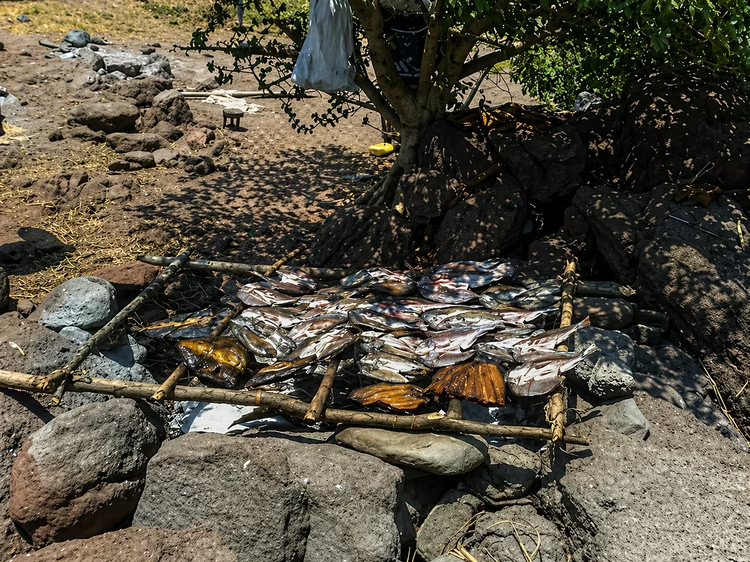
How Fire Was Made Before Stoves
Before matches and paraffin, fire was started using friction methods. One common approach involved a wooden stick rotated rapidly against a flat piece of wood to generate heat and spark embers. Flint striking was also used in some regions, but wood friction remained one of the most practical and widely used methods.
What Modern Zambia Can Learn from Traditional Methods
Preserving food, whether by drying, salting, or smoking, is practical knowledge. It means having something to eat even when conditions are uncertain.
We may rely on fridges today, but these methods remind us that survival does not begin with technology but with knowledge. And perhaps, knowing how to preserve food might matter more than we think.