When you think of African independence, the names roll off easily. Mandela in South Africa, Nkrumah in Ghana, Nyerere in Tanzania, Kaunda in Zambia. But behind each name sits a complicated story about what democracy meant to them and what it cost their countries.
Nelson Mandela
The ANC negotiated a transition to democracy. Mandela’s governance was characterised by racial reconciliation, especially with white Afrikaners, which he shrewdly promoted through symbolism. He took tea with Betsie Verwoerd, widow of apartheid’s chief architect. He wore Springbok jerseys at rugby matches. These weren’t small gestures at all.
South Africa’s “public square” became genuinely multiracial and African in style. State institutions began to mirror the country’s demographics, while the constitution established some of the strongest human rights and free speech protections on the continent.
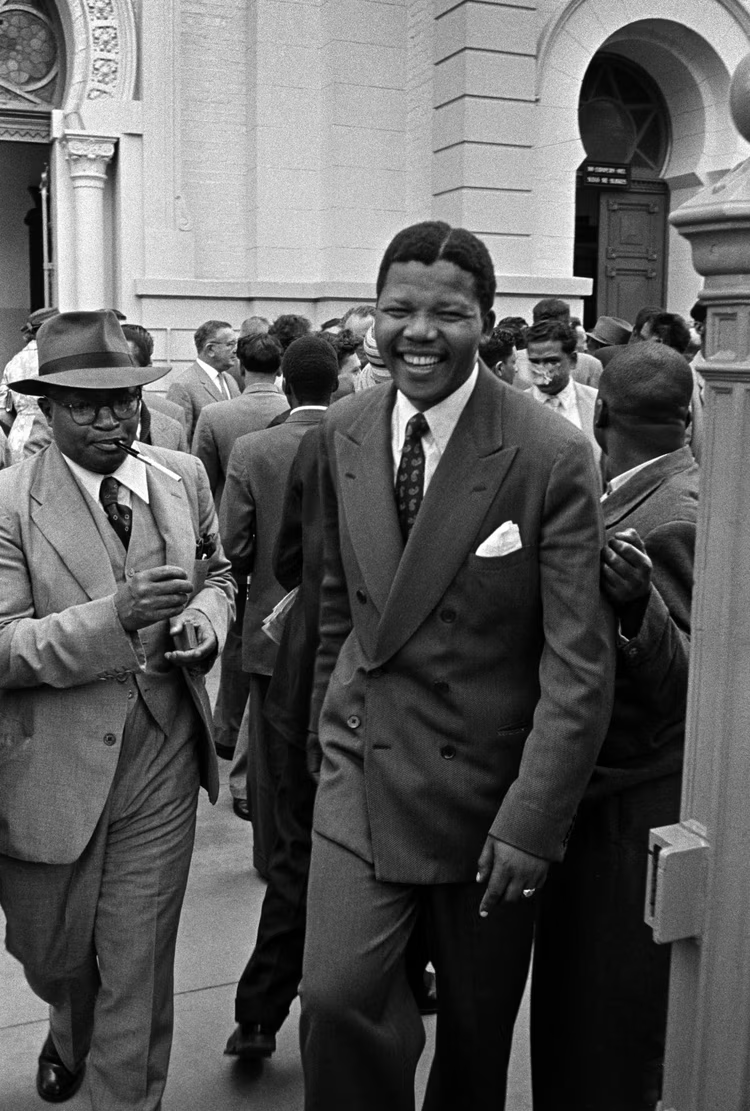
Mandela spent 27 years in prison. When apartheid began to collapse, the regime negotiated with its opponents. In February 1990, the ANC and other outlawed organisations were legalised, and Mandela was released. Four years later, he became president. He stepped down after one term.
Julius Nyerere
Julius Kambarage Nyerere served as President of Tanzania from the country’s founding in 1964 until his retirement in 1985. People called him Mwalimu (teacher). His concept of Ujamaa, or familyhood, rejected both exploitative capitalism and doctrinaire socialism.
Nyerere believed African socialism could create a democratic framework rooted in traditional communal values. His promotion of Pan-Africanism and Kiswahili helped unify a deeply diverse population and strengthen national identity.
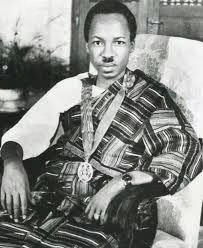
By the late 1970s, failed collectivisation policies had transformed Tanzania from a major agricultural exporter into a country increasingly dependent on imports. Still, Nyerere became the first African head of state to retire voluntarily.
Kenneth Kaunda
Kenneth David Kaunda served as Zambia’s first president from 1964 to 1991. After independence from Britain, Kaunda sought to build a united nation through his philosophy of Zambian Humanism, rooted in African values, Christian ethics, and social justice.
His rallying cry was: “One Zambia, One Nation.” Kaunda also played a role in supporting liberation struggles across Southern Africa. Lusaka became a haven for freedom fighters, drawing retaliation from apartheid South Africa.
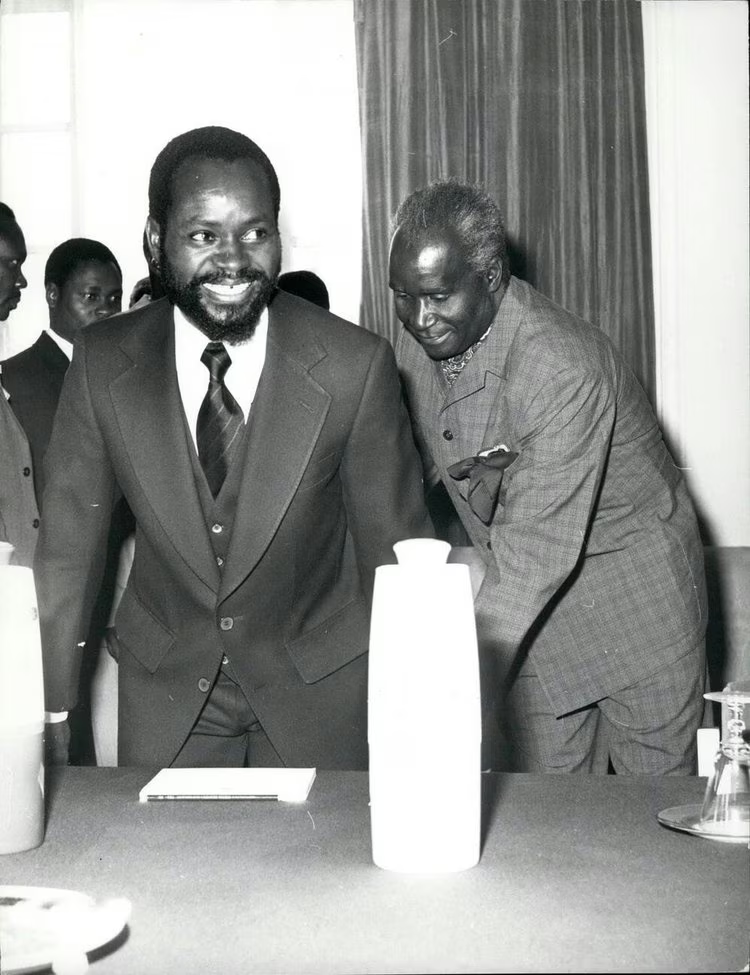
But opposition politics became increasingly restricted after 1968. Zambia formally became a one-party state in 1972 under the ideology of Zambia Humanism.
When the economy collapsed and public pressure mounted, Kaunda legalised opposition parties and agreed to free elections. He lost. Rather than denying the outcome or clinging to power, he stepped down peacefully.
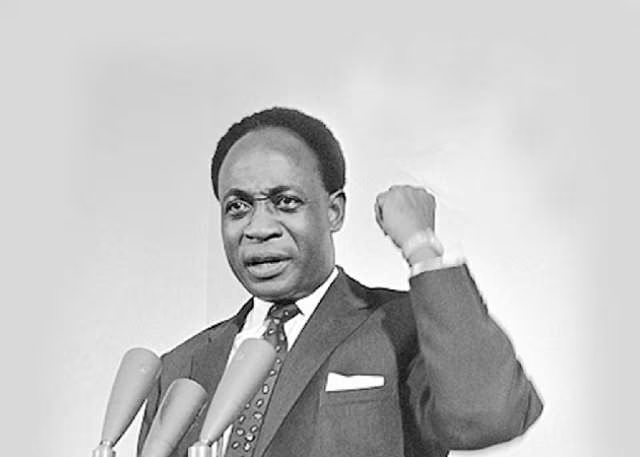
Kwame Nkrumah
Kwame Nkrumah transformed Ghana into the launching pad for Pan-Africanism. In 1957, Ghana became the first sub-Saharan African colony to gain independence from European rule in the post-war era.
Nkrumah declared that Ghana’s independence was meaningless unless linked to Africa’s total liberation. He invested heavily in supporting liberation movements across the continent, earning both admiration and criticism.
He hosted Pan-African congresses and helped found the Organisation of African Unity in 1963. His vision imagined African unity through shared economic systems, a common currency, and continental political cooperation.
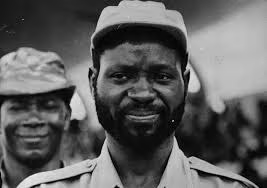
Samora Machel
Samora Moisés Machel, Mozambique’s first president, emerged as one of FRELIMO’s leading figures during the liberation struggle against Portuguese colonial rule.
Mozambique gained independence on 25 June 1975, following a military coup in Portugal that ended colonial rule. Machel became president and introduced sweeping socialist reforms. His government nationalised land, healthcare, and education, abolished private schools and clinics, and redistributed urban housing.
But Portugal handed power solely to FRELIMO, ignoring other political groups. Those opposed to the Marxist-Leninist model expected democratic elections after independence. That opportunity never came.
Machel died in an unexplained plane crash in South Africa on 19 October 1986 after eleven years in power.
Sam Nujoma
Sam Nujoma led the South West Africa People’s Organisation (SWAPO) and became the first president of independent Namibia in 1990.
Instead of pursuing retribution after independence, SWAPO’s slogan, “One Namibian, One Nation”, became the basis for national reconciliation and democratic stability.
SWAPO’s armed struggle against South African rule lasted 22 years. In 1989, the movement decisively won elections, and Nujoma became president.
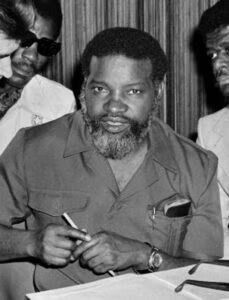
Unlike many liberation leaders, Nujoma showed little interest in becoming president-for-life. After 15 years in office, he stepped down in 2005 and allowed a peaceful transfer of power to his successor, Hifikepunye Pohamba.
Patrice Lumumba
Patrice Lumumba emerged as one of the most important voices in the struggle for Congolese independence. In 1958, he co-founded the Mouvement National Congolais (MNC), which became a driving force in the independence movement.
In 1960, Congo gained independence from Belgium. Following the country’s first post-independence elections, Lumumba’s MNC emerged victorious. He envisioned a unified Congo free from colonial influence and tribal division.
But his time in power lasted only ten weeks. Within days of independence, the army mutinied, and Katanga province attempted to secede.
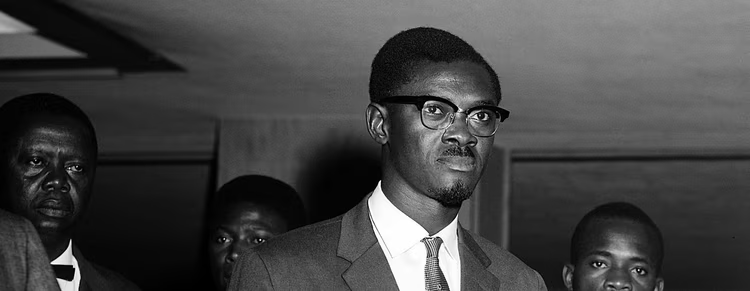
A man of deep conviction, Lumumba refused to compromise his beliefs even as resistance mounted around him. He was murdered on 17 January 1961.
What They Left Behind
These seven men shared a stage in history, but their visions diverged sharply.
The question is not whether they were perfect democrats. None of them was. The question is whether they left their countries better positioned for self-governance than they found them. Whether they built institutions that outlasted them. Whether they knew when to leave.
Their legacies are still being written. South Africa struggles with inequality. Tanzania rebuilt its economy only after abandoning Ujamaa. Zambia endured decades of economic hardship before finding stability. Namibia remains one of Africa’s most stable democracies. Congo never recovered from Lumumba’s assassination. Ghana’s democracy strengthened after Nkrumah’s exit. Mozambique descended into a civil war that lasted until 1992.
These were the founding fathers, yes. But they were also human beings navigating impossible circumstances with imperfect tools and competing pressures. Some rose to the occasion. Some didn’t. All of them shaped the continent we see today.