If you’re an adventure lover, could you confidently recommend a lesser-known national park in Zambia and mean it? Not the usual names, but the ones people often overlook. If not, this is a good place to start, and perhaps where your next story begins.
Blue Lagoon National Park
This park’s vast plains are stunning in the dry season and transform from dry grassland to a watery utopia in the wet season, attracting migratory birds from afar as the flats fill with water, and the shift alone is reason enough to visit.
My sisters and I were eager to visit, especially as the park had only recently reopened to the public. Thankfully, it is now under the management of the Department of National Parks and Wildlife (DNPW).
While there, we learnt of its establishment dating back almost 40 years. The park was once privately owned before being taken over by the National Parks Department.
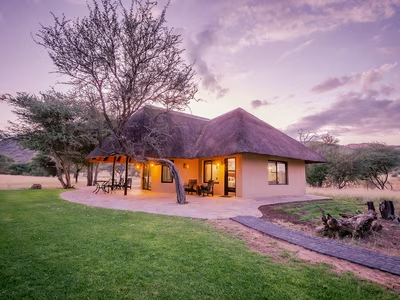
A farmhouse, which is still standing, now serves as the reception. A little farther away are four chalets: two old and the others new. We paid for one old one and one new one to accommodate all three of us, and even that small choice shaped our stay in ways we didn’t expect.
Fringed with acacia woodland, the Blue Lagoon lies about 120 kilometres west of Lusaka on the Kafue Flats. The vast floodplain is a habitat for a multitude of Kafue lechwes, zebras, some buffaloes and numerous waterbirds.
This park made our bird-watching fantasies a reality. The area is also known to host large reptiles such as pythons, which thrive in wetland ecosystems like this. If you’re looking for a park that has a stark contrast to the others in Zambia, this one meets that criterion.
Mutinondo Wilderness
Mutinondo is not a National Park, but a 10,000-hectare privately owned conservation area and eco-lodge that you have to visit at least once in your lifetime.
It is located on the Muchinga Escarpment in Northern Zambia, focusing on eco-tourism, birdwatching, hiking, and conservation rather than big-game safari. It is distinct from the surrounding public national parks.
Mutinondo is rich in biodiversity and offers a sense of remoteness that is increasingly rare, making it feel like a rare gem you discover.
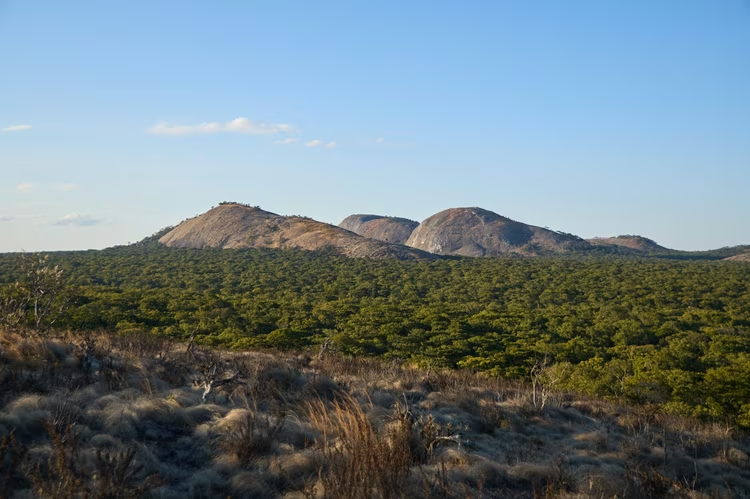
We were feeling very energetic, so we did the 10 Peak Challenge, with a trail of about 28 km, spanning the tallest inselbergs, encircling a significant elevation, alongside a 50 km cycle track which runs through wide paths, skirting hills and crossing watercourses.
Hiking, swimming, cycling, and enjoying the views from horizon to horizon without a trace of human activity are some things I cannot talk enough about and somehow, even that doesn’t quite capture it.
The four en-suite chalets, built and furnished by local craftsmen out of local materials, all have stunning views and characters of their own. My sisters and I had a pleasant stay.
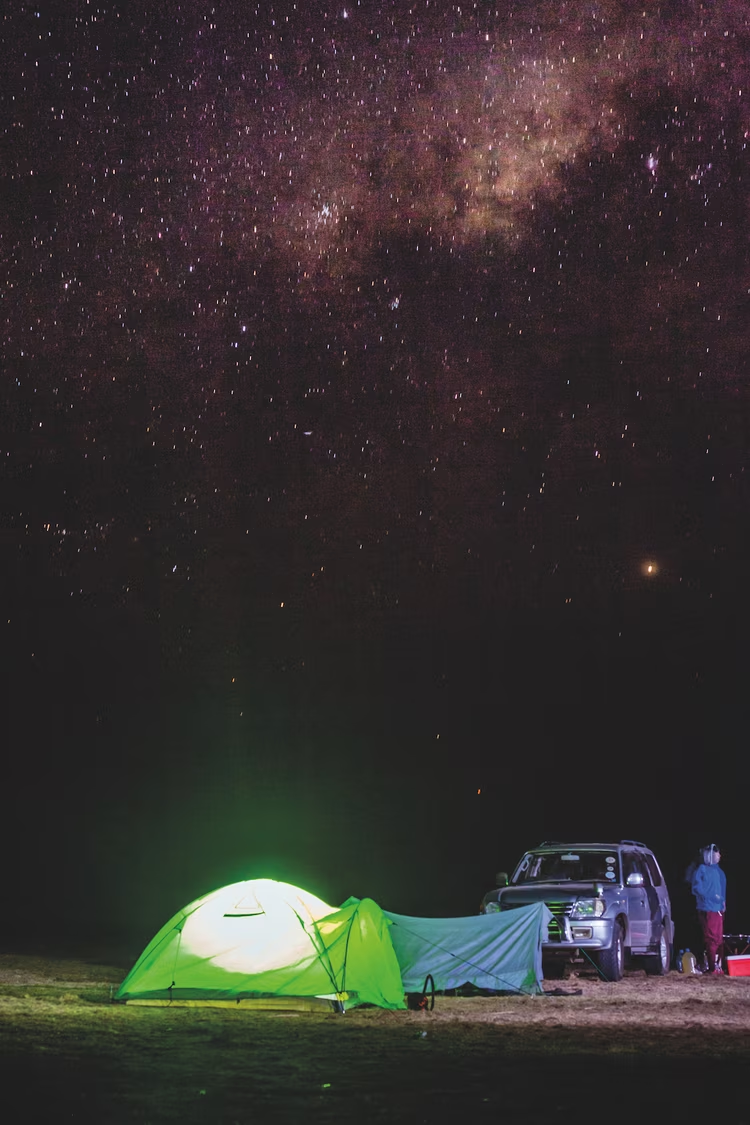
The nine rustic campsites are widely spaced and situated within Miombo woodland. An isolated self-catering camp eleven kilometres from the lodge was also an option for us and one that still lingers in my mind as the kind of escape you don’t easily forget.
Lusaka National Park
Lusaka National Park is proof that you don’t have to travel far to feel completely removed from the city you came from.
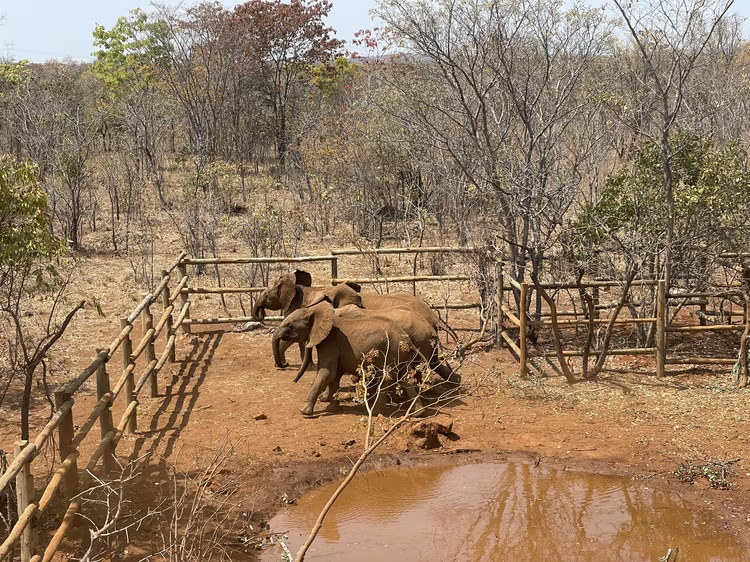
It is home to a wide range of wildlife, including white rhino, giraffe, eland, zebra, sable, kudu, and more. Located about 30 kilometres from Lusaka, this park was opened to the public in 2015, making it Zambia’s most recent and most accessible park. My sisters and I, as usual, went to verify the facts, and quickly realised that accessibility does not take away from the experience but enhances it in unexpected ways.
Nyika National Park
Nyika’s appeal lies in its quiet rarity, a place that feels almost untouched, simply because so few people make the journey.
While most of Nyika National Park lies in Malawi, a smaller portion extends into northeastern Zambia, offering a unique cross-border landscape. For someone who enjoys exploring, it offers a rare side of Zambia with a special collection of landscapes, views, and microclimates that blend across the plateau.
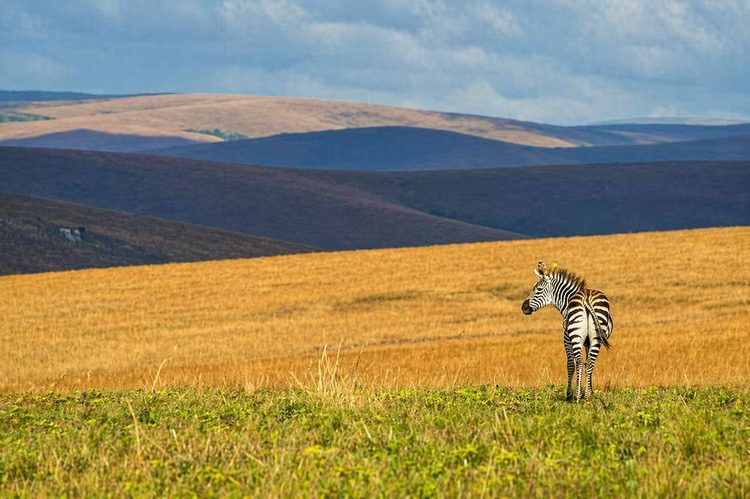
Due to the elevation of the Nyika Plateau, it is pleasantly warm during the day in comparison to the intense heat of the valley below. The higher parts have open, undulating grasslands with notched valleys, generating panoramic views, rolling hills, rocky outcrops, and small tropical forests. The park is also associated with river systems such as the North Rukuru, which flows through the broader Nyika landscape.
This park’s varied landscape gives ideas to trek, hiking, mountain bike and 4x4 escapades. It is also popular for its montane vegetation that attracts large numbers of antelope, such as duiker, eland, and roan. Lastly, it is a habitat to over 400 species of birds, including the wattled crane, red-winged francolin, and the rare Denham’s bustard.
Lavushi Manda National Park
Lavushi Manda is one of those places where the silence feels intentional, as though the land is waiting to be rediscovered.
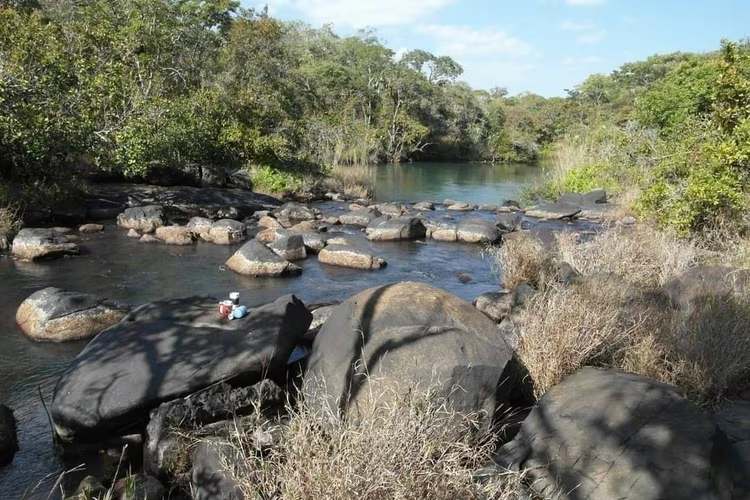
This park is a stretch of pristine Miombo woodlands, large dambo wet grasslands, and gallery forests along the headwaters of the Lukulu and Lulimala Rivers.
Although wildlife numbers have declined due to past poaching, there is still a presence of large mammals, and the park is considered suitable for future wildlife restoration efforts. Historical records indicate that the wild Black Rhinoceros was last spotted in the late 1980s, reinforcing its potential for conservation.
Tourist infrastructure and roads are notably limited too. However, a project that began in 2011 in association with the Kasanka Trust focuses on anti-poaching efforts and the improvement of roads, perhaps marks the beginning of a slow, meaningful return.
Whether you are looking to slow down, reconnect with nature, or seek out adventure, these parks offer something different from the usual travel routes. Zambia’s lesser-known national parks may not always make the headlines, but they hold experiences that feel more personal, more raw, and often more memorable and sometimes, the places we forget are exactly the ones we need to find.