A lion’s roar echoes through the forest, reverberating in my chest. It’s close-too close. I’m squatting behind a termite mound answering nature’s call when I hear it. I look around, searching, and then my eyes fall on Blackie’s head, his shaggy mane cresting the top of a tuft of adrenaline grass. He is less than six metres away from me.
I whisper a curse under my breath. We scanned the area fully before I got out of the vehicle, but he’s lounging in a dry riverbed and is very easy to miss. He bellows again, loud and deep, waiting for his brother to answer. I realise he hasn’t seen me yet; I’m equidistant between him and the vehicle, but he’s looking for Blondie, who still hasn’t replied.
I get up slowly, very slowly, and begin backing away from him towards the vehicle. He’s calling over and over, stopping occasionally to pant, and I can see drool dripping off his canines. I hear another call to my left and freeze: Blondie has answered, and he’s coming closer. I keep backing up, jumping into the vehicle just as Blackie stands and looks right at me. Blondie emerges from the thicket, and they greet each other with head bumps.
I ended up in Lower Zambezi serendipitously. My first visit to the Zambezi Valley was actually in 2020 at the height of the pandemic. I found myself completely alone with a skeleton crew at a camp in Mana Pools National Park, Zimbabwe. The backdrop of the towering escarpment across the river on the Zambian side, paired with light pooling in the Blue Forest, made for a truly exceptional photographic setting. At the time, I thought it was the most breathtakingly wild place I had ever seen. One year later, I was invited to visit the Zambian side of the Valley-Lower Zambezi National Park. I had never heard of it; Zambia would be new territory.
After a 30-minute flight over the Zambezi River, we landed at Jeki Airstrip. It was red dirt with a small hut, inside which sat a scout from the Department of National Parks and Wildlife (DNPW).
It was October, and hot as hell, 38 degrees Celsius at 8:30 am. I saw a herd of elephants walking single file across the plains, red dust kicking up from their feet. As we made our way through the forest, I noticed right away that it was much denser than Mana Pools, shafts of light streaming through the gaps in the canopy, elephants meandering slowly to pick up fallen pods from the winterthorn trees. Waterbuck and kudu were scattered throughout, peering back at me. It was then and there that I fell deeply in love with this place.
I spent one week in Lower Zambezi on that trip. Just six months later, I left my home in Paris, moved to Zambia, and took a job in the park.
The majority of my photographic work in Lower Zambezi tells the story of the winterthorn forests of Kulefu, a region on the far eastern end of the park named for the Kulefu Channel. Kulefu, “The Far Away Place,” is home to a verdant landscape of trees, flowing channels, and the Chakwenga plains, where game density is exceptionally high.
It is a complex ecosystem with shifting dynamics, and it is here that Lower Zambezi’s most dramatic stories unfolded before my lens. It is the area I have always been most drawn to, where light cascades through twisting branches, tufts of suicide grass create clusters for cover, and elephant trunks reach to the treetops in search of pods.
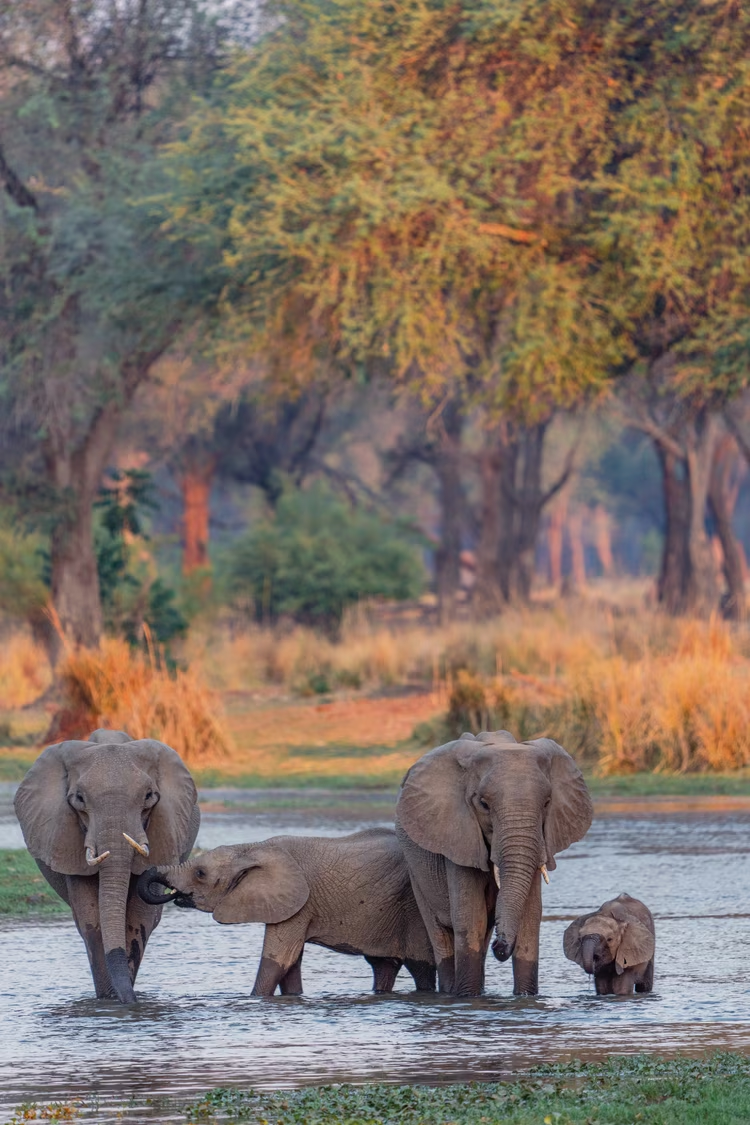
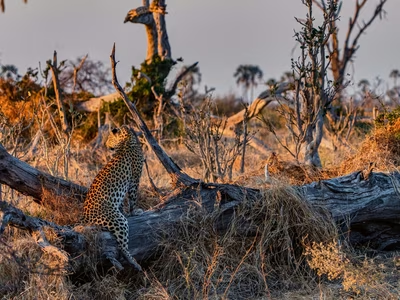
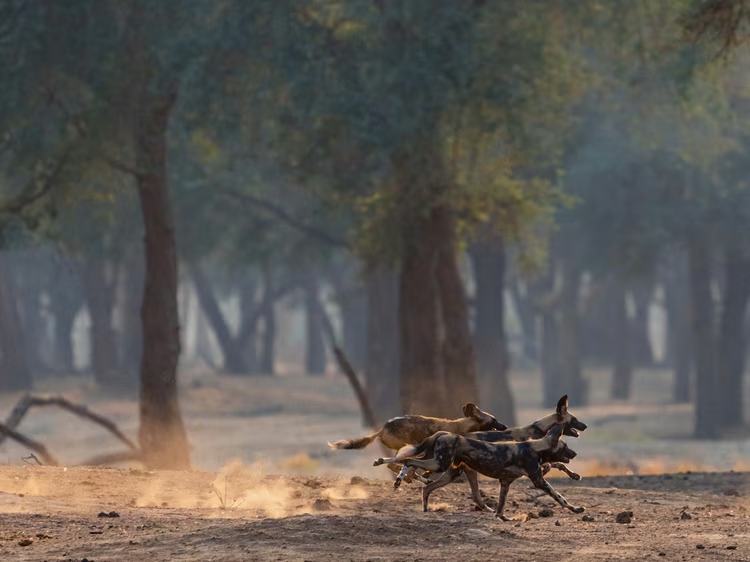
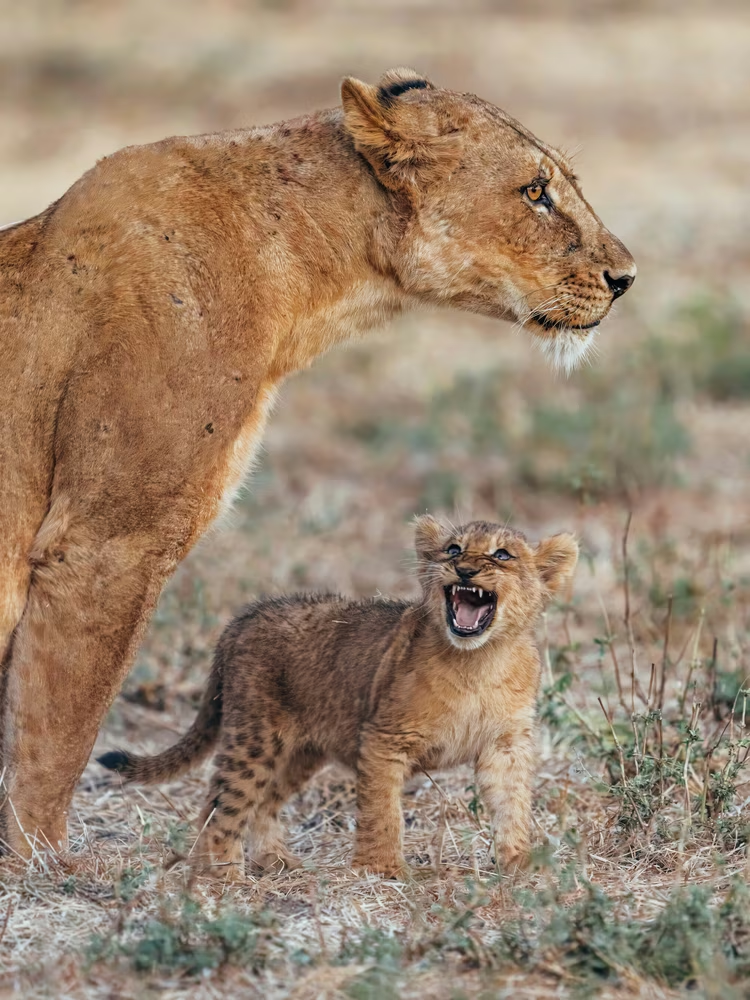
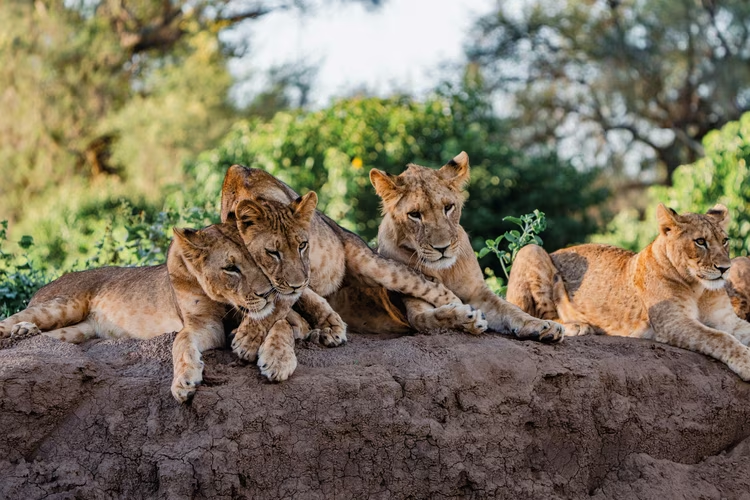
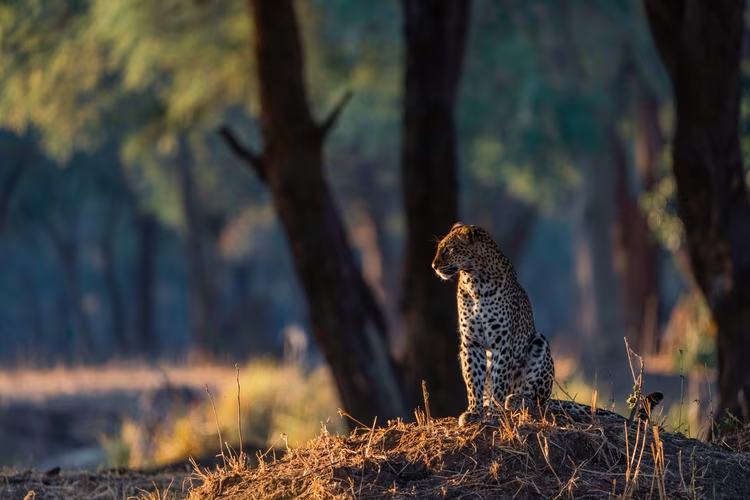
It is here in Kulefu that the evolving stories of a cast of leopards, a pride of lions and a pack of painted dogs continue to this day. As I write this in 2025, the Kulefu Pride is thriving for the first time in almost six years. Mai and her daughters have separated and spread out. Big Tom and Handsome seem to tolerate yet avoid each other in a small territory.
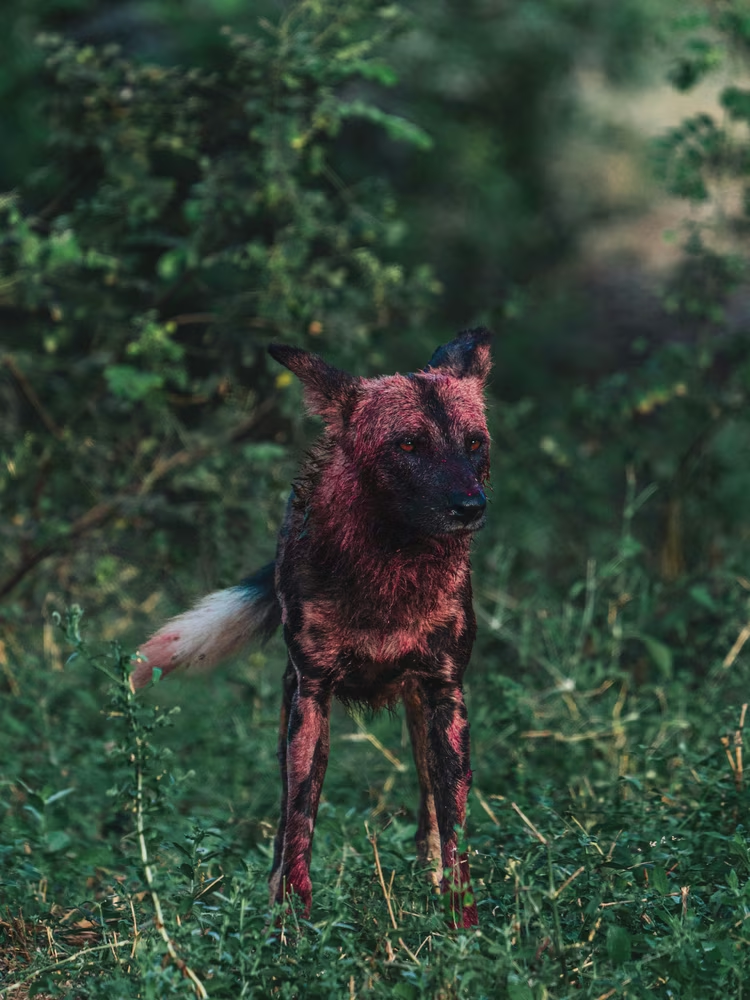
The Jeki pack grew to 46, split into two and hunted buffalo all the while. Cubs have been born, debuted to the world, played, tumbled and died…sometimes without explanation. 2024’s drought brought unexpected changes to the area: the once-flowing channels, ever-present through the height of the dry season, lost their last drops of water, transforming into barren mud pits. Long Pool’s water-hyacinth-covered surface, which had welcomed hippos, birds and elephants year after year, dried up in its entirety. Just now, the water has begun to flow again, but it will take several years of plentiful rain for it to fill to its former glory.
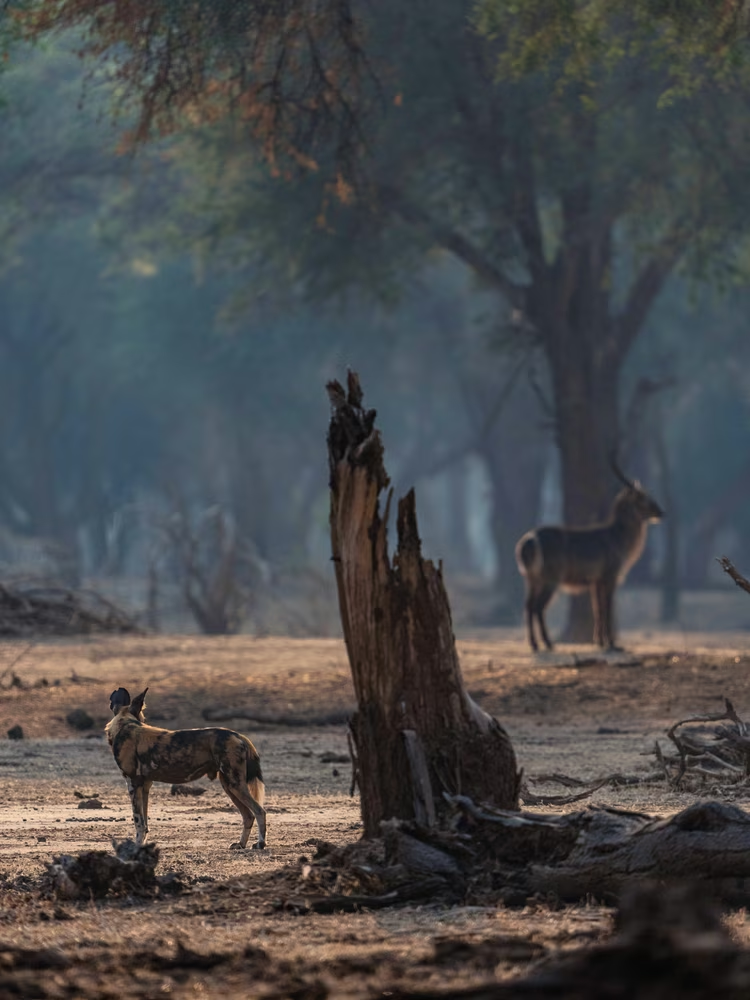
Throughout these changes, I have had the privilege of photographing many individual animals over the past four-plus years, watching them change and grow. It’s very difficult for me to describe in words what makes Lower Zambezi so special. I hope that my photographs will somewhat do it justice; however, nothing compares to watching the sun pierce through the forest, washing everything in a golden-orange glow.
We are warned not to anthropomorphise wild animals, not to project our feelings onto them, and rightly so. While they do not share the human characteristics we often search for, they do very much think, feel and have personalities. They respond to pressure, absence, abundance and loss in ways that become legible only over time. Their stories are far more captivating than any adventure penned by human hands.
Adapted from Finding the Light: Exploring the Enchanted Forests of Lower Zambezi National Park, Zambia, by Lusaka-based photographer Rachel Rebibo.