The drive down from Cape Town was supposed to calm my nerves. It didn’t. Every kilometre south along the Western Cape coastline, past cliffs and wild beaches, my stomach tightened a little more. By the time I reached Kleinbaai, a tiny coastal village that exists mainly because of what lives in the water around it, I was second-guessing everything.
I parked near the harbour and sat there for a moment, watching gulls wheel overhead and a boat rock gently against its moorings. This was really happening.
The Great White House, yes, that’s actually what they call it, is part café, part education centre, and clearly designed to make terrified tourists like me feel slightly less terrified. I signed in, accepted a cup of coffee and a croissant I could not quite finish, and tried to look like someone who does this sort of thing regularly.
Inside the briefing room, a marine biologist walked us through what was about to happen. She was annoyingly calm, the way people who spend their lives around apex predators tend to be. She explained the safety protocols, discussed shark behaviour, and pointed out that Marine Dynamics isn’t just a thrill-ride operation but has been collecting data for over 20 years and has contributed to more than 30 scientific publications. Their whole approach, she said, is to discover and protect, not to exploit.
I scribbled notes I’d never look at again. She mentioned unpredictability. Wild animals. Weather. I stopped writing.
“Any questions?”
I had about forty, but none I wanted to ask out loud.
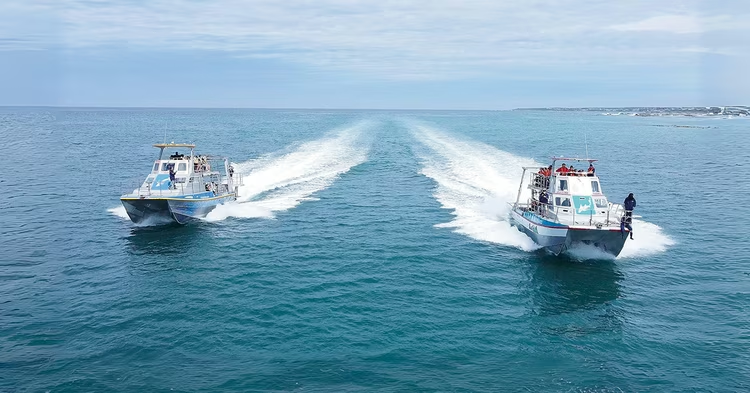
The boat cut through the harbour and into open water, and immediately I understood why they’d fed us breakfast. The Atlantic swell is no joke. The coastline shrank behind us as we headed towards Dyer Island, somewhere they call “Shark Alley,” which is exactly the kind of nickname that should make you reconsider your life choices.
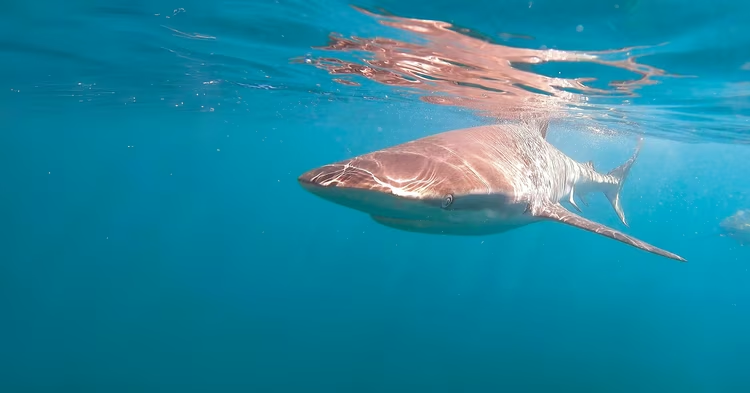
Our skipper pointed out a distant seal colony. I spotted a cluster of white seabirds perched on a rock stack. He explained how two ocean currents, the cold Benguela and the warmer Agulhas, collide here, creating nutrient-rich water that attracts everything from sardines to sharks. Bronze whalers, specifically. The kind we’d be meeting.
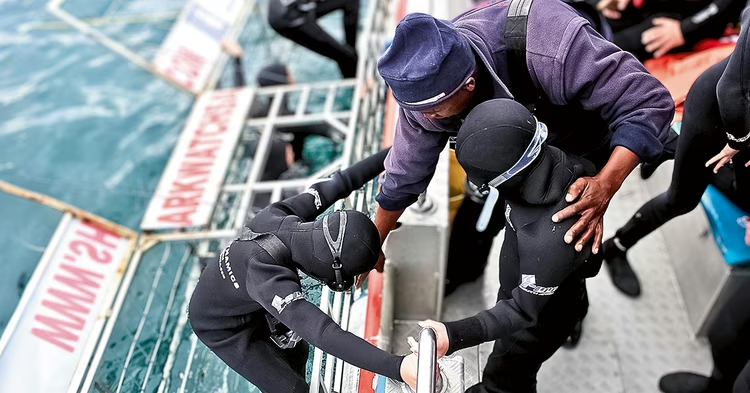
When we finally anchored, the crew started prepping the cage. I watched them work, feeling the weight of the wetsuit they’d handed me, still dry in my lap. The water looked calm. Flat. Almost inviting, if you ignored what was beneath it.
The wetsuit was tight. The life vest tighter. I shuffled to the edge of the boat, every cell in my body screaming that this was optional, that I could just stay on deck with my dignity intact.
But I didn’t.
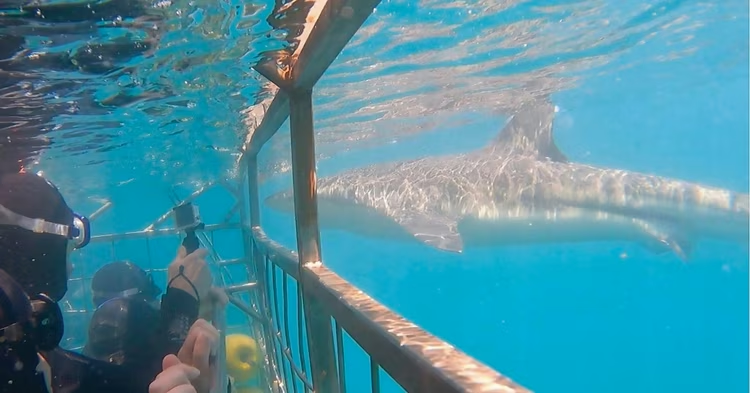
I gripped the ladder, swung one leg over, then the other, and dropped into water so cold it punched the air from my lungs. Inside the cage, I crouched low, feet planted on the bars, hands locked on the rails. My breath came fast and shallow through the snorkel. Bubbles rose past my face. I forced myself to look out through the bars.
Blue-green nothing. Light filtering down from the surface. My heartbeat loud in my ears.
And then, there.
A shape, bronze-toned and enormous, materialised out of the murk. She wasn’t charging. Wasn’t curious in the way I’d imagined. She was just there. Moving with a kind of effortless grace that made the cage feel ridiculous, like I was the one on display.
Her dorsal fin sliced through a beam of light. I could see the muscles under her skin, the texture of it, the slight movement of her gills. Her mouth opened briefly, not a threat, just breathing, and I caught a glimpse of teeth that could shred me without effort.
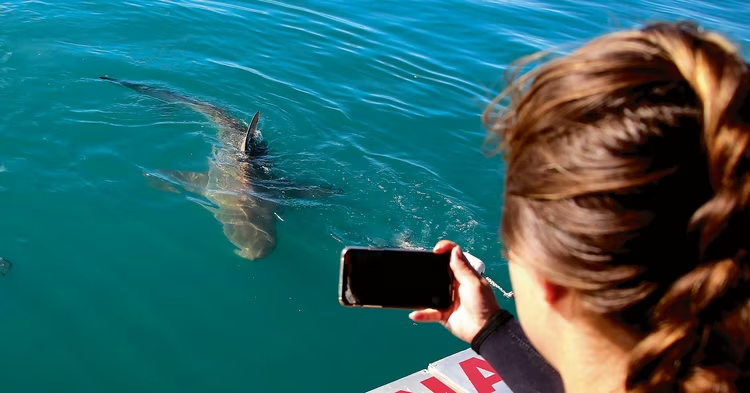
She drifted closer. Close enough that I could have touched her if not for the bars between us. I locked eyes with her, or thought I did, though I have no idea if that’s even a thing sharks do. In that moment, I wasn’t scared. I was small. Contained. Humbled. And completely, utterly alive.
She turned, slow and deliberate, and disappeared back into the blue.
I stayed down as long as I could, hoping she’d circle back. When I finally surfaced, clambering back onto the deck with shaking legs and numb fingers, I couldn’t stop replaying it. That moment. Her presence. The realisation that I’d spent my entire life thinking of sharks as monsters, and in thirty seconds underwater, she’d proved me wrong.
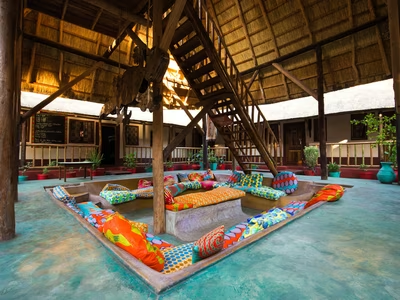
Back at The Great White House, they had hot showers running and soup waiting. Real soup, homemade, the kind that makes you remember you have a body that needs warmth and food. We gathered in the lounge while the marine biologist pulled up photos from the dive, answering questions about migration patterns and conservation efforts.
I learnt that Marine Dynamics doesn’t feed the sharks. They don’t touch them. They observe, collect data, and support the Dyer Island Conservation Trust. This whole operation exists not just to give people like me a story to tell, but to protect what’s out there. To remind us that sharks aren’t villains but apex predators holding entire ecosystems together. Without them, everything unravels.
I sat by the window overlooking the ocean, sipping something warm, feeling the adrenaline finally drain away. I thought about overfishing. About illegal finning. About all the ways we’ve decided the ocean is ours to take from.
And I thought about her. That bronze whaler. The way she moved. The fact that she didn’t care I was there.
Would I do it again? Yes, without hesitation.
But I’d tell anyone thinking about it to choose carefully. Don’t just pick the first operator with a website. Find the ones who care. The ones who see this as more than a business. The ones who understand that opening a cage is also opening a window into a world we’ve only just started to respect.
Marine Dynamics gave me that window. And what I saw changed me.