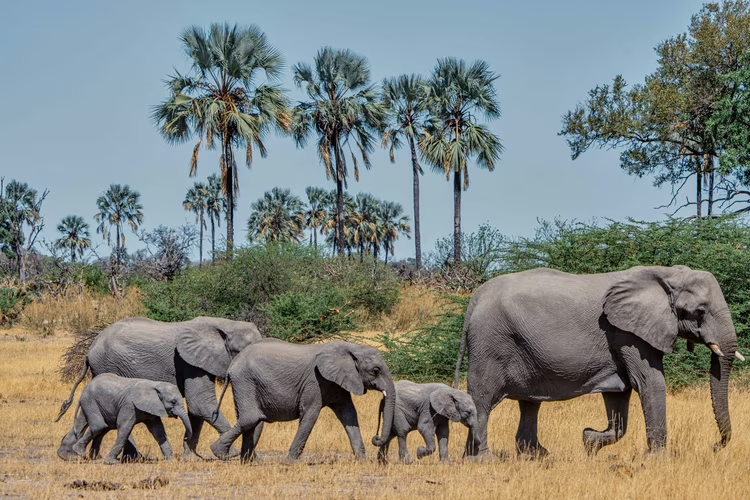
Elephants wade through reeds, predators follow ancient routes, and life gathers where water lingers. Its isolation, low-density tourism model, and ever-changing landscapes create an experience that feels both deeply intimate and endlessly renewed, where no two visits are ever the same.
Botswana’s Okavango has no delta in the conventional sense—no coast, no estuary, no sea. Instead, the river fans out across roughly 15,000 square kilometres of semi-arid scrub and sand, filling channels, lagoons and floodplains, then slowly disappearing, evaporating and soaking into the earth. The Delta is a system that exists entirely to consume itself, and it does this with extraordinary results.
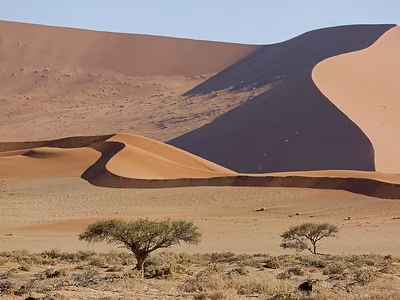
The rain that makes it possible falls in Angola, more precisely in the Bié Plateau and the central highlands. From there, it travels south and east through the Cubango and Cuito rivers, crosses into Namibia's Zambezi Strip, and enters Botswana as the Okavango River. This journey takes months, and by the time the water spreads out into the Kalahari sands, Angola’s wet season has long since finished. The Delta is an oasis surrounded by dry land, but with no outlet.
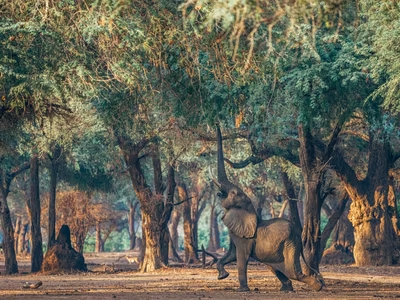
Flooding in this region peaks between July and August, which is technically Botswana's dry season, and this inversion of water arriving at the driest moment of the year is exactly what gives the Delta its ecological importance. As surrounding landscapes contract and dry out, the Delta’s waterways expand and fill. Elephants travel long distances across the Kalahari to reach these waters, and buffalo herds consolidate along its edges. Predators follow. The result is a concentration effect, where species that would otherwise be spread across a much larger area are clustered by the reliable presence of water and food in a landscape that otherwise offers neither.
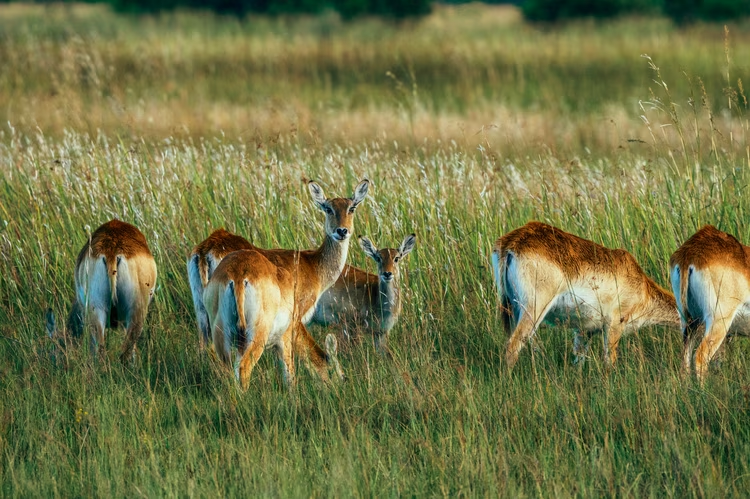
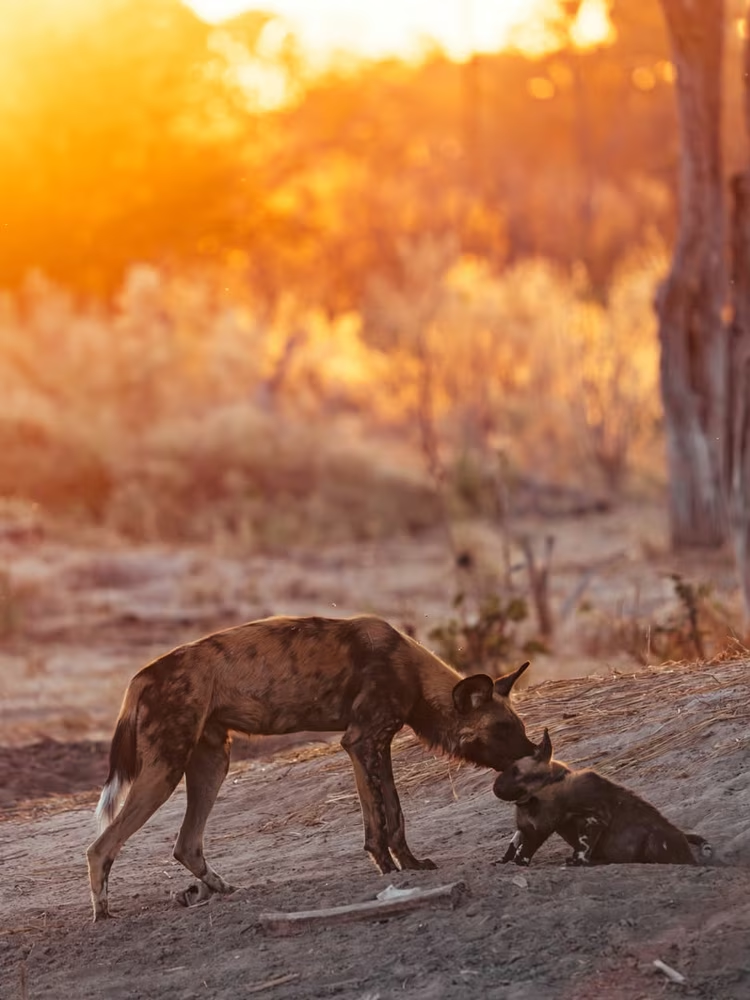
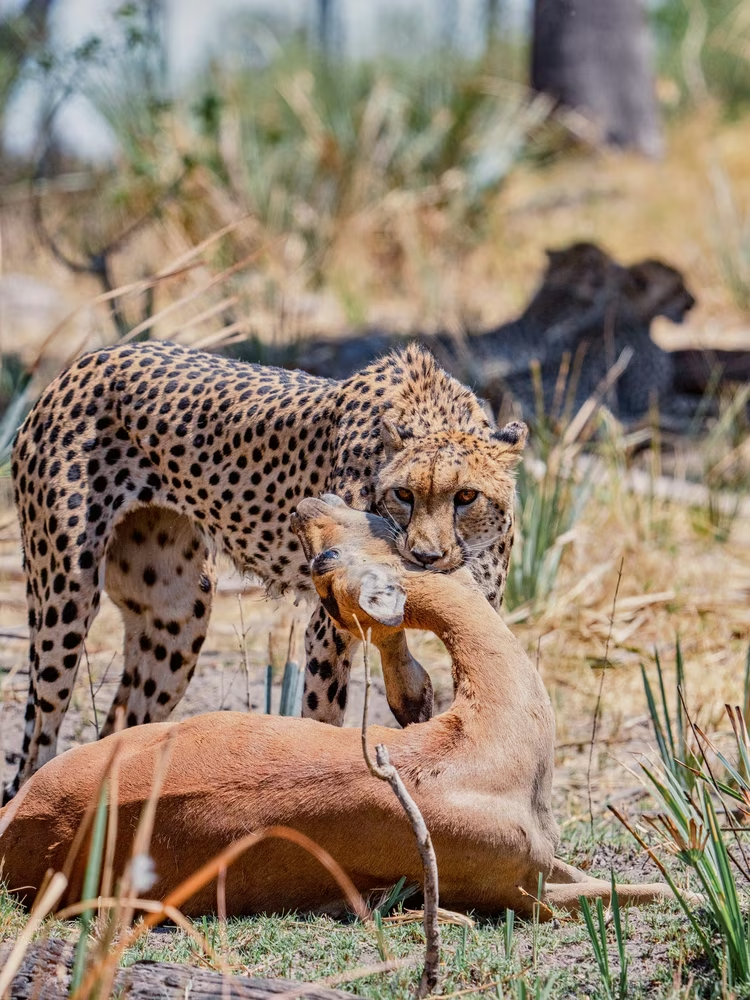
Beyond its unusual ecosystem, spectacular wildlife sightings paired with near solitude are what truly set the Delta apart. Elephant populations in the northern Botswana ecosystem are among the largest remaining in Africa; they swim across channels and meander through reeds. African painted dogs, one of the continent's most endangered carnivores, have strongholds here, making it one of the best places on earth to see them. Lions roam the sands and grasslands, while leopards dangle their limbs from sausage trees. The Delta is also home to over four hundred recorded bird species and one of Africa’s largest cheetah populations. And all of this with very few people.
Much of the rest of the Delta operates through private concessions, which have shaped Botswana's safari industry into something distinctly exclusive—and expensive—compared to most other destinations on the continent. Concession agreements typically cap the number of beds, restrict vehicle access to licensed operators, and require management plans that account for environmental impacts. The result is an unusually low-density tourism model in areas that could otherwise sustain far more visitors. The camps are small, and the areas they cover are large. Exclusive traversing rights in many concessions mean that vehicles from one camp following one wild dog pack across one floodplain are, functionally, the entire human presence in that landscape at that moment.
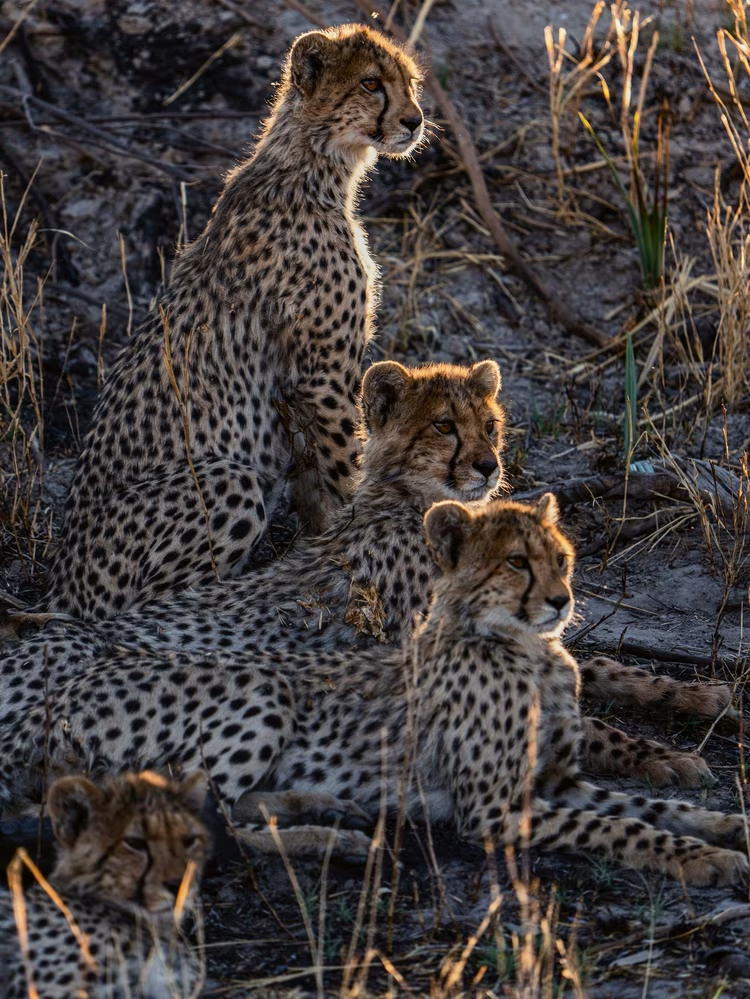
Moremi Game Reserve sits in the centre of this unique ecosystem and has for decades been the ecological anchor of the Delta. It was gazetted in 1963, largely through the efforts of the local BaTawana community. Moremi protects a broad sweep of the Delta's core habitats: mopane woodland, acacia forest, reed marsh, open floodplain, deep channel, and permanent lagoon. It holds strong populations of lions, leopards, elephants, wild dogs, cheetahs, and buffalo, and supports one of the most productive general safari circuits on the continent. Many visitors encounter it first from Chief's Island, the large landmass at the centre of the reserve, where the density of game in the dry season can be extraordinary.
The eastern edge of the Delta, where Khwai Community Concession borders Moremi, has become one of the most closely watched safari areas in Botswana. Wildlife does not recognise boundaries, and the game viewing in Khwai consistently ranks among the best in the country, particularly for predators. Beyond wildlife, Khwai’s importance also lies in its structure. The concession is managed for the benefit of Khwai Village, and tourism revenue feeds directly into the community. It represents a serious attempt to give local people a genuine stake in what happens to the land around them. For visitors, it also means access to a landscape where night drives, guided walks and off-road tracking are all possible, activities that public reserve rules often prohibit.
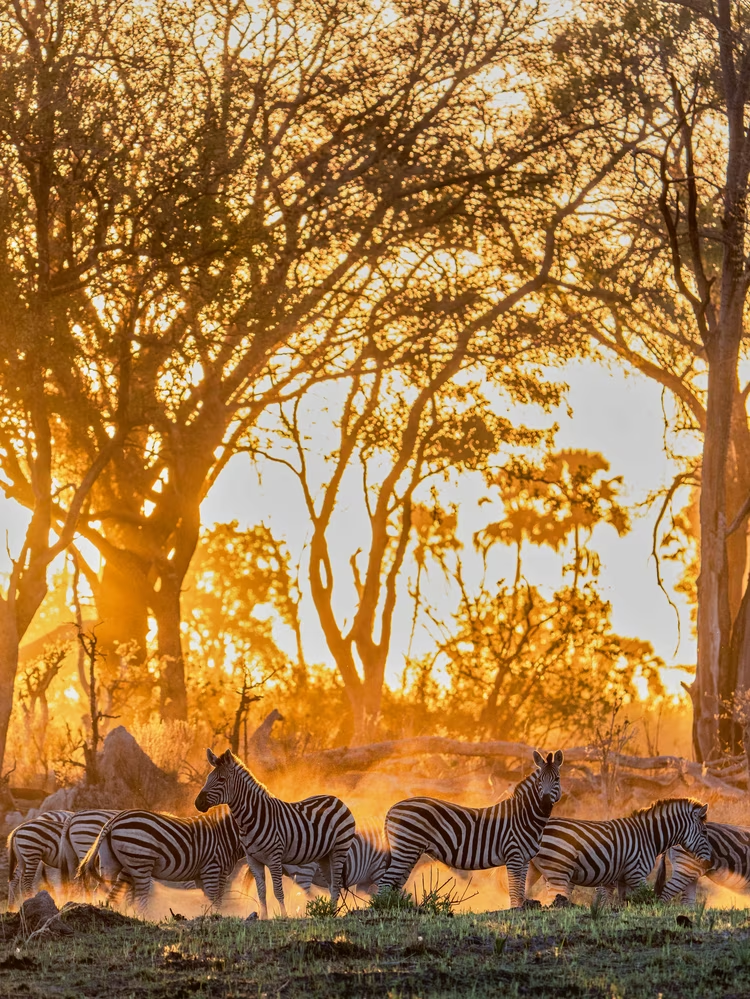
The Delta's remoteness makes access integral to its model. Most camps require a light aircraft transfer from Maun, and costs across the system sit at the higher end of the African safari spectrum. While Khwai is technically accessible by vehicle, the drive from Maun is not for the novice. The trade-off is real: what the expense buys is space, exclusivity and a calibre of wildlife experience that high-density destinations simply cannot replicate. It also provides access to an ecosystem that functions, at least in parts, with something close to ecological integrity, in the form of large predator populations, wide-ranging herds, and seasonal movement patterns that respond to flood and drought rather than fences and management zones.
The Delta evolves yearly with water levels; visiting it once, therefore, hardly means you have seen it. The flood level varies year to year depending on Angolan rainfall. A high-water year transforms normally dry concessions into boat-access-only landscapes. A low year opens ground that would otherwise be unreachable on foot. Different seasons bring different concentrations, behaviours, and logistical realities. Photographers who know the system return repeatedly, working specific areas at specific times for specific subjects. That depth of possibility and the sense that the same place can keep producing new experiences are part of what gives the Okavango its reputation as a destination worth more than one visit.