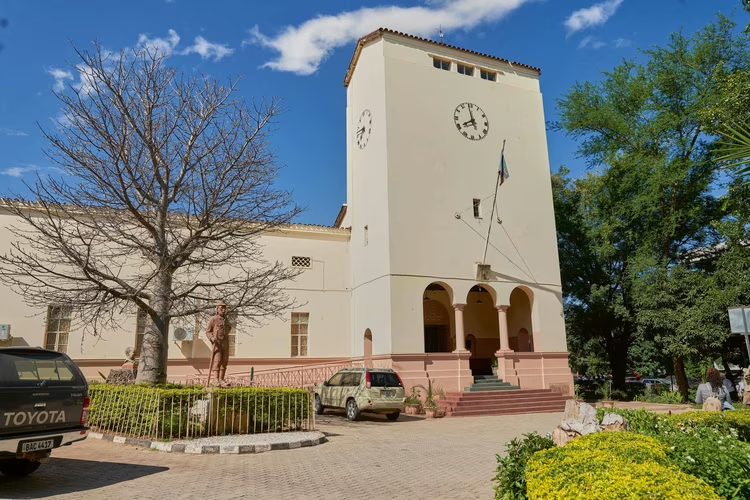
I hadn’t planned to come here. Limpo’s Pub & Grill wasn’t part of my Livingstone itinerary. However, that’s where I found myself as my first day in Zambia’s tourist capital was winding down. Maybe it was the fact that I hadn’t been back in over ten years that made me more open to going off script, or maybe it was Ackim's persuasive nature.
My day had begun as planned. I landed at the airport during late morning and headed to David Livingstone Safari Lodge & Spa. As we drove into Mosi-oa-Tunya National Park, Ackim, my taxi driver, asked about my plans. I gave him the rundown: the falls (of course), sundowners at Royal Livingstone, a river cruise, museum visits, dinner on the Royal Livingstone Express. He told me sundowners at the Royal Livingstone Hotel were a good idea, but that I should also grab a drink at a local spot. He also said a visit to Mukuni Village, beyond the curio market, was a must. He offered to accompany me to both.
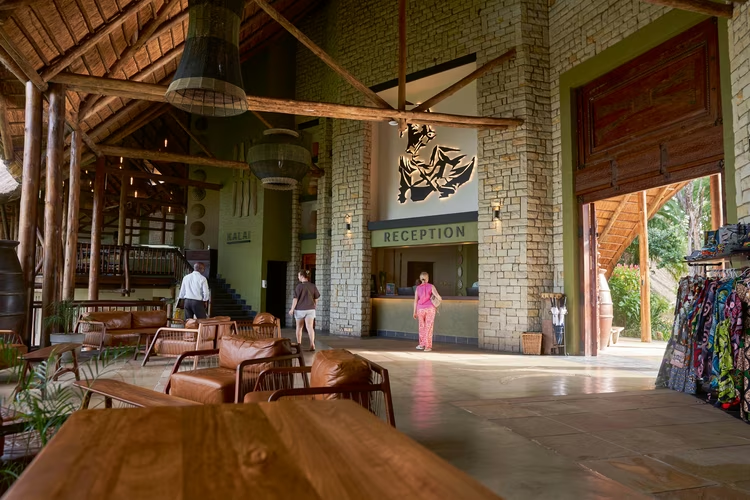
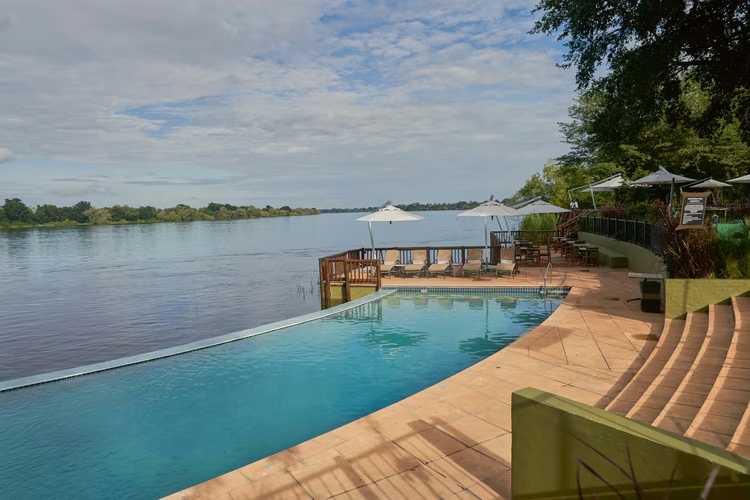
The verdant grounds of the David Livingstone were perfectly manicured, opening out towards the Zambezi, which runs alongside the lodge. At the reception, staff welcomed guests with soft marimba music and a drink.
Lunch at the David Livingstone brought me closer to the river, with a sense of calm I hadn’t felt in ages. A few kilometres away, the Zambezi moved steadily toward the Batoka Gorge, where it plunges over the edge to form Victoria Falls. Lingering over a late lunch, I feasted on succulent T-bone steak and sipped slowly on a peach mojito mocktail, with the distant smoky mist of the falls visible. Locally, the falls are known as Mosi-oa-Tunya and Shungu Namutitima, both of which roughly translate as "the smoke that thunders."
I reluctantly peeled myself away from the magnetic pull of the water and headed to the Royal Livingstone Hotel for sundowners on its riverside deck, and a different view of the smoke from Mosi-oa-Tunya once again. Zebras grazed across the grounds, unbothered by guests seeking Instagram moments. With a gin and tonic in hand, I watched the Zambezi stretch out beneath a muted sunset, grey clouds softening the light. The rain eventually forced me under shelter, and it was there, drying off in Royal’s lobby, that I decided to call Ackim rather than head back to my lodge for an early night.
Not long after, I was at Limpo’s, Ackim’s suggestion for a popular local hangout. It was dimly lit, and a few people hovered around pool tables while a television flickered overhead. Being a Monday and with the downpour outside, it was less busy than usual. Zambian classics blasted through the speakers; the nostalgic sounds of artists like Nalu, Daddy Zemus, Kanji, JK and Exile.
Ackim joined me and we each ordered an ice-cold Mosi. Originally from Lusaka, Ackim had lived in Livingstone for five years. He spoke about the opportunities in the city, driven by tourism and cross-border movement. We talked about local politics, business, and human-wildlife conflict. Elephants had arrived early this year, thrilling but disruptive. We ended the night at Serengeti restaurant over a shared meat platter, making plans for Mukuni Village the next morning.
Ackim picked me up early and introduced me to Etiken, my navigator for the day. Born in the village, he had lived there his whole life. We met under an acacia tree near Chief Mukuni’s compound, a place where David Livingstone once waited in 1855, surprising residents who had never seen a white man. Today, it remains a place to welcome visitors and a meeting place for village residents like the ones I saw playing mancala, a traditional strategy board game played across much of Africa.
Mukuni Village, home to the Toka-Leya people, is over 700 years old. Walking through it, Etiken explained the structure of huts, how to tell if one belonged to a married couple or a single person, and pointed out newer brick homes built by those who received support from family members working outside the village. Tourism is a major source of income, but farming remains important for many, though it is at risk from elephants drawn to local fruits.
We sampled ingi fruit at a family home, and while visitors are welcome, it still almost felt like an invasion of privacy. Etiken showed us how mongongo oil is extracted and used for both cooking and cosmetics. We were given musale, a type of sugarcane I enjoyed countless times as a child.
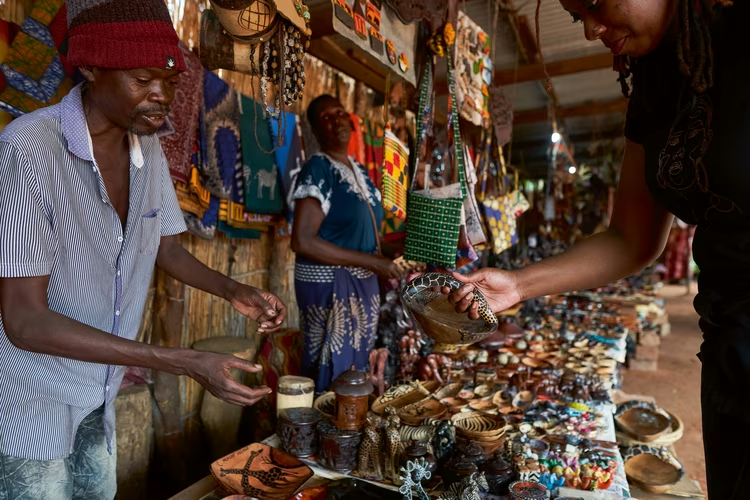
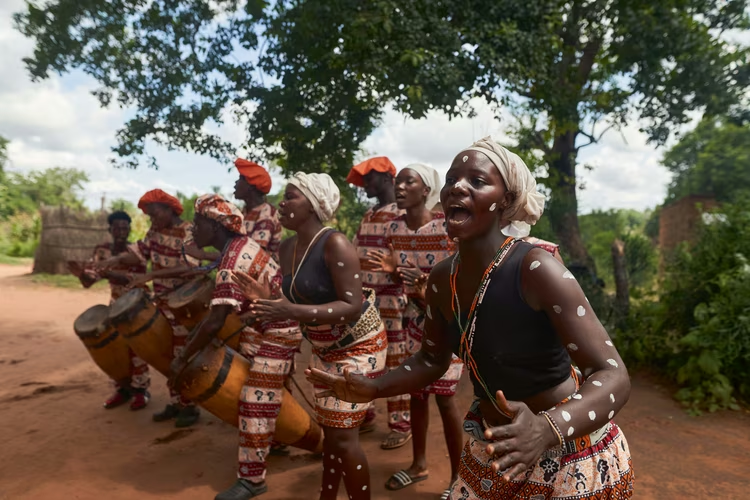
At the crafts workshop, which was more of a thatched shelter than an industrial warehouse, I spoke to Isaac, who had been carving various items for 17 years, a skill passed down from his father and now to his children. He even teaches tourists, should they have time for a longer visit. Nearby, young high school graduates performed traditional dances, generating income in areas where few formal opportunities exist.
The conversation drifted to tradition and modern life. Etiken spoke about embracing both, referencing his own birth, assisted by a traditional attendant, as an example of how the “old ways” still work. At the curio market, a sign read “Bitcoin accepted here”, a reminder of how much had changed since my last visit to the village.
Back in town, we went to Cafe Zambezi. In the courtyard, under a large mango tree, I ordered crocodile spare ribs. The ribs arrived piled high, coated in sweet chilli and masala sauce. Sticky, slightly spicy, and unlike anything else I had eaten on the trip, in the best possible way. Ackim had to leave for work. He shook my hand, told me to come back soon, and was gone before I had finished saying goodbye, absorbed back into the city the way people who truly belong somewhere always are. I sat alone with the last of the ribs and realised that the best guides are never really guides at all. They are just people who love where they live.
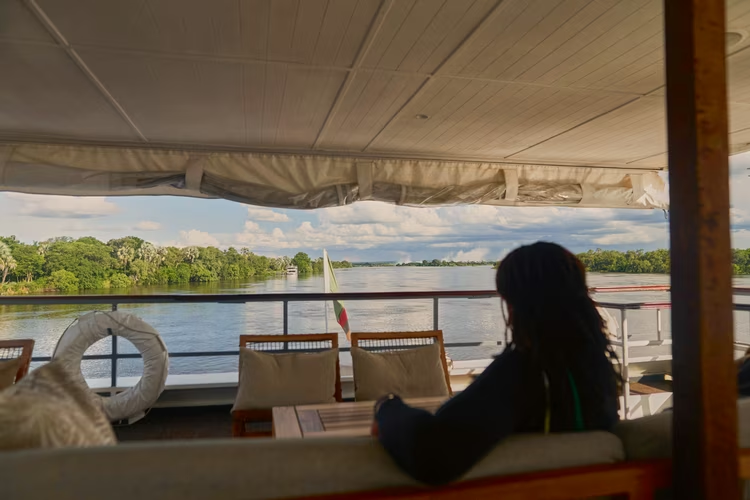
Later, I returned to my lodge for a sunset cruise on the Lady Livingstone. It was calm, almost meditative. From the upper deck, we spotted bushbucks, impalas, hippos, giraffes and more. Captain Webster shared stories, including the significance of Siloka Island as the burial site of the first Chief Mukuni. Snacks flowed steadily, from multiple savoury bites to homemade ice cream and fruit.
That night, I kept dinner at the David Livingstone simple, opting for a smoked salmon salad with sorghum, cucumber, cherry tomatoes and pickled onions. Fresh, balanced, a little ‘nutty’ from the sorghum (an ingredient I rarely get to eat) and satisfying.
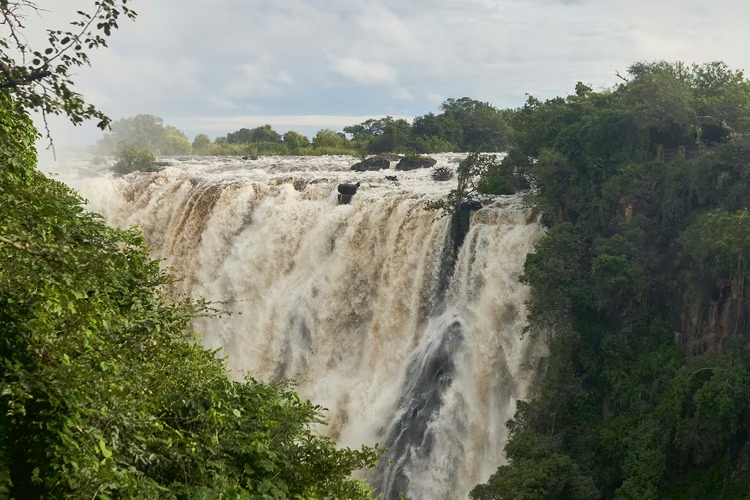
The next morning, my taxi driver apologised for being “late”, explaining that he had found elephants on the road and had to wait for them to cross. I arrived at Mosi-oa-Tunya just before 06:45 and found myself among the first visitors there. The path wound through dense greenery, the air thickening before the sound even announced itself. Then the mist found me, not gradually, but all at once, the way memory does. The roar was constant, indifferent, magnificent. Standing at the edge of the gorge, I understood why people run out of words here. Familiar, and yet entirely new. Ten years is long enough for a place to become itself again.
At the Knife Edge Bridge, I hesitated, then crossed. Two Canadian tourists, Paula and Scott, suggested that if I was nervous, I could cross with them, and I took them up on their offer. Within seconds, I was soaked. The view appeared and disappeared through the spray. My raincoat only shielded my top half, barely. I thought back to Etiken, who told me he also runs tours of the falls, showing people the shrines and teaching about the falls' cultural significance.
Now changed and dry, I headed to the Railway Museum, located at the former Zambezi Sawmills locomotive shed. The sawmills' operation, active from the 1920s to the late 20th century, ran its own railway moving timber across the region. Now, early 1900s steam trains sit on display, once used to transport both goods and people.
I stepped into a first-class, whites-only coach I would not have been allowed to enter before 1964. Burgundy leather seats, spacious cabins, even beds. It was a stark contrast to the lower classes, which I could only imagine travelling in. On the same grounds, the Gateway Jewish Museum traces the contributions of Jewish settlers to Livingstone’s development.
Having worked up an appetite, I headed back to the lodge, arriving just in time for the last call for breakfast service. Eggs, veggie pancakes, fruit and pastries, all enjoyed overlooking the river, a view I never get enough of. The rest of the morning was slower, spent napping, walking the grounds and resting by the pool.
For my third and final day at the lodge, I lunched on grilled whole Zambezi bream, tender and perfectly charred, served with a refreshing salad and golden fries. Simple, local, and comforting, it was one of my favourite meals on this trip.
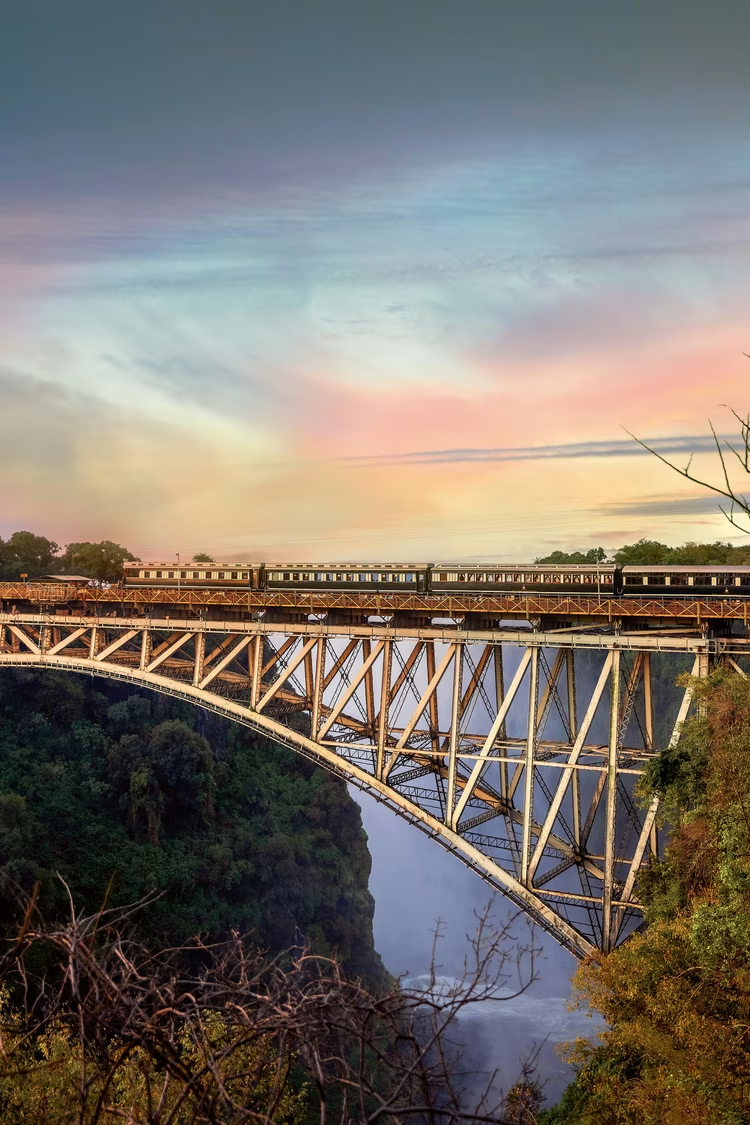
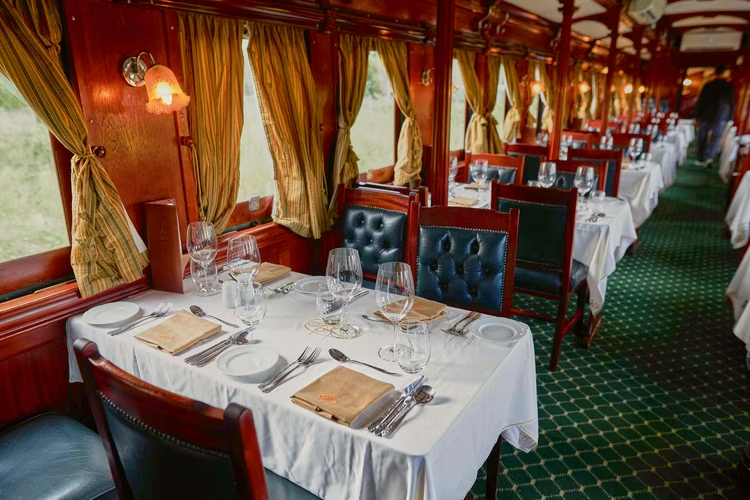
The Railway Museum, however, would not be my last train experience. That evening, I boarded the Royal Livingstone Express. With polished wood and brass finishes, it felt like stepping into another era. As we moved toward the Victoria Falls Bridge, our captain, Tulani, spoke about Cecil Rhodes’s unfinished Cape to Cairo vision and how these tracks formed part of it, while not shying away from the fact that it was the product of an era when he would not have been allowed on the train because of his colour.
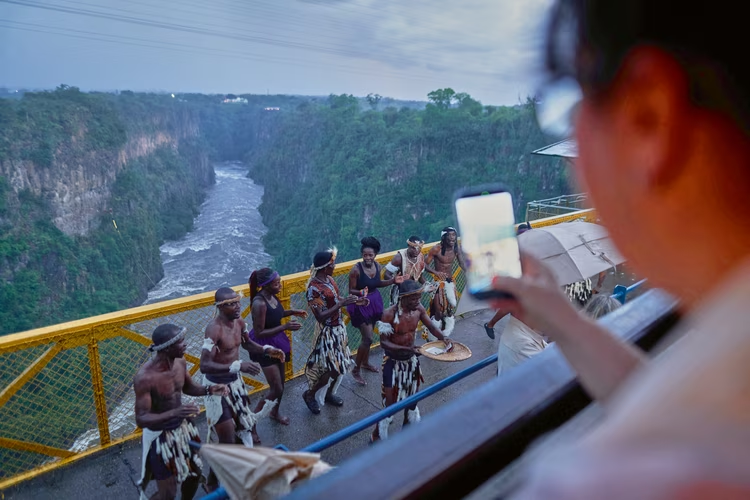
At the bridge, on the border between Zambia and Zimbabwe, rain fell lightly as dancers performed along the walkway. Persistent vendors sold curios, assuring us that they had a wide stock and accepted many currencies. I stepped onto the bridge, looking out over the gorge, the Zambezi cutting through the dramatic landscape below.
Dinner followed our return to Zambia. A thoughtful menu, locally rooted and elegantly presented, was paired with a wide selection of wines and spirits. The gentle motion of the train, the view of the river below, and the quiet conversation of fellow passengers made the evening feel both intimate and grand, a perfect close to the journey.
As the train slowly rocked us back into the city, I thought of Ackim, of Etiken, of the family who handed me musale as if it were the most natural thing in the world. Livingstone is not a destination you finish. It is a conversation you keep returning to, each time with something new to say. I already know what I'll order at Cafe Zambezi. I already know I'll call Ackim from the airport. Next time, I'll leave the itinerary at home.