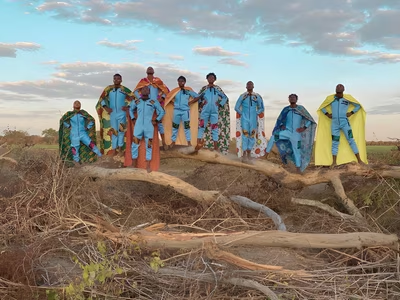
Wele!!!
One of the boys throws his arms into the air as the plastic ball sails between two dusty flip-flops serving as goalposts. Half the players celebrate, while the other half insist it was missed completely.
The argument is electric as the boys get back to their positions on the dusty road. A few metres away, you and your friend barely look up. You're too busy patting handfuls of damp earth into tiny round cakes, arranging them carefully beneath the afternoon sun where they are expected to bake. A broken cup becomes a mixing bowl. This earthy delicacy is decorated with sticks, while purple and pink flowers add what everyone agrees is the perfect finishing touch. Soon, a younger cousin arrives, demanding to buy cakes with imaginary kwacha notes scribbled onto scraps of paper.
Business is brisk until somebody steals the mud cakes and runs, laughing so hard they trip over their feet. By the time your mother calls you home, your hands are brown with dirt, your knees are scratched, and a cup of tea with fresh buns is waiting after a proper scrub-down.
Odd, isn't it? We all grew up in different homes, towns, and compounds, yet so many of these memories overlap. Somewhere in Mongu, another group of children was probably doing the same thing. In Lusaka, someone else was tying together grocery bags to make a football with just the right amount of bounce. Across the country, children, regardless of their social background, found endless ways to entertain themselves, and perhaps that is why these games have stayed with us for so long.
Take the waida.
Two players swung the rope in broad arcs while the next jumper watched carefully, searching for the perfect moment to dart in. The longer the game continued, the more ambitious it became. The rope climbed from ankle height to knee height, then to waist height, challenging anyone brave enough to keep jumping. Even without a proper skipping rope, strips of plastic tied together proved equally effective. Looking back, what stands out is not who won but how effortlessly everyone accepted that a homemade rope was all that was needed for an entire afternoon of fun.
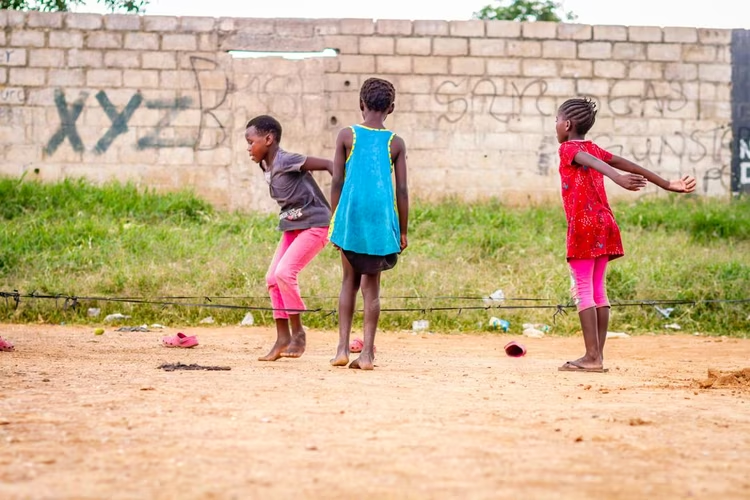
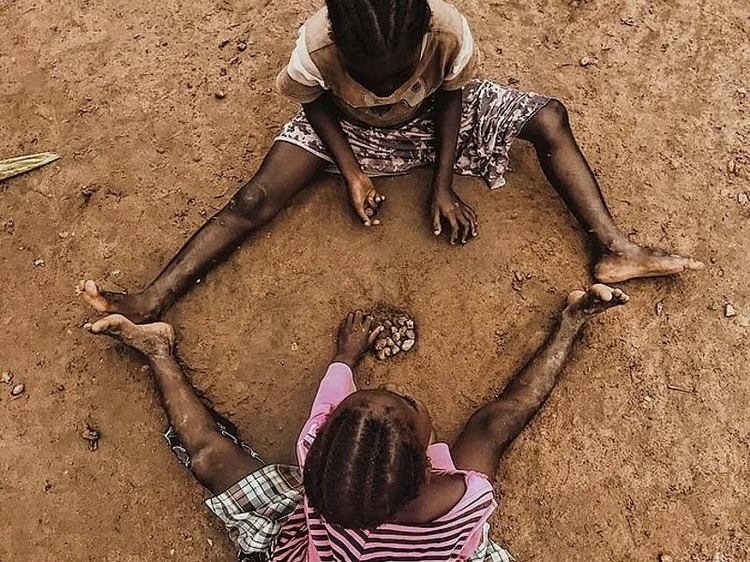
Ciato (pronounced ch-yah-to) demanded a different kind of concentration. A circle scratched into the dirt, and a handful of smooth, carefully chosen stones were enough to transform an ordinary piece of ground into a playing field. The movements looked simple from a distance, but every toss required timing and a steady hand. One mistake and your turn was over. There was always another child waiting patiently on the edge of the circle, convinced they could do better. They often couldn't, but that never stopped them from trying.
Homemade Toys That Fuelled Creativity
Then there was malegeni.
For many boys, owning one felt like a badge of honour. The search for the perfect Y-shaped branch could take days, and the rubber strips had to be just right if the catapult was going to fire properly. Once assembled, it was carried with unmistakable pride, tucked into a waistband or held tightly on the walk home from school. Small stones became ammunition, empty tins and small birds became targets, and during mango season, the highest branches suddenly seemed within reach. Parents rarely shared the excitement, usually discovering the existence of a malegeni only after a cracked window or a complaint from an unfortunate bystander.
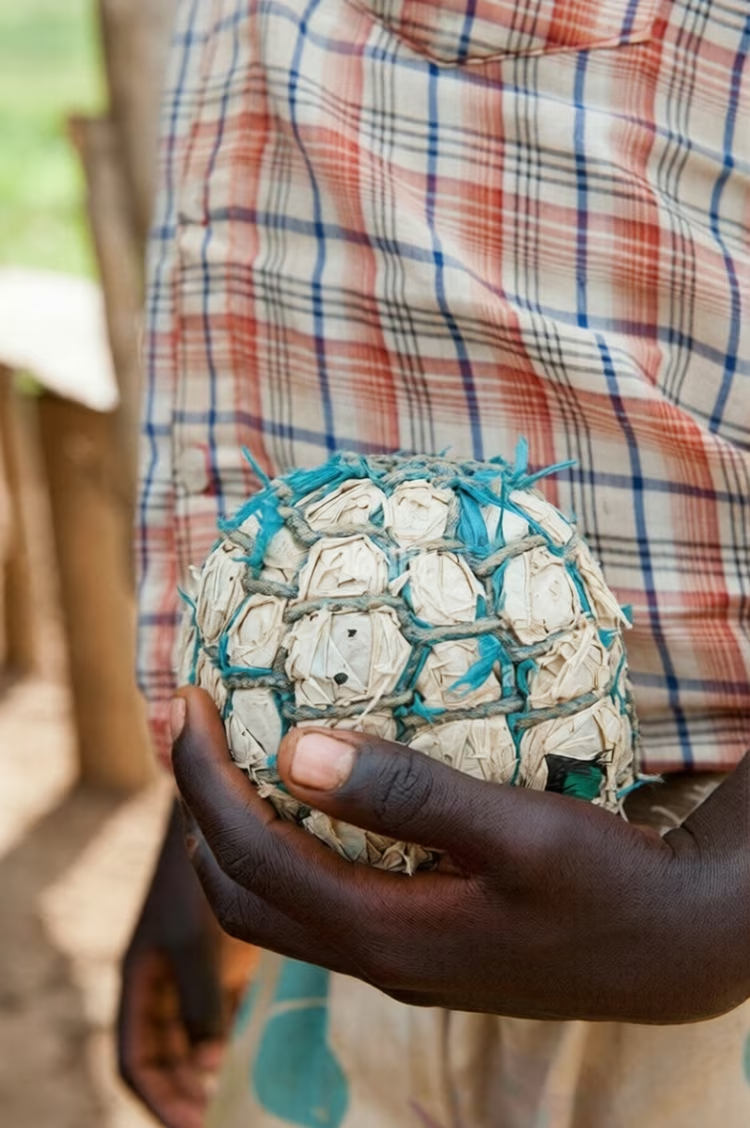
Perhaps the greatest invention of all was the plastic-ball football. Every child seemed to know someone who could make one. Layer upon layer of discarded shopping plastic bags were packed together and wrapped tightly with string until something resembling a football emerged. It was never perfectly round and rarely lasted forever, but that hardly mattered. It rolled; it bounced just enough, and, most importantly, it created one of the most competitive local tournaments, which somehow developed its own structure despite makeshift boundaries and flip-flop goalposts.

How Imaginative Play Shaped Childhood
Even the games that weren't really games carried their own importance. Imaginary restaurants opened for business with bottle-cap currency and invisible customers who somehow always left satisfied. Looking back now, it is difficult not to wonder whether some of today's bakers, footballers and entrepreneurs first discovered the joy of creating something from nothing while simply having fun.
Why Traditional Zambian Games Still Matter
The remarkable thing about all these childhood pastimes was their simplicity. Entertainment wasn't confined to a screen. It lay outside with friends, making the most of what was available. Maybe that's why these stories endure: they were never confined to a rulebook. They belonged to the children who played them, changing slightly with every new street and every new generation. And if you ask a room full of Zambians about the games they grew up with, don't be surprised if the conversation quickly turns into a debate over who was playing them the right way all along.