Your phone slips from your pocket and its screen cracks. Your favourite trainers split at the front, or your fridge suddenly stops cooling properly. Do you replace the item, try to repair it, or make do without it? For many Zambians, the answer comes down to what they can afford, what can be fixed and who has the skills to fix it.
Sometimes, the answer is found in a familiar habit: repairing the things we own when they no longer work as they should. The decision is not always philosophical or ethical. Often, it is simply about need, cost and whether something can still be saved.
One example is kintsugi, the Japanese art of repairing broken ceramics with lacquer and decorative metallic powder, often gold. Rather than hiding the damage, the technique highlights the repaired joins and gives the object a renewed life. Other cultures have their own repair and reuse traditions, using locally available materials and practical knowledge to mend what might otherwise be discarded. Exploring these practices side by side can show how different communities have found value in repairing and preserving the things they own.
Many other cultures have practised their own versions of it in their own right. The use of golden lacquer to the use of tree sap and ash to make earthenware look as good as new. That juxtaposition of what would be Zambian indigenous upcycling tradition to its well-known asian counterpart helps us understand how the connectedness between each other as human beings. In recent times, the trust networks that have been nurtured between those in need of those repairs and those skilled enough to do them have not only increased the value of the assortment of craftsmanship available to anyone in need but have also allowed us to support one another beyond any goods and services.
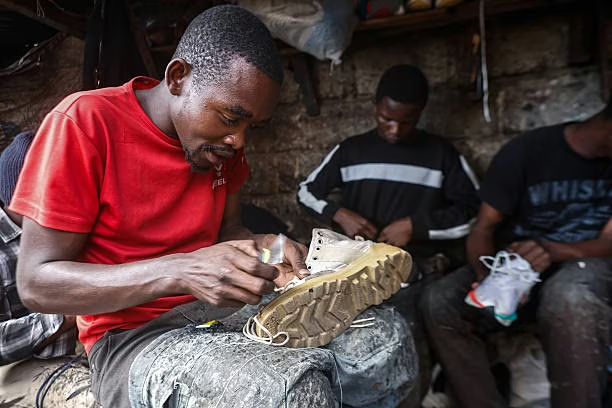
The community around repair culture in Zambia is one that has probably lived as long as there has been a need for these vocations. The tricks and traditions that have stood the test of time, which in some parts of Zambia have not lost their value to the technological and economic advances of the times. Also, just understanding how, now, it saves a lot more than just money. Not far from what would be understood as the main reason is just how important repair craftsmanship is for employment. And the reliability of this sector helps build the communities they are situated in. The mechanic that fixed your car for almost nothing when it broke down right before you needed to be somewhere and now is your go-to guy/go-to woman, the cobbler that made your slippers look as good as the way they did when you got them. As often as you need something done, they manage relationships and build skill through the highly technical tasks we hand them. That is the part of the micro-ecosystems that are growing and are sustained.

Just as the flow of disposable consumerism and its habits increase, on the ground the economic pressures of daily change and artisans like cobblers, tailors, mechanics, carpenters, electricians and phone technicians use intuitive and informal knowledge to be financially resilient and provide themselves with respectable informal employment to support themselves, families and the community. Whether they know it or not, repair culture helps Zambians redirect income towards their essential needs. By democratising utility, money that would have been used to buy a new fridge can be used to pay the electrician, and what is left over can be used to acquire groceries or even healthcare. The expense could be only a fraction of what it would cost to get a completely new appliance. Saving money, of course, and allowing at least a more even spread of income.
These trades are also often being carried on by informal learning and apprenticeships within communities. People young and old engage in learning skills that allow access to basic needs. This looks like using the learned skills or selling parts to people with skills; nevertheless, participation in the circular economy goes on.
The resourcefulness of the craftsmanship is apparent; the environmental positives might not be easy to see. Though the streets have turned into somewhat illegal dumpsites, repair culture helps reduce waste. By reusing, reinventing and remaking, repair culture contributes to slowing down the piling up of material waste like electronics, plastics, textiles and even metal. Changing what they mean along the way as well. This is a show of immense skills growing beyond the systems put in place. Standing as an act of financial, environmental and also social resilience.
In times when it is easy to underestimate the values of what is around us, the values embodied in the work done by all the people participating in the repair economy can stand as our own motivation to care for what we have and know that it never really is the end. A little bit more care and grit go a long way.