It is 2.30 pm, and while Margret Ngoma’s school day has ended, another part of her day is just beginning. For the next two to three hours, Margret will challenge herself to beat her personal best on the same bicycle that has taken her from a primary school desk to the top step of the national championship podium.
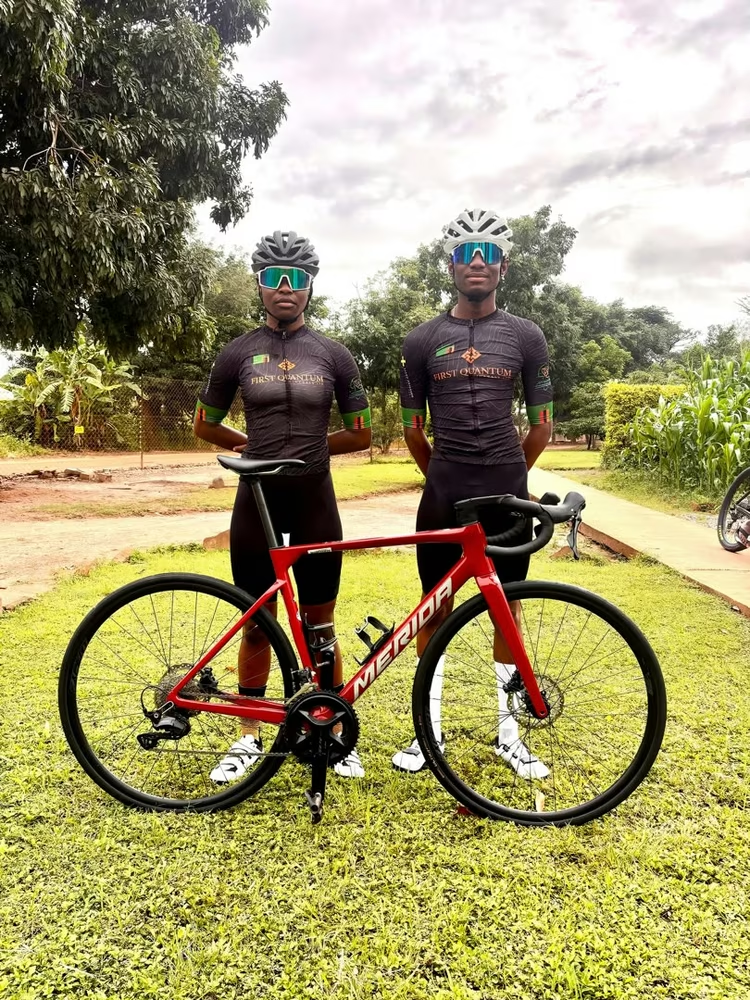
Margret joined the Kansanshi Cycling Team in 2020, when she was selected for the programme as a Grade Five pupil at Makole Community School in Solwezi. She had seen female cyclists racing and competing in championships, and while she aspired to do the same, her commitment to training only took hold when she signed up for a race outside Solwezi, won it and began to see cycling as a serious competitive sport.
Six years later, she has taken the junior women’s title at the 2026 National MTB Championship, and in May 2026, she won silver in the junior women’s category at the African Mountain Bike Championships in Côte d’Ivoire. On the road, she won the national titles in 2024 and 2025 and claimed second place in 2026.
She was not the only Kansanshi rider to come home with a medal. Zambia sent four riders to those championships, all from the Kansanshi Cycling Team, and they returned with three medals: gold for Luwi Chikomba in the women’s U23 cross-country race, silver for Margret in the junior women’s race and bronze for Richard Kashimoto in the men’s U23 race. Two months later, Kansanshi hosted Zambia’s first UCI-registered national mountain-bike championship. The event allowed local riders to compete for UCI ranking points in Zambia.
Balancing schoolwork with training and competition, Margret has already built an impressive record. Her results are one part of a wider story about the Kansanshi Cycling Team and the support available to riders in Solwezi.
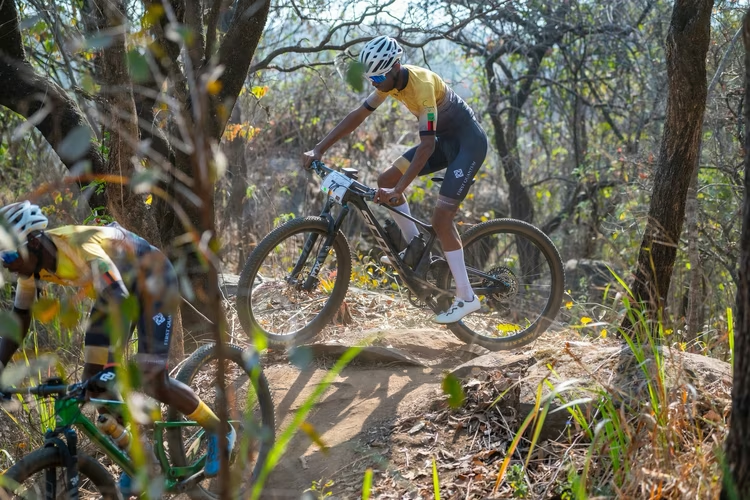
Cycling in Solwezi began in 2012, and in 2014 the Kansanshi Cycling Team was formally established under the Kansanshi Sports Foundation, an initiative of Kansanshi Mining Plc, a subsidiary of First Quantum Minerals. Meiring Burger, now General Manager of Kansanshi Mining, recognised sporting potential among Solwezi’s youth. A competitive cyclist himself, he saw the opportunity not only to develop serious athletes, but to create a pipeline through which youth could be coached, develop their abilities and gain opportunities beyond cycling.
Today, the programme supports 24 riders, including six women, and three community riders. Its development initiatives include training, mentorship, competition exposure and opportunities to build practical skills.
Riders are selected against a set of criteria. Coaches are trained to identify sporting potential and scout at local school events, particularly in sports where stamina and determination are key, such as running.
But speed and endurance are not the only criteria. Coaches also look for discipline, determination and a willingness to learn and develop everything from endurance to technical skills. Solwezi’s terrain plays its part too, with over 50km of marked trails in Kansanshi Mining’s game park and technical circuits around Trident College used for training.
While Margret’s story shows homegrown talent, Gift Puteho’s road to glory began far from Solwezi, in Livingstone. Gift has been on a bicycle for as long as he can remember. He first used one to travel to school when his father acquired one for health reasons. Some time later, a friend introduced him to a cycling club, and in 2020 he entered a race organised by Thorn Tree House Safari, which he won. This was when he decided he would compete seriously. Getting onto the Kansanshi team took persistence: after connecting with coach Nora Richards, he called her every week for 15 months until a place opened up. Now based in Solwezi, Gift dedicates 12 to 13 hours a week to training. He begins his day at 6 am, combining strength training and technical work with long practice rides.
His dedication has paid off. In 2026, he claimed the men’s elite national road race title over 150km. He has also competed internationally in South Africa and Rwanda. Pursuing cycling has meant living away from his family. “Being far from the people I love is never easy,” he says, explaining how difficult that distance can feel when things are not going well.
Margret faces a different challenge. She trains around five days a week, usually after school. Balancing her studies with competitions takes discipline, especially when training leaves her exhausted.
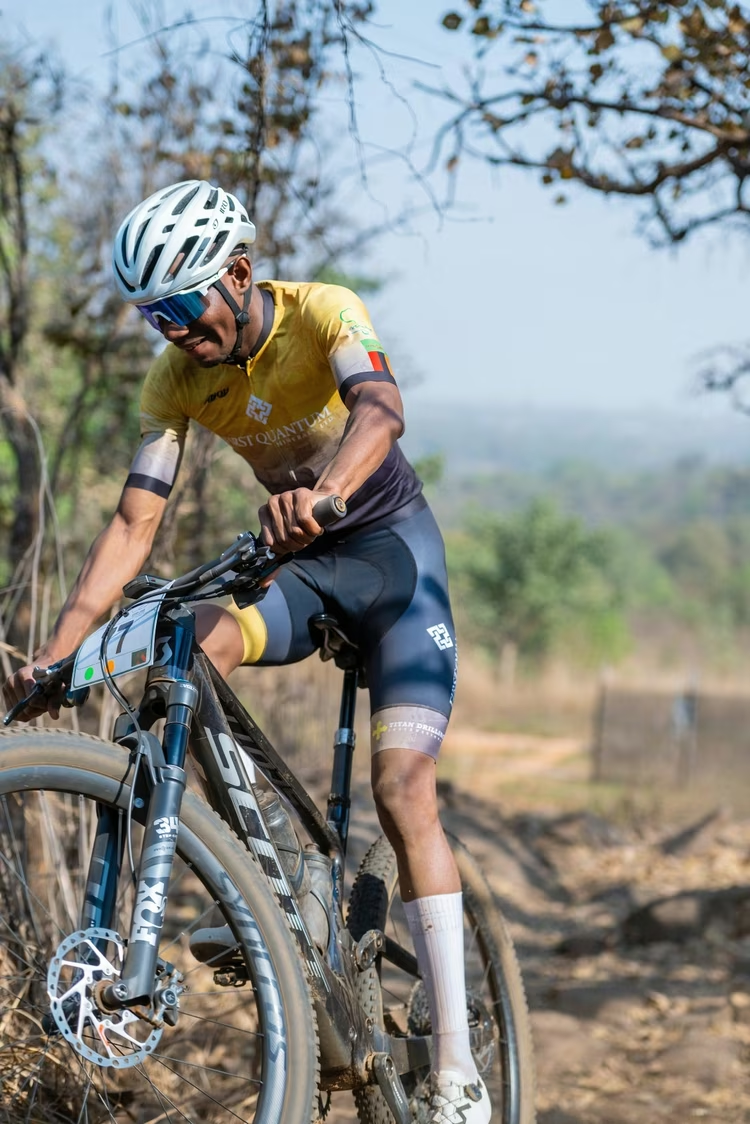
Both riders share an ambition to compete at a higher international level. Margret hopes to join a team outside Zambia, while Gift wants to establish himself on the global racing circuit.
Reaching that level comes at a cost. Bicycles, coaching, transport, training facilities and race entries all have to be paid for.
Through Kansanshi Mining, First Quantum has provided equipment, coaching, mentorship, tuition support and access to local and international competitions. This year, four of Kansanshi’s riders took part in the Absa Cape Epic in South Africa, an eight-day, 701km mountain-bike race ridden in pairs.
Some alumni of the programme have gone on to work as mechanics, coaches and mine employees. For younger riders, the national titles matter, but the bigger opportunity lies in what comes next. As Margret says, “My journey started with watching other female cyclists and daring to believe I could do the same. Today, I am proud of how far I have come, and I believe my story is only beginning.”