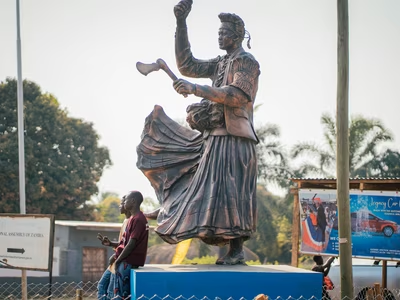
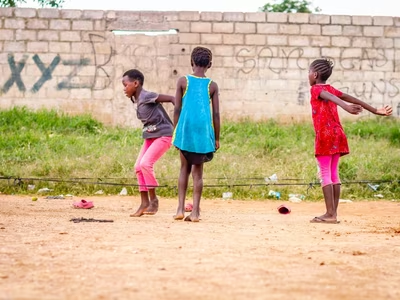
Every August, thousands of people gather near the Zambezi River in Zambia's North-Western Province for one of the country's most spectacular cultural celebrations. This year, Likumbi Lya Mize carries even greater significance as the Luvale people mark the ceremony's 70th anniversary.
Where the Ceremony Comes From
The name "Mize" comes from an old royal capital of the Luvale people. Long ago, the palace stood in a grassy plain, and that is how it got its name. The ceremony is rooted in ancient initiation traditions that mark the transition of boys and girls into adulthood. These traditions date back hundreds of years and originated among the Luvale people living in areas that are now Angola, the Democratic Republic of the Congo, Zambia and Namibia.
According to Luvale traditional authorities, the modern public celebration of Likumbi Lya Mize was formally organised in 1956 by the late Sakavungu to unite the Luvale people in an annual celebration under Senior Chief Ndungu. Since 1956 is the starting point, 2026 marks 70 years. This is why this ceremony is a significant moment in Zambia’s cultural calendar.
Chief Ndungu still leads the ceremony today from the royal capital at Mize, near Zambezi town. Under Luvale custom, succession to the throne follows the maternal line, with the Namakungu royal clan traditionally providing candidates for the chieftainship.
The Ceremony Has Grown, But Stayed the Same at Heart
Over 70 years, Likumbi Lya Mize has grown a lot. It used to be mostly a local event. Now it is one of Zambia's top cultural epics, pulling in visitors from all over Zambia and other countries too. All for the story and what it represents, offering visitors a rare insight into Luvale spirituality, history and cultural identity.
In 2008, UNESCO inscribed the Makishi masquerade on its Representative List of the Intangible Cultural Heritage of Humanity. This made the ceremony even more famous and brought in more visitors and researchers.
But even with all this growth, the heart of the ceremony has not changed. Young boys still undergo Mukanda, an initiation period that traditionally includes instruction in community values and responsibilities before circumcision.
Girls go through a similar process called wali, guided by older women in the community. The ceremony still starts with the dramatic "waking up" of the Makishi from the town graveyard. It still includes a big procession through town and across the Zambezi River. And it still ends on the final Saturday, when Chief Ndungu comes out of his palace to greet his people. Elders use the week to teach young people their history, morals, and traditional skills, keeping the culture alive for the next generation.
The Makishi Masked Dancers
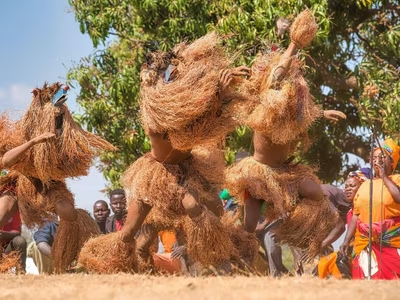
The most famous part of Likumbi Lya Mize is the Makishi. These are masked dancers believed to represent the spirits of ancestors. They symbolically emerge from the forest or a sacred area associated with the ancestral world before entering the community.
Each masked character has its own name, look, and job. For example: Mwana Pwevo represents the spirit of a young woman and is known for amazing acrobatic moves on tall poles. Chikuza is over the initiation camp. Kapalu helps Kayipu and is in charge of keeping order during the ceremony. The masks and costumes are works of art, carefully made by skilled craftspeople and passed down through generations.
The Chief and the Whole Community Take Part
Chief Ndungu is at the centre of the ceremony. His appearance from the royal palace on the final day, along with his queen, is the biggest moment of the whole event. It comes with anthems, speeches, and celebration.
But it takes the whole community to make Likumbi Lya Mize happen. Village leaders, clan elders, dance groups, the young initiates and their families, and everyday people from Zambezi district all play a part. Performing, host guests, cook, and keep the traditions going. Government officials and even foreign diplomats now attend regularly too, showing how important the ceremony has become for the whole country, alongside other well-known Zambian ceremonies like Kuomboka and Kulamba.
Good for Culture and Good for Tourism
For Zambia, Likumbi Lya Mize has become an important way to bring tourists to the North-Western Province, an area that doesn't usually get as many visitors as Zambia's famous parks and waterfalls. The ceremony gives visitors a real, honest look at a tradition that is still truly practised, not just performed for show. Because of its UNESCO recognition, it also attracts people interested in learning about African culture and history.
Turning 70 years old is a proud moment for the Luvale royal family and for Zambia. It's a chance to celebrate how long the ceremony has lasted, honour the leaders who built it, and how we are sharing it with the world.
What to Expect If You Visit
The ceremony usually happens during the last week of August, in and around Zambezi town and the royal capital at Mize. Here is roughly what happens: The Makishi "wake up" at the cemetery and march into town. Several days follow with masked dances, music, and a crossing of the Zambezi River. The celebration builds up to the final Saturday, when Chief Ndungu leads the main ceremony at Mize.