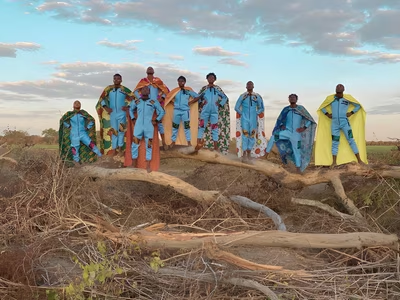
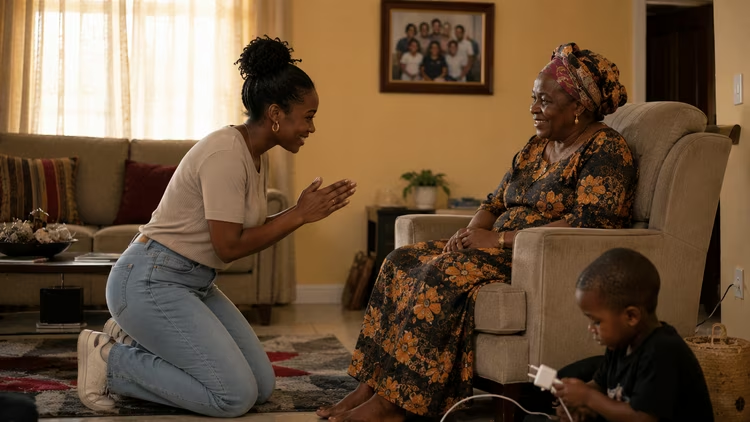
The older I get, the more I realise that growing up in Zambia meant learning a language no one formally taught us. No classroom explained why we softly clap when handing something to an elder, why we instinctively say “Ba…” before someone’s name, or why respect here is often communicated through posture before words. Somewhere between childhood and adulthood, we absorbed these habits simply by living among one another.
And perhaps that is what makes Zambian culture so fascinating. We are a country of more than seventy-three tribes, with different migration histories, different languages, different cosmologies, and different kingdoms, yet there are social instincts that feel remarkably familiar across provinces. A woman from Eastern Province can attend a funeral in Luapula and still recognise the process of mourning. A Bemba-speaking child in Kitwe and a Tonga-speaking child in Monze may grow up under different customs, yet both understand what it means to greet properly, to lower oneself before elders, and to avoid calling older people by their first names. Somehow, beneath the diversity, Zambia developed a shared social grammar that no dictionary can define.
How ‘One Zambia, One Nation’ Shaped Shared Culture
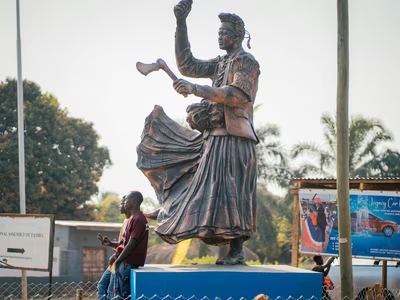
Part of that was deliberate. When Zambia gained independence in 1964, Kenneth Kaunda inherited a country that colonial borders had stitched together from dozens of ethnic groups. “One Zambia, One Nation” was not simply a political slogan. It was a survival strategy. In many African countries, ethnic identity became the fault line through which violence entered politics. Zambia avoided much of that. Over time, people moved into mining towns, intermarried, traded languages, attended the same schools and churches, mourned together, borrowed customs from one another, and cultures became layered. Certain practices remained tribal in origin, but others slowly became recognisably Zambian.
That is why respect occupies such a central place in everyday life here. Respect is viewed as a pillar of your moral upbringing. It is a representation of the values your parents instilled in you, particularly in their absence. The kneeling, the clapping, the lowered voice around elders, the careful etiquette around in-laws—these practices communicate humility and awareness of one’s place within the community. In many homes, a daughter-in-law does not casually lounge in the presence of her in-laws. Certain tones, postures, and ways of dressing still matter deeply and give impressions long before you speak. To outsiders, these rituals can appear excessive or old-fashioned, perhaps even exaggerated. But culturally, they emerged from societies where family cohesion and communal harmony were essential for survival.
Even the famous “soft clap” carries meaning beyond greeting. Across many Southern African cultures, clapping became a physical display of respect, acknowledgement, and peaceful intention. Anthropologists have long noted similar gestures across Bantu-speaking societies, where posture and bodily conduct communicated hierarchy, sincerity, and social harmony. The body itself became part of language. We see a similar gesture in Asian culture through the soft bow. The essence of reducing yourself slightly in the presence of others represents humility and self-awareness.
Funerals and the Culture of Collective Grief
And then there are funerals, perhaps the most unique representation of who we are.
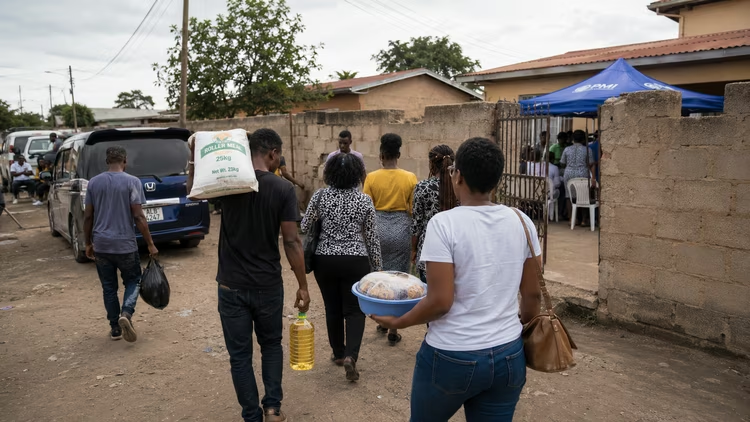
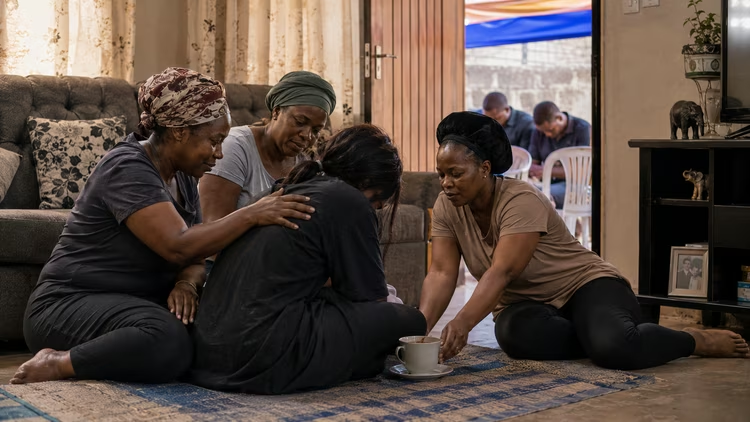
Grief is heavy, and Zambians have chosen to carry that heaviness together. When someone dies, the entire social fabric responds. Furniture is moved, a tent is propped up, and everyone bears a sort of responsibility. Women gather indoors and, in the event of a husband dying, surround the widow not only to mourn with her but also to care for her, while men remain outside through the night, sometimes sleeping in parked cars or around fires. People arrive not only to mourn the deceased but also to carry the emotional weight collectively. Someone begins crying at the gate, and suddenly the atmosphere changes for everyone present. Nothing about this is peculiar in our culture. Another mourner remembers a brother they buried ten years earlier and breaks down all over again. The grief multiplies and merges.
This communal mourning has deep roots in African understandings of personhood. Death was never viewed as an individual event alone. The dead remained spiritually tied to the living, and funerals became both emotional and social obligations. In some Zambian traditions, failing to mourn properly was believed to disturb not only family relationships but also spiritual balance itself.
The Spiritual Roots Behind Everyday Superstitions
Even the superstitions people laugh about today often come from older spiritual anxieties. A child whistles at night, and an elder immediately rebukes them. “You are calling bad spirits.” The warning sounds dramatic now, especially to urban younger generations, but historically night carried spiritual significance across many African societies. Darkness represented vulnerability, uncertainty, and the unseen world. Taboos were often ways of insisting on caution, discipline, or reverence for forces they believed existed beyond ordinary life. Sometimes these customs protected the social order and protected children. Sometimes, no one fully remembers the original reason anymore, but people still follow these cautions almost religiously.
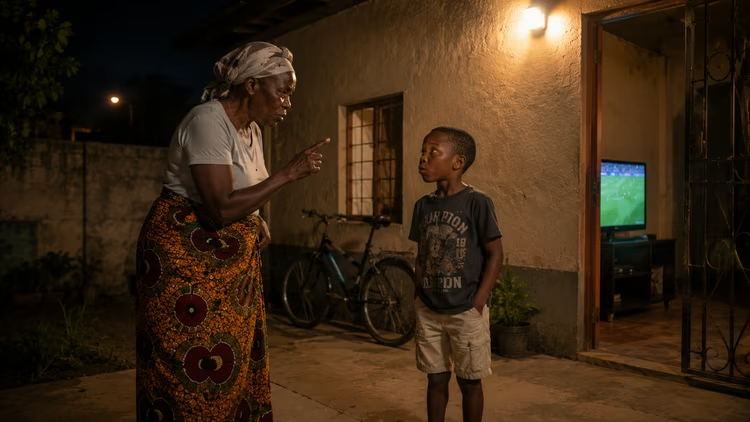
That may be the most interesting part of culture. Customs often outlive their explanations, and that is why storytelling about our culture through our own voices is so important today.
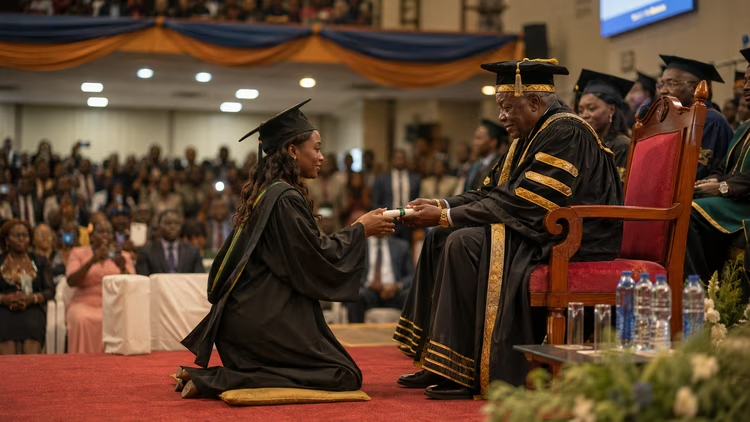
And despite modernisation, despite smartphones and TikTok and English becoming the dominant language in many urban homes, these habits remain surprisingly intact. You still see university graduates kneeling when receiving their degrees. You still hear young people switching into respectful language registers around elders. You still see mourners arriving with mealie meal and cooking oil at funerals because grief, here, is still treated as a collective responsibility.
Nothing is entirely new under the sun. Yes, the setting changes. We see it in the clothes, the language shifts, and even in weddings. But underneath it all, Zambia continues to carry old instincts into modern life almost unconsciously. Modernity does not require us to abandon ourselves. Our culture is not backward, nor is it something to quietly discard as we interact more with the West. It is an imprint, a representation of who we are that we should protect with the same determination we show towards preserving our wildlife. This culture cannot be perfectly preserved in museums or textbooks. It must continue living through us.