Life Begins at the Bus Stop
"Abaleya!"
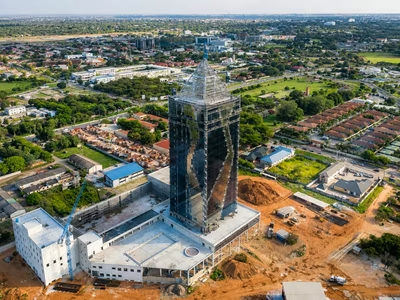
In the bustle of the city centre, a bus conductor calls out for you. It is a busy evening at Kulima Tower, and everyone is rushing to get onto a quickly filling bus. The conductor sees you struggling to cross the road and comes to get you, stopping traffic with nothing more than a wave of his hand. In that moment, you feel chosen, almost special. The Lusaka bus system stretches from city centre to many of the city's residential and peri-urban areas. Many passengers have their own experiences with buses, but all share a familiarity with the lingo that comes with being a frequent passenger.
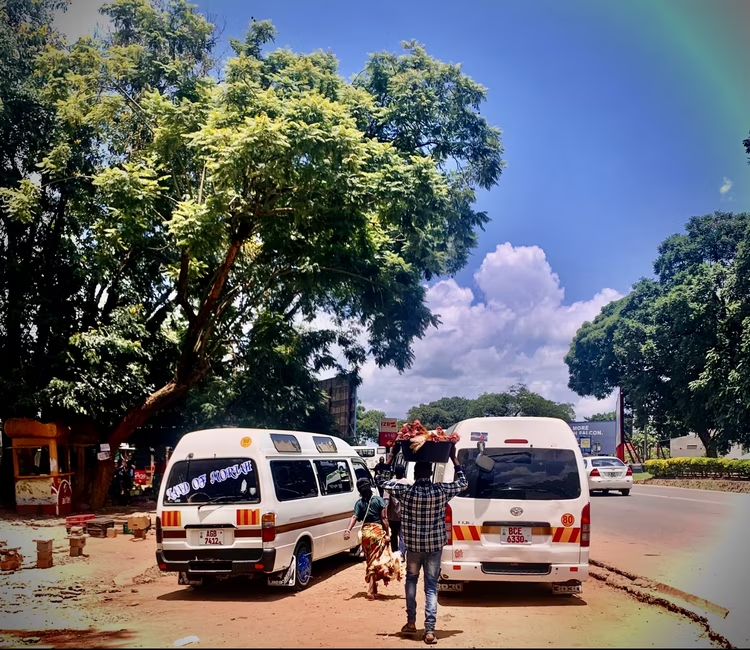
For many Lusaka dwellers, these buses are more than transport. They are places where friendships begin, arguments break out, impromptu sermons are preached, and the city's daily theatre unfolds one stop at a time.
Meet the Bus Conductor
This lively individual wears several hats: logistics manager, accountant and sourcing agent.
We can all attest to how disorganised a bus is without a conductor. For some intriguing reason, they know how much everyone pays and where they are going. They know who boarded three stops ago and who is pretending to have already paid. They remember who handed over a K50 note and who is still waiting for change, all while hanging halfway out of the bus, shouting for more passengers.
On my last bus trip to Kitwe, the bus conductor collected my luggage, kindly ushered me to my seat, and ensured I was comfortable aboard United Buses of Zambia (UBZ). Customer experience varies from passenger to passenger, but I must say I have seen the evolution of these individuals. You will, of course, experience a select few who may cram five people into seats designated for three, or you might be the unfortunate soul who gets a quick boil on the "pa bondix", the engine cover. Yet even then, the conductor somehow convinces you that there is still room for "just one more".
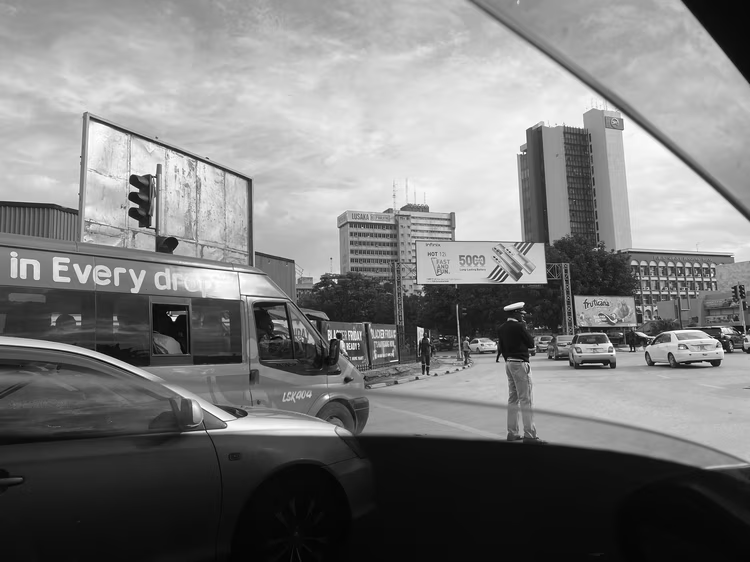
Regardless of our experience with conductors, we must admit they are the heart of the transport system. Without them, fares would not be collected, passengers would not know where to sit, and the organised chaos that somehow keeps Lusaka moving would simply fall apart.
The Art of Bus Fare Negotiation
The BFNE (Bus Fare Negotiation Expert) is a title I coined some time ago, and it is earned through experience. You can tell someone is a BFNE long before they get on the bus. They hold a stern expression, obviously not there to play games.
"Nili che na K5," they say, maintaining eye contact with the conductor at the entrance.
The trick here is that you must actually have the exact amount you intend to negotiate with, because if you present anything more, your deal will be rendered futile before it even begins. The seasoned negotiators know exactly when to strike. Some wait until the bus is nearly full, hoping the conductor will accept a lower fare than delay departure. Others begin walking away dramatically, only to slow down just enough for the conductor to call them back with a better offer.
Most pros maintain the same expression throughout their journey until they reach their destination. There is no smiling, no unnecessary conversation, and certainly no hint that they secretly have another K20 note tucked safely into their pocket. Of course, the bargain comes with its pitfalls. There is no formal agreement on the deal made, so the conductor can simply change their mind halfway through the journey. Worse still, if the bus changes conductors along the route, your carefully negotiated agreement may suddenly become invalid, and you are left explaining yourself all over again.
Surviving Traffic on Lusaka's Roads
As Lusaka continues to grow and develop, it is expected that its traffic will increasingly resemble that of other international cities. It is no longer unusual to spend several hours on a bus on your way home. For some, this is the perfect opportunity to tune in to popular Zambian radio stations such as Hot FM or Phoenix FM, both of which host drive-time shows that invite listeners to interact through WhatsApp, Facebook or direct calls. If fortune smiles upon you, you may even win one of the station's daily giveaways.
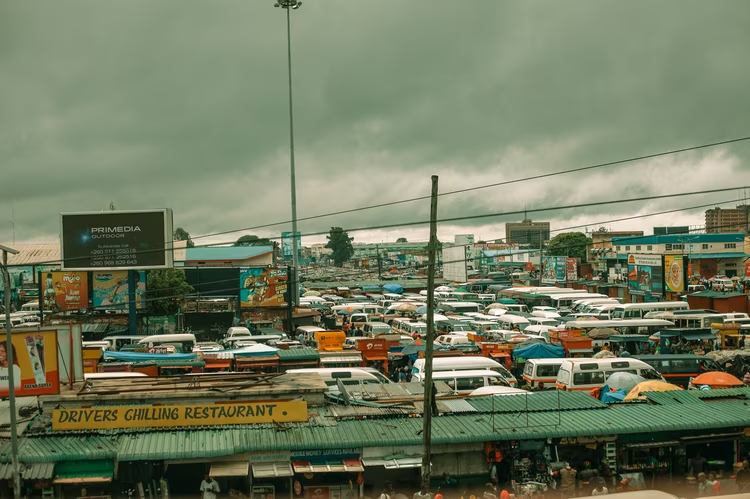
If radio is not your preference, you could lose yourself in a good book or simply stare out of the window, watching Lusaka unfold one traffic light at a time. Vendors weave confidently between stationary vehicles selling bottled water, groundnuts and phone chargers, while minibuses perform manoeuvres that seem to ignore every known principle of road safety.
It is common knowledge that most bus journeys come with some form of onboard entertainment: a preacher delivering a passionate sermon, someone loudly claiming over the phone that they are "just around the corner" despite the bus not having moved in twenty minutes, or buses serving as the birthplace of the most intriguing conspiracy theories. A conductor arguing with another conductor across the road as though they have known each other for years — and probably have. It can never be a dull moment on your local "blue carriage".
Perhaps that is why, despite the delays, the overcrowding and the occasional seat "pa bondix", Lusaka's buses remain unforgettable. They carry thousands of people every day, but they also carry stories, inside jokes, negotiations and memories that anyone who has ever shouted "ba conductor, ni sekula!" will instantly recognise.