Running a seasonal safari lodge in a remote national park is a sustained logistical commitment, one that begins before the season opens and continues long after the last guest leaves. From forward-stocking fuel and dry goods before the rains cut off road access to rotating staff across camps to hold teams together through the off-season, what makes a safari feel effortless is, behind the scenes, anything but.
Every lodge has the making of a postcard. Most actively court it: a deck is positioned so that the sun is always setting on a plain teeming with wildlife, or so that it is reflected in the slow ripples of a river passing by. Serendipitous. The guests’ rooms are similarly placed, just another extension of the horizon. Words fail. But the postcard has limits: it cannot account for other things. Like how time melts, picked up by the stirrings of nature: a hippo grunts, a flock of birds whirrs overhead, a lion roars. Some of these limits have been overcome by the moving postcards we now hold in the palms of our hands. One postcard among a million as we constantly scroll. It is easy to forget that this is incomplete, one half of the carefully curated image projected onto our faces. Postcards are not natural; they are staged.
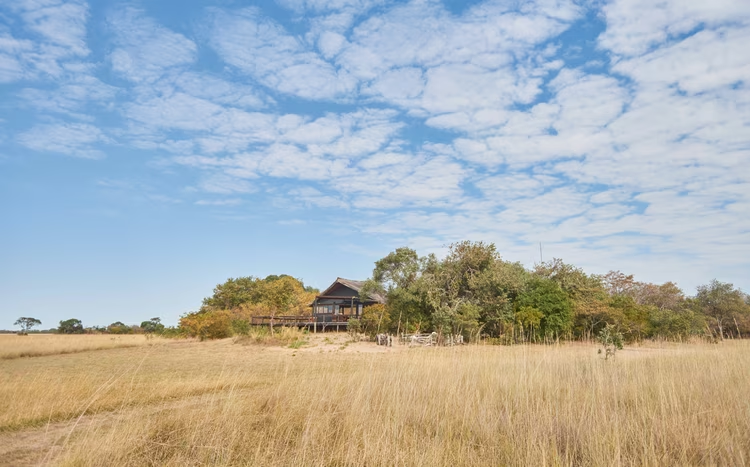
It is three in the morning and it is cold outside. The icy wind lashes the faces of the passengers packed into the safari vehicle as it makes its way to the lodge. Some, the lucky ones, stay in the staff quarters on the premises. It always depends on how remote the lodge is. The further away from the park gate, the more impassable the road, the more likely it is that all the staff stay on the premises, spending long weeks away from their families. At Shumba Camp by Wilderness Safaris on the Busanga Plains, a picture of three young men and a canoe hangs on the wall. Sepia-toned. They were labourers working on the lodge’s construction and used a tree-bark canoe to reach the site. One of the young men, now middle-aged, still works at Shumba. He still has to travel long distances to visit his family, and then only after a few weeks, although no longer by canoe.
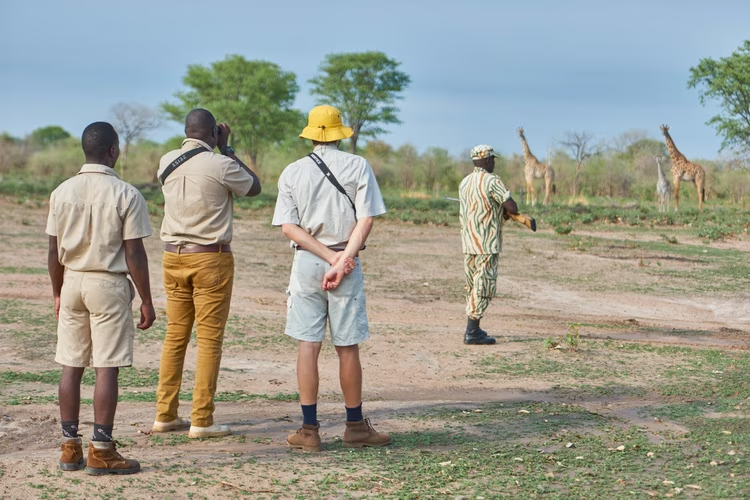
Everything must be set up by 05:00. That’s when the guests are woken up. A staff member politely knocks on my door. I hear myself calling out, “Yes, yes, I’m awake,” before falling asleep again. Another knock, half an hour later, this time more insistent. I wake, fall out of bed and drag myself towards breakfast. Breakfast, ideally, at 05:30. Tea, coffee and a continental breakfast. All consumed in a lazy hurry. The staff are alert, ready for the slightest whim. The guide is nearby, having a cup of coffee and ensuring the final preparations for the morning game drive are complete.
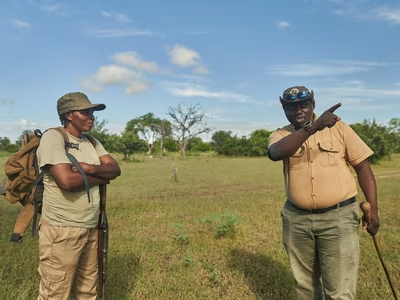
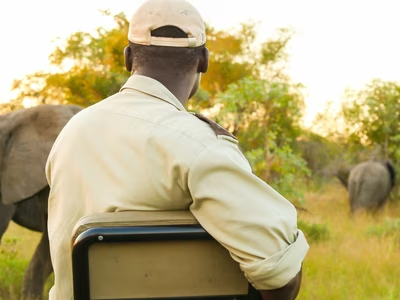
Here, the staff are split into two: the guides, usually accompanied by a spotter, clamber into their safari vehicles at around 06:00 with their guests, who have tiredly bid farewell to everyone. They are wearing ponchos. At more exclusive lodges, the guide-to-guest ratio is 1:1. The intimacy is deliberate and functional: guests often have specific requests, such as going birding, seeing big cats, or seeing small game. Only by knowing your guests can you cater to those requests. Thus, it is known practice for the guides, as the most privileged members of the front-facing staff, to eat with the guests.
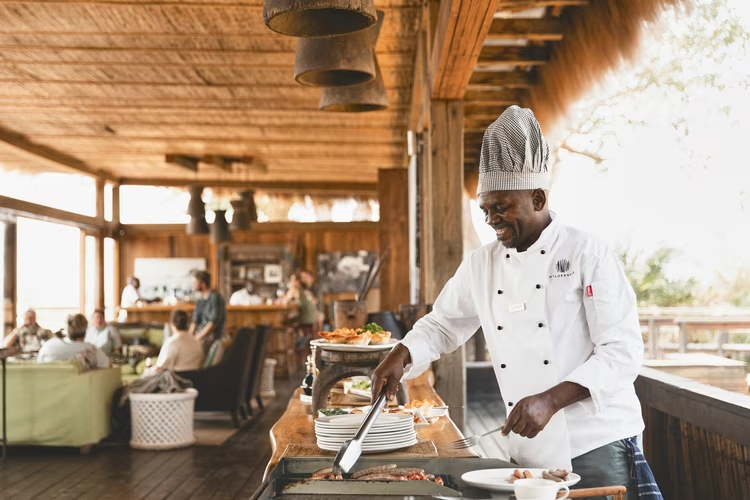
During the morning game drive, the remaining staff clear the small buffet and start the cleaning rounds. Now that the guests have gone, they can enter their bedrooms, clean, organise and prepare for brunch. The few times I have stayed behind during the morning game drive, a little hungover on wine, a little tired from the long drive, I would wait on the deck or swim in an empty pool. The staff mill around freely then, joking with one another as they sweep and mop the floors. Their days run on schedules different from ours; part of their job is just to be present. At times, they get to rest.
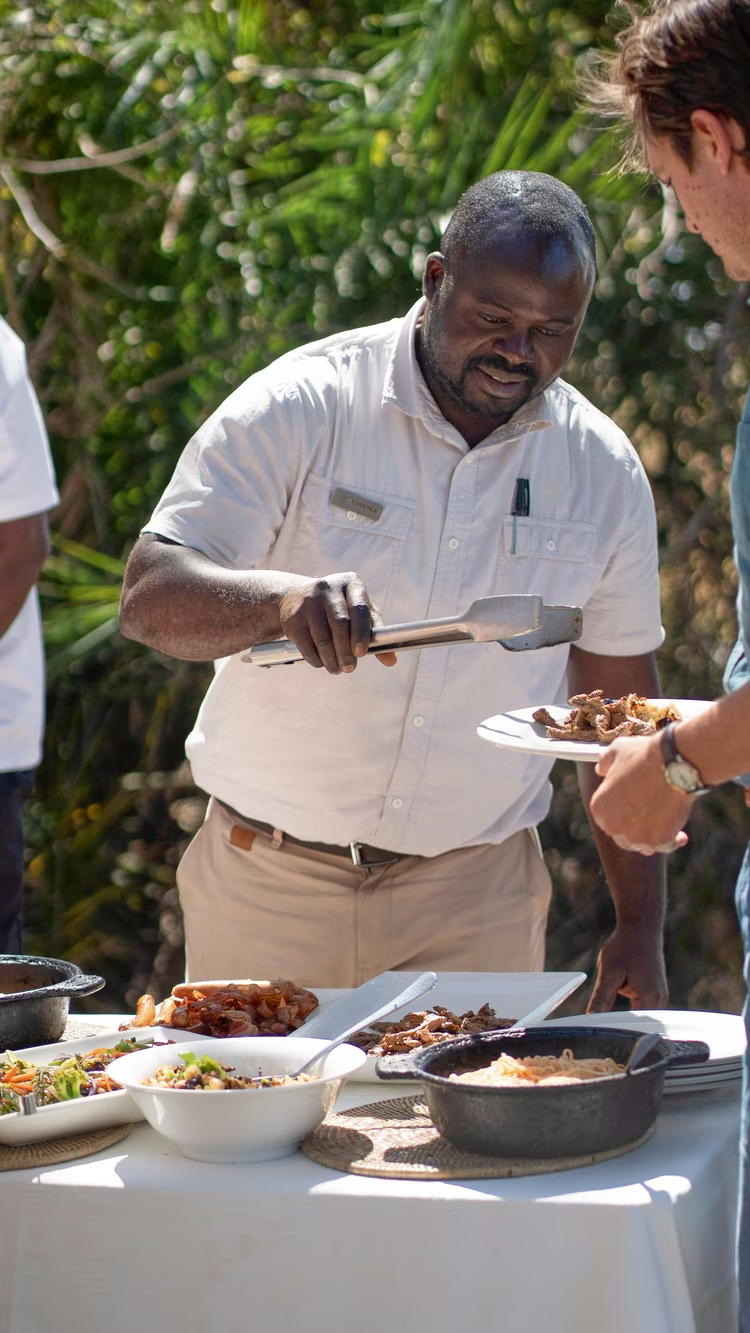
Presence, however, is not always seen. The kitchen, often what makes or breaks a good trip for guests, is like a hidden organ of the lodge. Food preparation has to be done with waste in mind. Because many lodges are remote, they struggle to obtain all the fresh produce they need to satisfy their customers, who are often quite exacting in their tastes. Thus, careful portioning of meals and using every usable offcut of produce to reduce waste are necessary. However, some lodges, such as Mfuwe Lodge in South Luangwa National Park, have their own farm about an hour from the park gate. We were shown around it by our guide Steve and two of the farm workers, who were enjoying their lunch before our arrival. We walked through the seemingly endless mango orchards alongside greenhouses housing vegetables. A project begun during COVID, the farm now supplies much of the lodge’s fresh produce, reducing its reliance on Chipata or Lusaka.
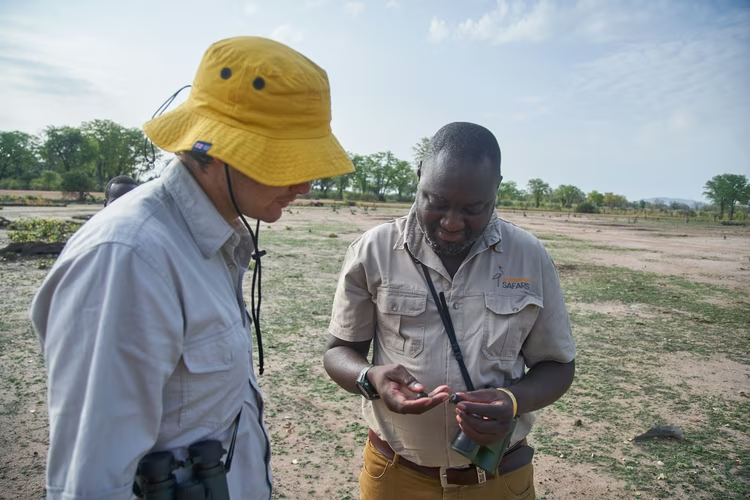
During the off-season, however, the reality can be a lot starker for the staff who choose to stay behind and mind empty lodges from November to May. Forward planning is essential. During the green season, many national parks flood, becoming inaccessible to vehicles and other forms of transportation. Due to the rising waters, the only way to travel is often by boat. Arnold, from Wilderness Safaris, tells a story of travelling six hours by banana boat on the Lufupa River from Lufupa River Camp north to the Busanga Plains to deliver supplies for the staff who remained behind. The journey was epic, the stuff of legends. As Arnold recalls: “I had to weave around large logs swept downstream, avoiding hippos that had moved out of the main channel because of the rising water, and pushing through thick bush where branches scraped against the boat. Along the way, snakes occasionally dropped from the trees into the boat, and sometimes we were disturbed by swarms of bees resting on low branches.” But it was ultimately rewarding, bringing fresh food to staff who had been surviving on tinned food and dry goods for two months.
Setting up seasonal camps and lodges requires extensive planning and preparation, and a basic level of camaraderie in the face of difficulty binds the staff together. Their days are organised by the repeated rituals that give the work a sense of stability. The afternoon game drive repeats, for the staff, much of the same ritual as the morning game drive. A small meal beforehand, tea, then staff split into two: one half with the guests, the other half cleaning and preparing rooms for the evening, preparing meals and listening for the crackling radio announcing the arrival of guests from their drive, tired and somewhat glassy-eyed after a couple of G&Ts. A short rest and then dinner is served, usually a three-course meal. Waiters stand and chat in hushed tones, keeping an eye on the guests and ready to serve.
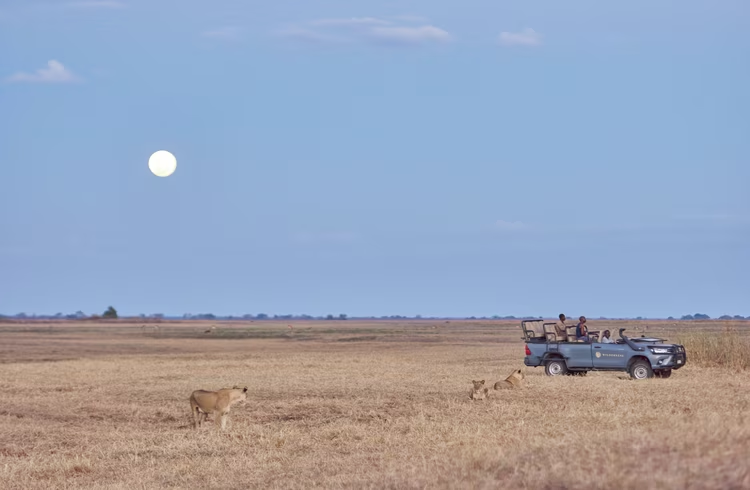
The guests may be a little tipsy after dinner; it is a holiday, after all, and they may sit by the firepit on this cold night. We are sitting with our guides on the deck at Liuwa Camp, in front of a smouldering fire and under a canopy of stars. The conversation turns to lions, then politics, then to the niche topic of lion politics on the plain. As it gets later, our laughs ring out across the plain louder and louder, until suddenly they stop. We realise that we are tired and need to drive home tomorrow. As we stumble to our rooms, a man with a torch guides us to bed and bids us goodnight. We will sleep soundly. He may not have that privilege. After all, postcards don’t make themselves.