Zambia's history is not confined to textbooks and museums. Sometimes, the best way to understand it is to stand where the stories happened.
From ancient art on the hillsides of Kasama to archaeological sites, museums and natural landmarks, the country is rich in places that make its history leap from textbook pages and offer a deeper understanding of Zambia.
So, if you are planning a heritage-focused trip around Zambia, here are seven places worth putting on your itinerary.
Victoria Falls: Zambia's Most Iconic Natural Heritage Site
Not many places can introduce Zambia to the world quite like Victoria Falls. Known as Mosi-oa-Tunya, or “The Smoke That Thunders”, the falls are one of the world’s best-known natural landmarks and stretch for more than two kilometres along the Zambezi River. The site is recognised by UNESCO as a World Heritage Site and is one of Zambia’s most prominent tourist attractions.
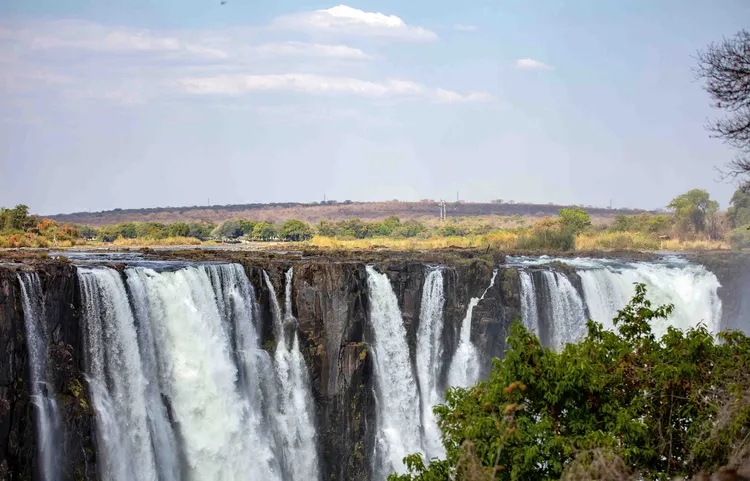
How you experience Victoria Falls shifts dramatically with the seasons. Water levels are typically at their highest around the end of the rainy season, producing enormous volumes of spray and a thunderous roar associated with the name Mosi-oa-Tunya.
The falls are in Livingstone, Southern Province, roughly a 10- to 15-minute drive from the town centre.
Expect breathtaking viewpoints, heavy mist during high-water periods, walking trails and spectacular views of the gorge. Activities such as river rafting and Devil’s Pool are seasonal and depend on river and safety conditions.
Entrance fees apply, and rates can change, so check the latest information before your visit.
Livingstone Museum: Explore Zambia's History and Heritage
If Victoria Falls sets the scene for Zambia’s natural heritage, the Livingstone Museum helps paint a picture of the history and people surrounding it.
Located on Mosi-oa-Tunya Road in the centre of Livingstone, it is Zambia’s oldest and largest museum. With collections covering everything from archaeology to natural history, the museum offers a rich introduction to Zambia’s past.
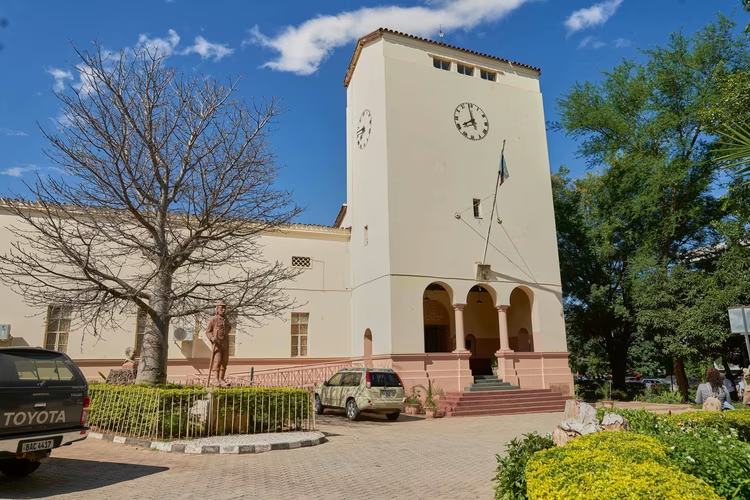
For a full experience, allow at least two hours to explore the galleries. The museum is open daily from 09:00 to 16:30, except on Christmas Day and New Year’s Day. Admission fees can change, so check with the National Museums Board for the latest rates before visiting.
If you are already planning a trip to Victoria Falls, the museum is an easy addition to your itinerary.
Chilenje House 394: Step Into Zambia's Independence History
In Lusaka’s Chilenje suburb stands a modest house that holds an important piece of Zambia’s political history. Dr Kenneth Kaunda lived at Chilenje House 394 from January 1960 to December 1962, and the house became a centre for his activities during Zambia’s struggle for independence.
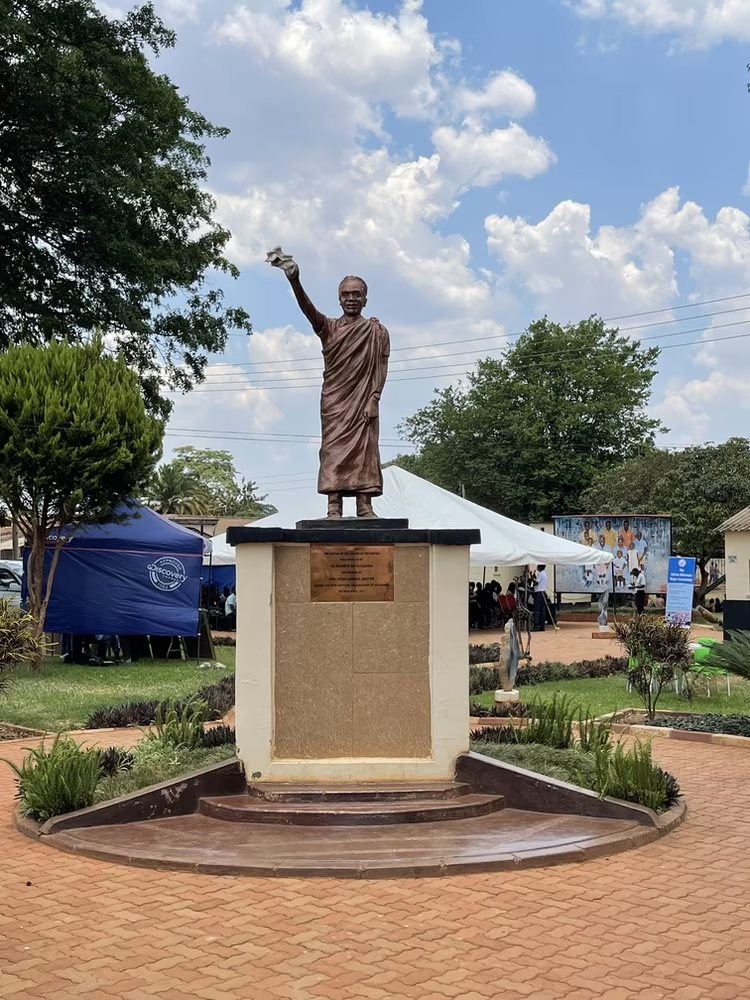
The house is intentionally kept on a modest scale. The number of rooms, the furniture and the surrounding area provide a more personal experience of the independence story than a large monument could.
Contact the National Heritage Conservation Commission before visiting to confirm opening arrangements and any entrance fee that may apply.
Mwela Rock Art: Discover Zambia's Ancient Rock Paintings
About five kilometres from Kasama, the Mwela Rock Art Site offers one of Zambia’s most remarkable glimpses into prehistoric life. The rock paintings at Mwela are linked to hunter-gatherer groups of the Later Stone Age and include more than 1,000 paintings.
The site received national monument status in 1964. Beyond its ancient art, the landscape also holds cultural and spiritual significance for local communities.
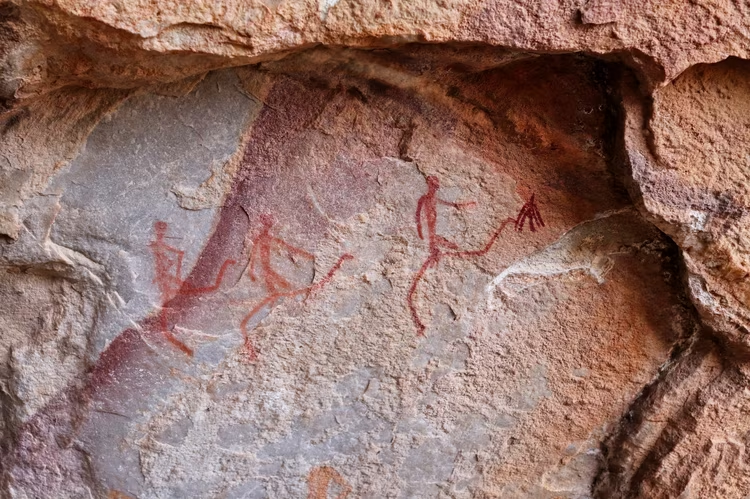
You can expect an experience that is more oriented towards the outdoors than a typical museum visit.
Given the distance from Lusaka, Mwela is better suited to an itinerary exploring Northern Province than to a short weekend detour from the capital.
Mukuni Village
Heritage isn't always that which is kept behind glass; at times it is a living community.
Located near Livingstone, Mukuni Village is associated with the Toka-Leya people and the Mukuni chieftaincy. Although it is situated near one of Africa’s busiest tourism areas, the village remains closely connected to local cultural traditions.
Visitors should approach the village with respect, ask before taking photographs, follow their guide and keep in mind that this is a living community, not a theme park.
Ing'ombe Ilede: Explore Zambia's Archaeological Heritage
The archaeological site known as Ing'ombe Ilede, meaning “sleeping cow”, is located on a hill near the confluence of the Zambezi and Lusitu rivers.
Archaeological evidence indicates that the site was an important trading centre, connected to wider trading networks across southern and central Africa.
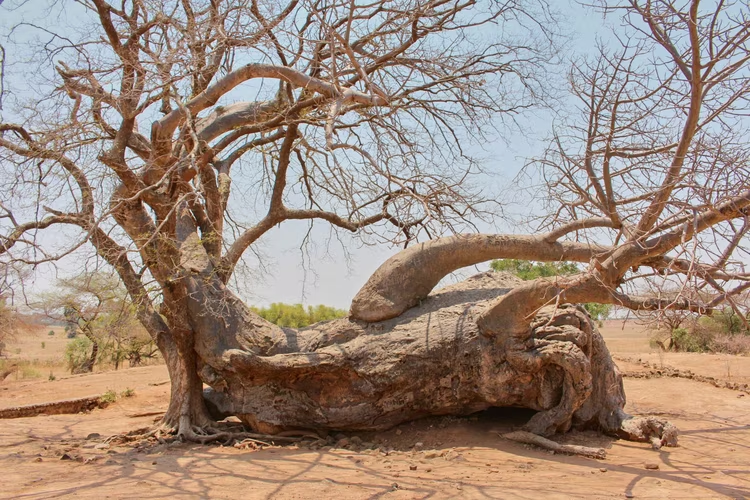
It is close to Siavonga, so visitors can combine a trip to the heritage site with a tour of Lake Kariba. It is a place aimed at people who enjoy archaeology and the stories buried beneath ordinary landscapes.
Lusaka National Museum: A Starting Point for Zambia's History
If you want a general overview of Zambia’s history, visit the Lusaka National Museum in the capital.
The museum features exhibits covering Zambia’s cultural and historical heritage, making it a useful starting point for gaining an understanding of the country before exploring other destinations.
Admission fees can change, so check with the National Museums Board for the latest rates before visiting. The museum’s current opening hours and payment methods should also be confirmed before setting off.
Before You Visit Zambia's Heritage Sites
At some sites, visitor facilities have been established, and entrance fees are published, while others are archaeological or community-based sites where arrangements may change.
Before setting off, check opening hours, entrance fees and whether guides are available.
Above all, arrive with a curious mind. The heritage of Zambia is not just a set of old buildings, paintings and artefacts; it is a record of people.