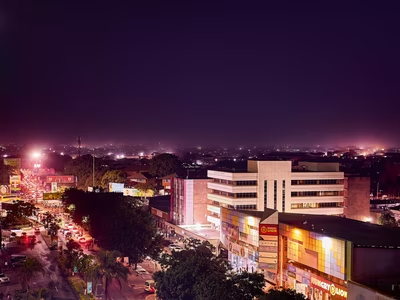
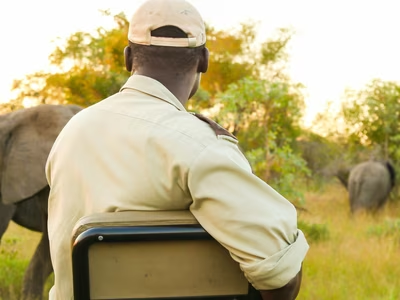
Mfuwe is not a town so much as a collection of villages that have since outgrown their old boundaries and now rub up against one another in forced neighbourliness. The road from the airport cuts through the villages like an artery, feeding them. Tourism is big business. Most visitors to South Luangwa National Park (SLNP) arrive from Chipata or Mfuwe International Airport and enter the park through Mfuwe Gate. There are four other, less popular gates: Kapamba, Nylon, Lusangazi, and Zikomo.
They exist more as names than real places, in reality no more than a boom gate operated by a bored ranger, letting in the odd tourist, or self-described explorer, wide-eyed and in search of some mythical beauty: an idea of wilderness, a savage drama played out in the remote reaches of the animal kingdom. Mfuwe obliges.
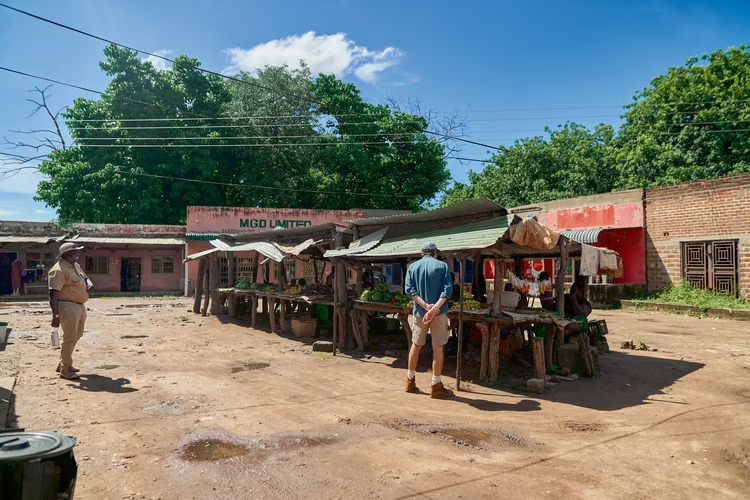
We cruise, avoiding potholes for about 40 minutes before quite suddenly the distance between the buildings on the roadside lessens, more shops appear, and the area’s only petrol station comes into sight. If Mfuwe is a town, it is only because of the presence of the national park.
And yet, Mfuwe resists. It has its own economy of small dramas: a fully stocked hardware store doing brisk business, a woman selling tomatoes and impwa in the shade of plastic sheeting, a group of men hanging around their motorbikes, waiting for work. The park brings the money, but the town has its own business to attend to.
Where Elephants Tread
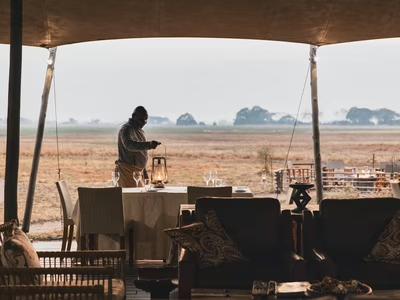
The Luangwa River, which acts as a natural boundary for most of the park, is flowing strongly. So much so that it even threatens a lodge. We cross it as we enter SLNP, and about five minutes later, we come across Mfuwe Lodge on the right. Its ease of access makes it popular, and it is large, with about 20 rooms in total, overlooking an oxbow lake that dries up between the rains. From the veranda of my room, I can see crocodiles floating on the fast current. A pair of water monitors chase a vervet monkey. Hippos graze the grass between the rooms.
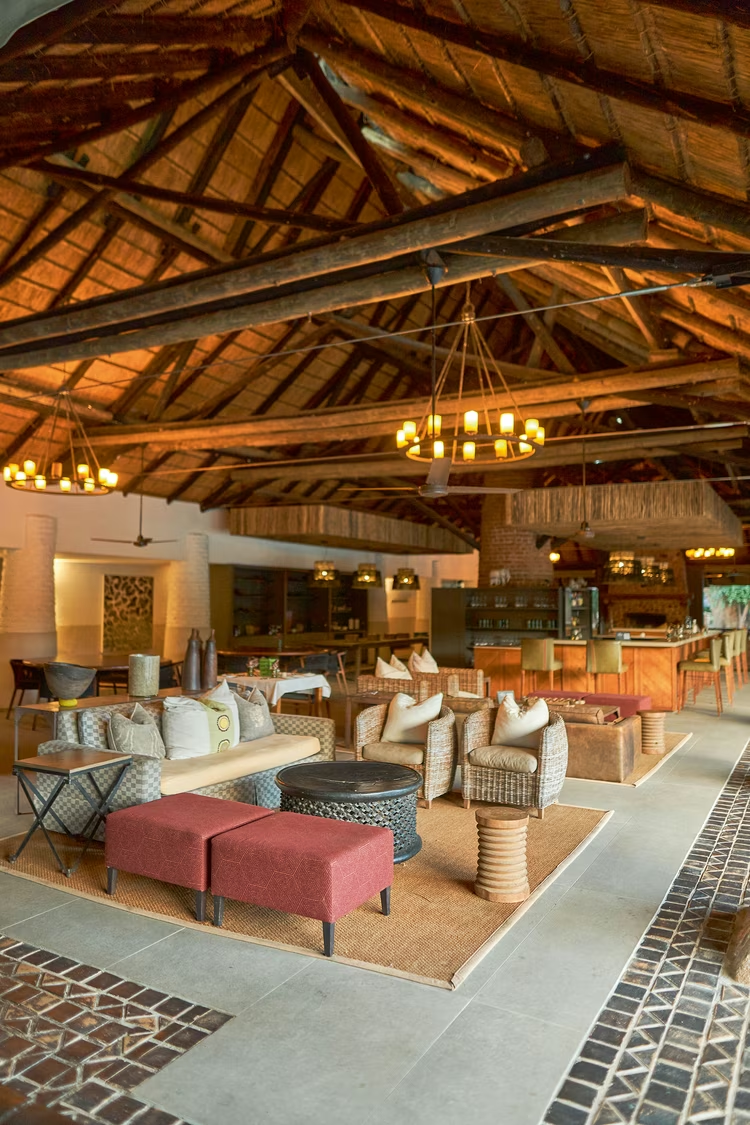
Mfuwe Lodge is known for the elephants that walk through the reception area to pick at the fruit of the large wild mango tree between the common area and the library, which houses books on Africa and all the tender things in between. The lodge is the flagship of the Bushcamp Company, a ‘gateway’ for more exclusive bushcamps set deeper into the park.
Serenity in the Wild
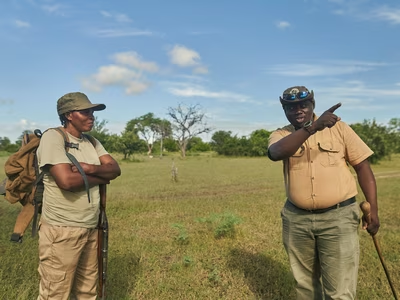
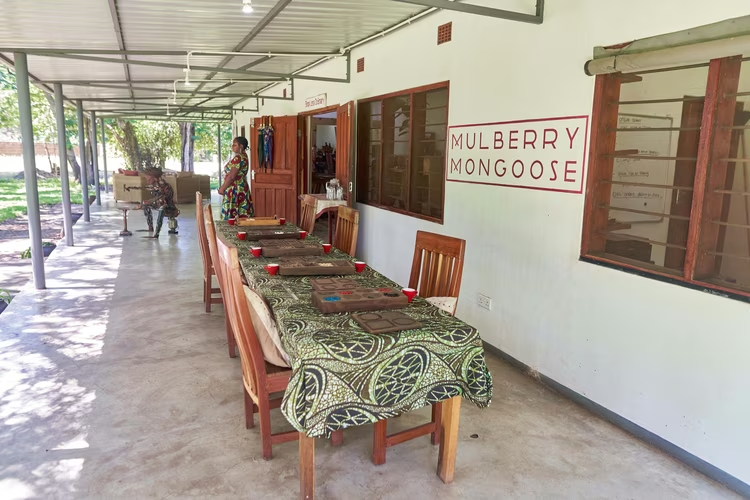
The lodge is also home to the ‘Bush Spa’, overlooking the same oxbow lake. Janet, who has worked at the spa for 20 years, says that mendosana (which translates to 'back legs') is popular with many guests who have spent their days on walking safaris. South Luangwa is, after all, home to the walking safari. A two-hour early morning walk with the mist low on the ground and dew still clinging to the grass explained the treatment’s popularity.
Beauty from Cruelty
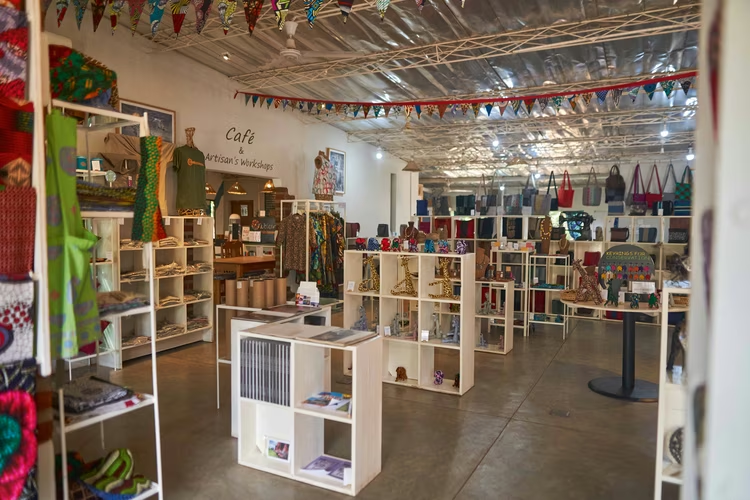
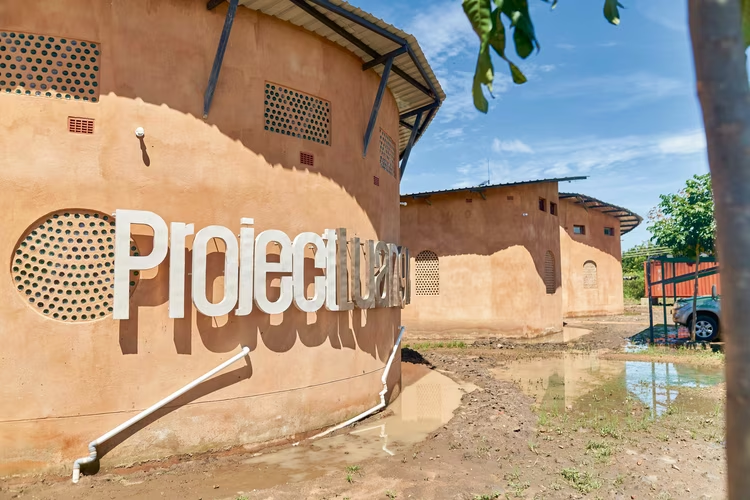
We walked around Mfuwe for a bit with Steven, our guide from the lodge. We started at Project Luangwa, an important community initiative that grew out of the Luangwa Conservation and Community Fund, a part of Conservation South Luangwa (CSL). The fund is supported by lodges in the South Luangwa area. A shop selling goods made by local residents, alongside a café, forms the public face of the Project. A group of women are at the back tailoring goods.
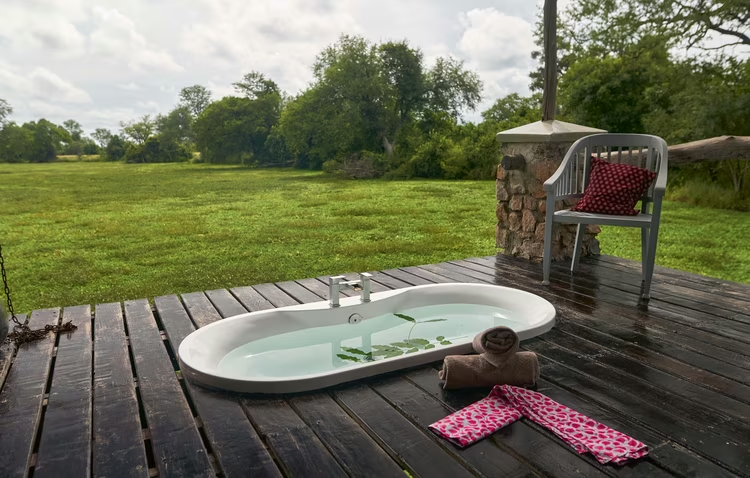
SLNP, and by extension Mfuwe, is an example of a successful experiment in sustainable tourism. Project Luangwa is just one of the initiatives working hard to bridge the gap between the local communities surrounding the park and the tourism that operates within it. Other initiatives are less directly involved with conservation structures, such as Mulberry Mongoose, which sells jewellery made from snares found by game rangers in national parks and helps fund conservation efforts. We were earnestly welcomed and given a tour of the jewellery and the workshop in the adjacent room. The artisans are hard at work. The jewellery strikes a balance between its naturally bulky material and the delicacy it demands. It is meant to be worn in the bush, in harsh conditions. I enjoyed the clarity of intention that transforms something so aimlessly harmful as snares into a thing of beauty.
For Us, By Us
As we walk around Mfuwe, I keep noticing banners hanging on shop fronts announcing a certain DJ Xtra Wiggle’s 40th Birthday Bash. I ask Steven about it, and then he notices DJ Xtra Wiggle walking not far from us, holding a pair of live chickens by their wings. DJ Xtra Wiggle is friendly and invites us to his 40th birthday party. We apologise: unfortunately, we won’t be in town.
Everyone knows everyone else in ‘The Valley.’ It is the charm of any small town. By asking around, we met Willy Malambo, a veteran tour operator in Mfuwe. He has played an important part in the Mfuwe community, co-founding the Mfuwe Sports Association and the Mfuwe Fitness Club, a free community gym. He is open and generous with his time and his stories—the pleasures and pressures of work, the scenic view of his house on the river. And most strikingly, his commitment to the Mfuwe community.
The Summer House
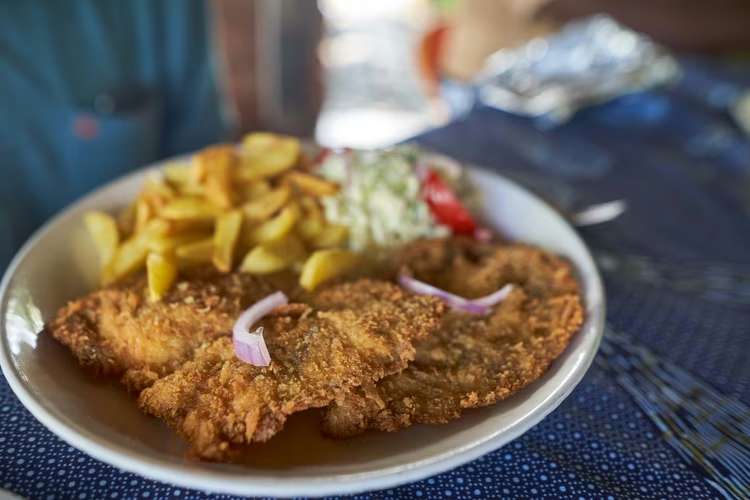
After speaking for about an hour, we headed to Dorphil Restaurant, which is known to all locals. ‘Dorphil’ is a portmanteau of the names Dorica and Philimon, the husband-and-wife owners of the restaurant. When we arrived at the restaurant, we were shown to a small thatched structure with a table and chairs, which Steven calls a summer house. I enjoy his description, like something out of a 19th-century novel. The flooded grass gives off a shimmer in the light. A dog is wandering around, begging for handouts. Dorica comes and takes our orders, and insists someone try her chicken schnitzel. I try it. It is quite delicious.