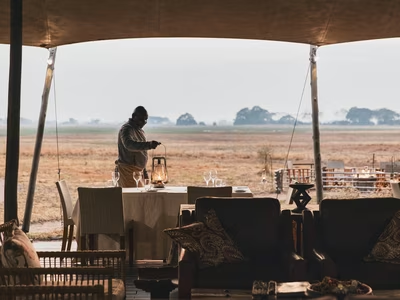
Just before I enter Marlin, there is a glass door. From the angle I approach it, I can see the insides of the restaurant—all glittery with lights and laughter and waiters running around or looking on. The trappings of a nostalgic dream. As I draw closer to the entrance, almost reaching the landing, I look at the glass door once more. I see myself in a flash; yes, that is me now, but also a part of me from the past that seems to linger, like a memory. That memory stuck between places: half-me, half this-place.
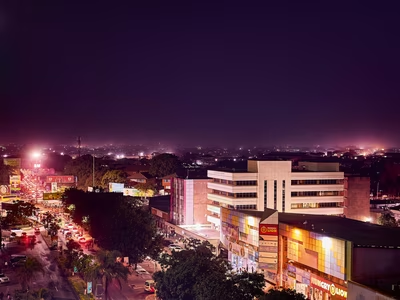
Marlin was one of the first restaurants my family visited when we arrived in Zambia, just after the 2008 financial crisis (a disconnected event, I think). In any given city, a good steakhouse acts like a magnet, around which an allure revolves. Perhaps it is the matter-of-fact attitude toward its food, reflected in a menu that has remained unchanged for 20 years. Or its unpretentious, offhand attitude towards change. Marlin maintains its indoor smoking area, the advertisements for cheap cigarettes lining the walls, and the ornate pressed ceilings. The owner still comes in every evening to monitor the kitchen. Naturally, there are cosmetic changes: the waiters no longer wear waistcoats, and the wall-hung partitions have been removed. Nowadays, they serve two wine brands instead of one.
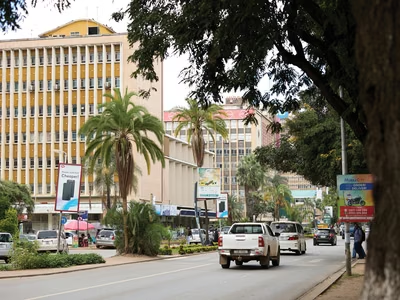
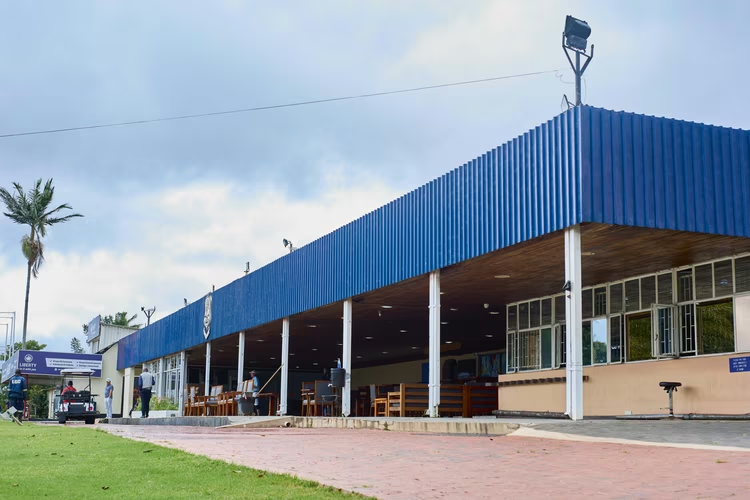
Marlin is located in the Lusaka Club, a sports club not too far down the road from The Lusaka Golf Club. Both have eschewed the trappings of an elegant façade and instead have this kind of mean look. Squat, sneering. This stands in contrast to the stated aims behind the planning of Lusaka, which was purposefully built as a ‘Garden City’: the new capital of Northern Rhodesia was meant to live up to the colonial ideal of a well-ordered, green city. But the garden city has no public parks, and the closest thing to public greenery is the large trees lining some of the older streets and the traffic roundabouts that host either a national monument from a forgotten war or garish, absurd advertisements, such as a chicken. Instead, to find something resembling a public park, one must travel to the outskirts of the city. Chaminuka is one such place.
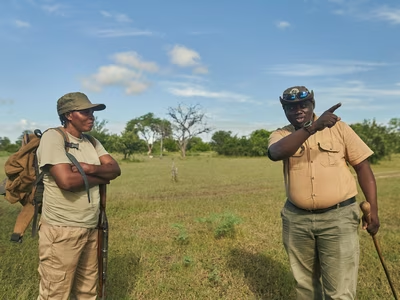
Chaminuka was built in 1978 as the private estate of Andrew Sardanis, and occupies around 10,000 acres north-east of Lusaka. At its centre is a large building surrounded by lodging, overlooking a lake where animals lazily graze. Its proximity to the city makes it a popular destination for tourists, offering a taste of the promised Africa: walking with cheetahs and elephants, game viewing on short safari drives, and a curio shop. But my interests lie elsewhere, namely, its art collection.
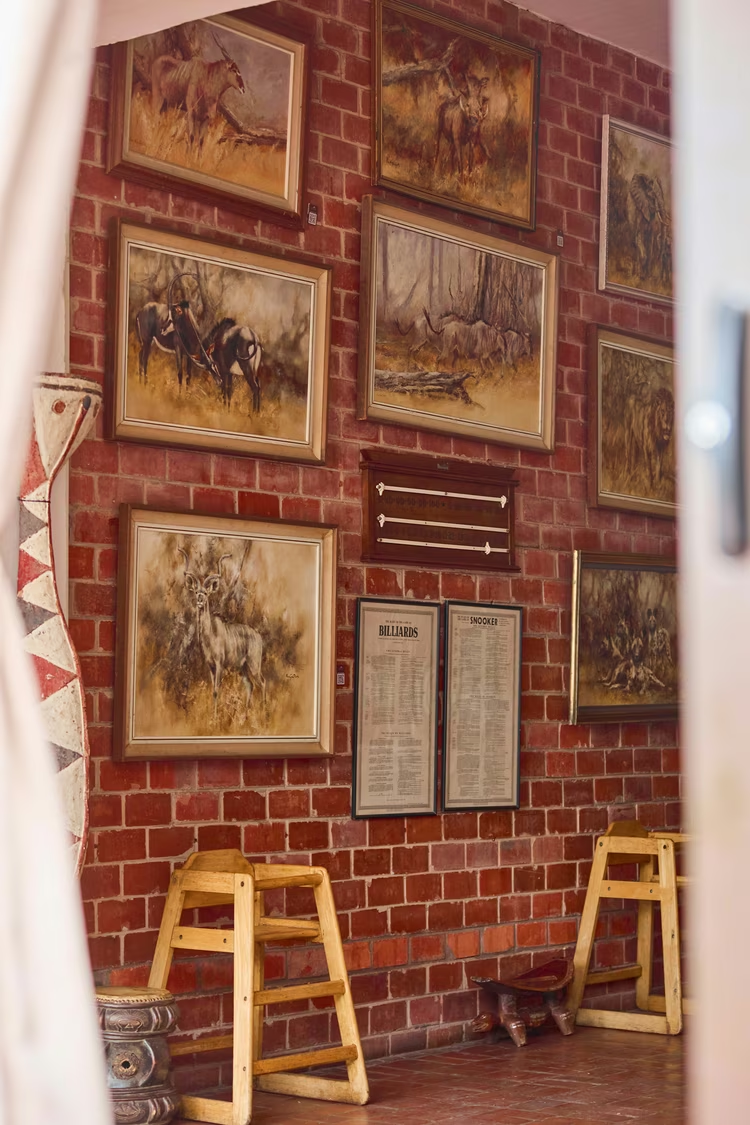
Chaminuka holds a large collection of artworks and artefacts from Zambia and the region. You walk through its hallways as you would a home, admiring in part the books, the snooker table, and the little figurines with elongated limbs in a glass cabinet. A woman gives birth. QR codes provide a basic description of the artwork, which totals over 850 pieces. We are guided through the exhibition by the densities of light and dark reflecting on the brick walls on an overcast day. As a collection, the pieces are impressive. The names of Zambia’s most famous artists begin to feel familiar.
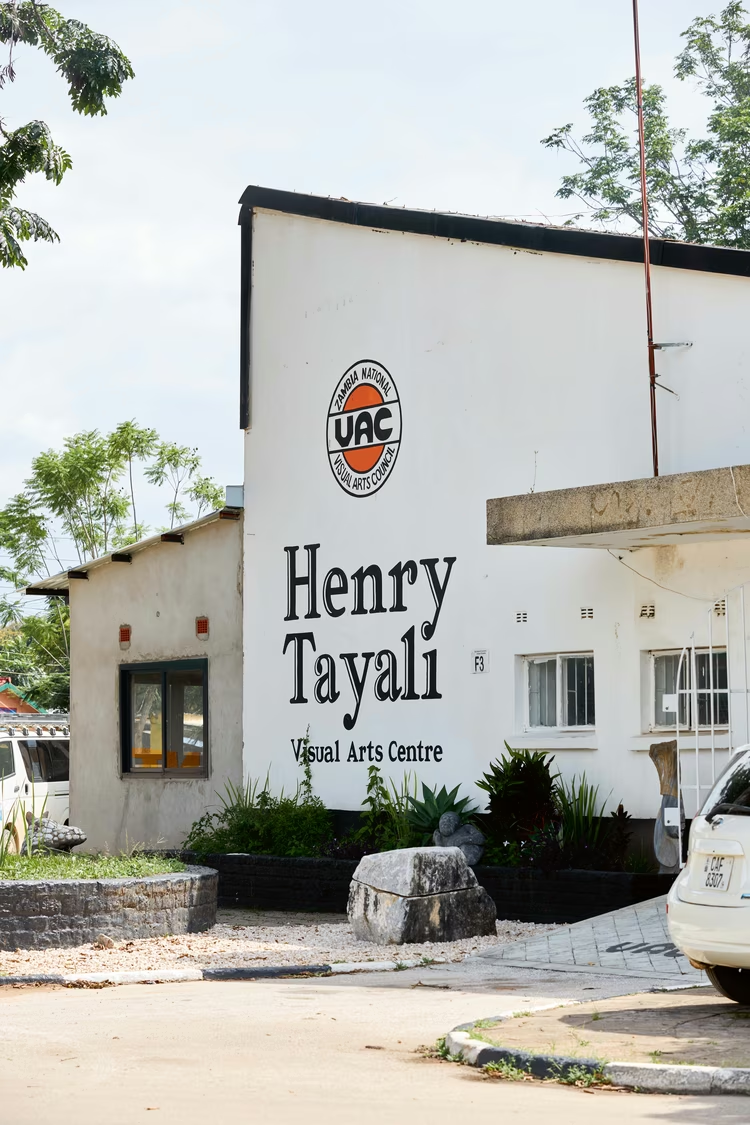
There are a few well-worn institutions in Lusaka where one can view art, one of them being the state’s flagship gallery, The Henry Tayali Gallery, located in the Showgrounds. The exhibition I visited at the gallery was titled ‘Izwi’, which translates to ‘voice’ in Lungu. The exhibition, as the curatorial statement explains, is in celebration of International Women’s Day, and so the ‘voice’ is a woman’s voice, the voice of womanhood. The exhibition aims to centre the perspectives of women in the art world.
The art exhibited is of varying quality. Some are clearly amateurish, and others deserve their place in the art gallery. The best are the two large-format paintings by the artist Mwamba Chikwemba. The mixed-media pieces portray full-body portraits of women that imply womanhood is a bricolage of motherhood, sisterhood, and individuality, among other things. The two pieces remind me of Wangechi Mutu’s art, although Chikwemba’s are more figurative and less surreal. The majority of the art centres on figurative paintings of women, and I wonder whether this is deliberate or not.
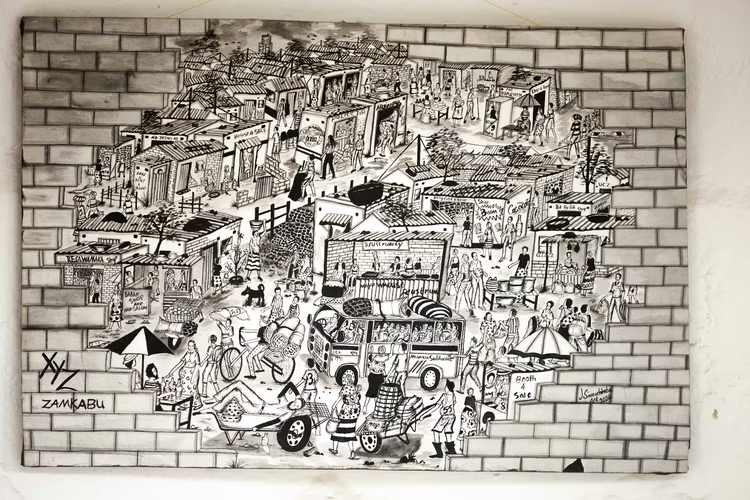
I have always disliked the main exhibition space. It always felt empty to me. I prefer the messy area in the small courtyard on the opposite side of the entrance. Around one corner, and then another, I see discarded objects. This is the place of discarded objects, where artworks by men are hung in the semi-circular alcoves lining the walls. Here, the range of artwork is broader. Immediately on the left, there is a painting of a grotesque woman singing the national anthem. I enjoy its sense of humour and its ironic placement.
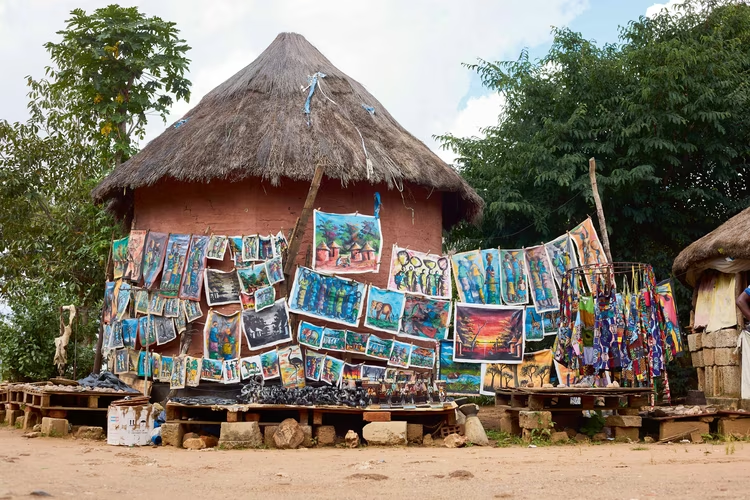
Galleries separate art from craft, but I don’t think this distinction is true or should hold as true. Kabwata Cultural Village traffics in the latter: craft, or not-art. I try to avoid the Cultural Village, in part because I disagree with the idea that ‘culture’ can be found in a make-believe village within sight of apartment blocks, and in part because I often feel harassed by the vendors. However, I suspend my concerns for the time being and enter the village gate. The dirt path is lined with thatched huts, in which craftsmen and craftswomen sell their wares. They call to us from the dark recesses of the huts, stepping out as they see our pale skin. But we ignore them momentarily, and instead turn our attention to the sounds at the end of the path. A performance must be taking place. Drums and singing and the shuffling and thumping sound of feet on earth.
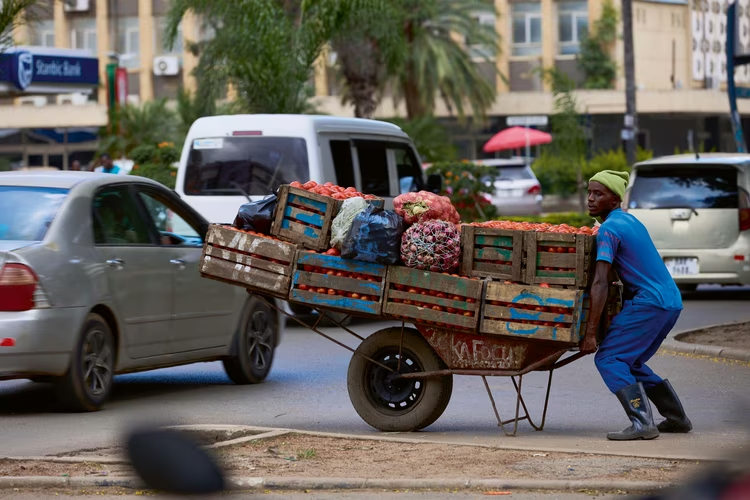
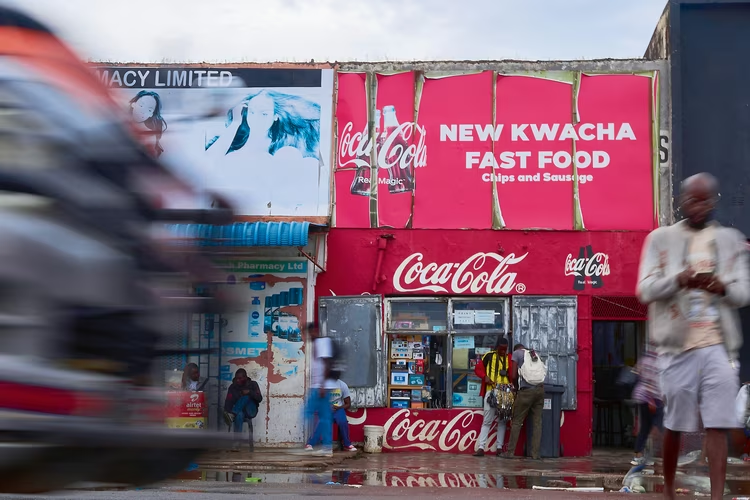
I am holding a packet with a Hungarian and chips. I got it at New Kwacha Take Away in town, which is one of the oldest take-away stores in the city, first opening its doors to the public soon after independence. I find a seat to eat in the amphitheatre, a set of concrete benches surrounding a concrete stage covered with dirt. Everything feels dilapidated. We are watching a troupe of dancers, most of them adolescent girls with chitenge wrapped around their waists. The men are mostly older—save for a group of three young boys—who are either drumming or leading the performance. They stop for a few minutes to discuss the next dance. I open my packet and eat the Hungarian sausage and chips.
The chips are soggy—it has been about 30 minutes since I ordered them from the little hole-in-the-wall on Freedom Way. I break off a piece of the Hungarian, its pink flesh turning grey in the scalding sun. It has the texture of rubber. Sodium pulses through my veins. A little artery is clogged. An errant piece of hardness is in my mouth, and I spit it out. I begin to use the mashed chips like a piece of nshima and the Hungarian like a piece of relish.
The performers begin another dance. I watch this one and the next, and they are captivating. The movements are not perfectly choreographed, but they express an energy and willingness that is difficult to fake. I later find out that they are performing Ngoni dances in honour of the recent Ncwala ceremony. I soften my initially hard attitude towards the place; perhaps there is something here about the connection between cultures that the village creates. And I am more forgiving of the artists who ask me to buy their artefacts. There is no doubt that these are elegant in their own way. I just don’t need anything at the moment, I apologise to them truthfully.
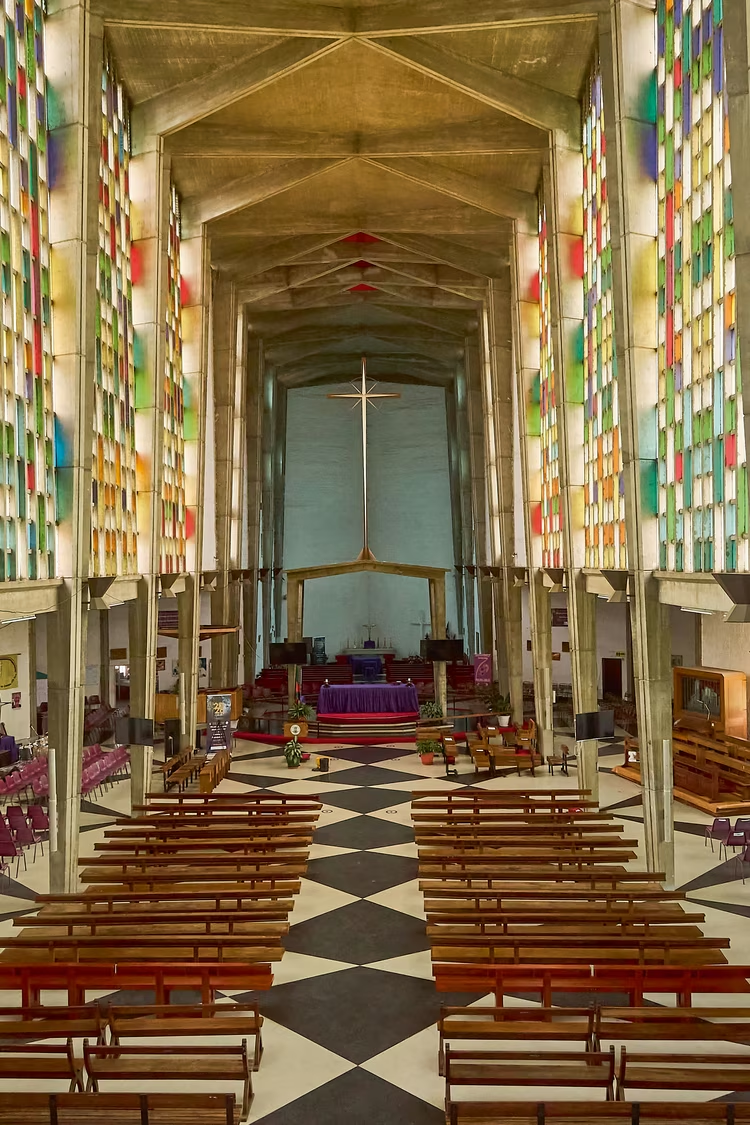
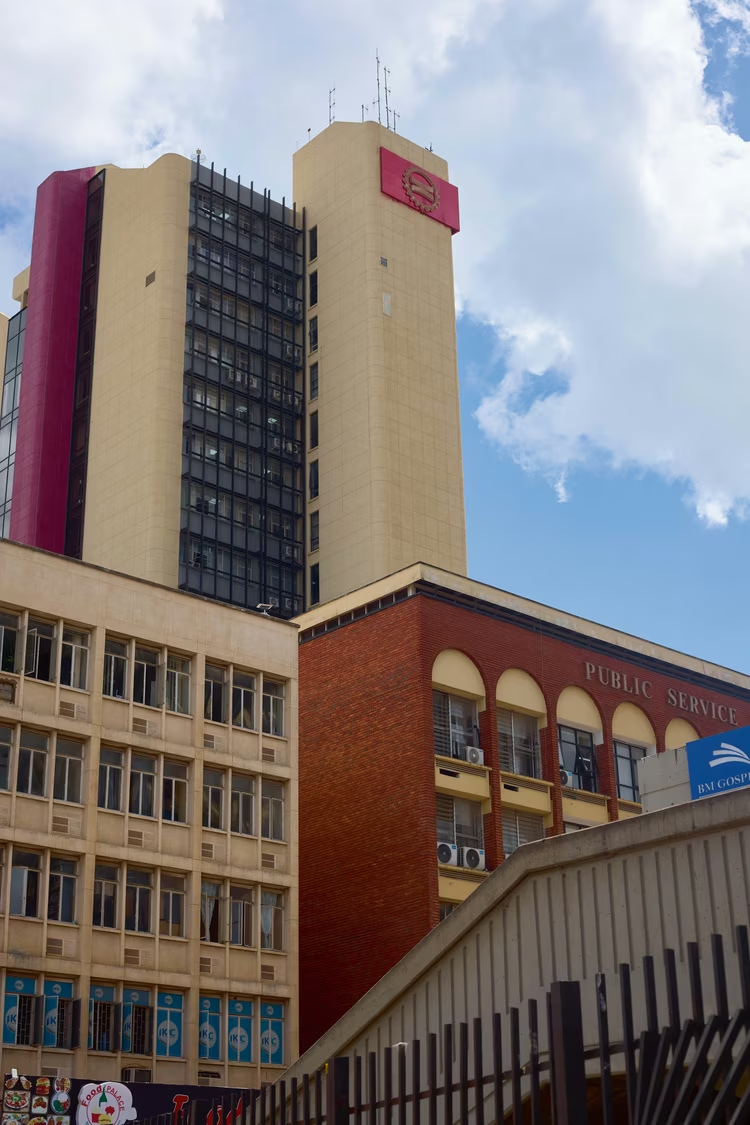
The rhythm of African life is often contrasted with the stiffness of the West. Wondering whether this was true, I attended Sunday Mass at the Cathedral of the Holy Cross during the month of Lent. It is a hallowed period marked by sombre ceremonies. I have been to the Cathedral often, to marvel at its architecture, which watches over the government buildings from its privileged position on Cathedral Hill. This part of town is all very neat, very deliberate. The union of the colonial state and religion, sanctified by the Queen Mother, who laid the foundation stone in 1958, is a brash, imposing example of African Modernism, a gift—whether in good faith or not—from the British to the newly independent nation.
The procession comes down the nave, singing. The high vaulted ceilings hold the solemn tone in their concrete ribbing. The stained glass strangely illuminates the grey sky outside. We seem small in comparison to the building, no doubt a spatial analogy to God, whose presence should overawe and overwhelm us. The priest has a sing-song voice and is practised—that much I can tell from his service. I sing the hymns from my hymn book proudly.
Afterwards, Mr Thompson, who has been sitting near me, greets me. He casually wonders what I am doing here, and I fumble with my thoughts because it is not clear that I know. Passing through? Yes. At some point, we are interrupted by a tramp, who wears a tattered suit, comically long tie and extravagant pocket handkerchief in the truest manner of a Beckett play. Mr Thompson told me I must come back for the early Easter Mass. Five o’clock in the morning. Then, he says, you go into the cathedral in darkness. As the service takes its course, you witness the genesis of the world again: it is quiet, the birds chirp as the sun dawns, and you end it all with tea and hot cross buns.
I must really come, he insists. I tell him, unfortunately, I’ll be away.