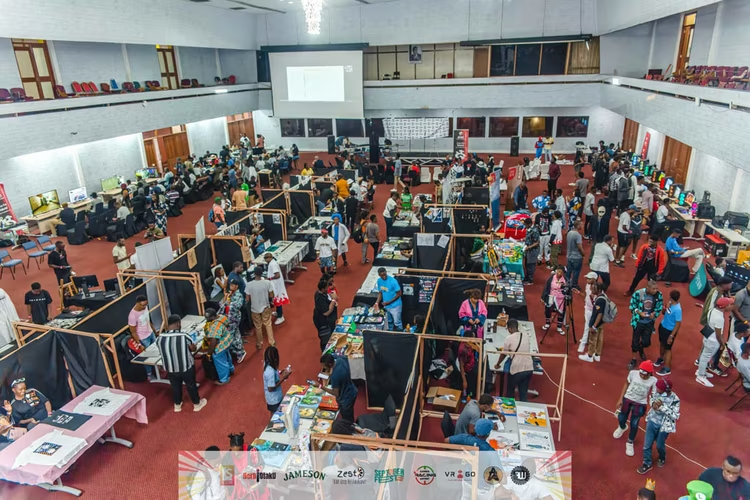
On a Saturday afternoon in Lusaka, a crowd gathers around a television screen. Every pass, goal and missed opportunity is met with cheers, groans and playful insults. To an outsider, it might look like a football match. It is actually a FIFA tournament. Across Zambia, gaming is no longer just a pastime. It is becoming a growing digital culture powered by tournaments, mobile gaming, content creators and ambitious esports communities.
If you were to walk into a local gaming lounge, you’d find the air thick with anticipation. Controllers click, screens glow, and crowds cheer on as players battle it out in gaming tournaments. What was once considered a childish pastime activity is now becoming one of the country’s younger generation’s cultural movements.
FIFA Tournaments and Gaming Lounges Are Building Communities
Gaming lounges have become social hubs offering access to reliable internet, gaming consoles and a sense of community. For many Zambian gamers, FIFA is the gateway. University hostels and local market lounges host tournaments where winners earn bragging rights and sometimes modest cash prizes. Mobile gaming has also grown significantly, offering accessible competition for players who cannot afford consoles.
A new wave of content creators and Zambian YouTube streamers has also emerged. These creators stream matches, provide commentary and build online communities around gaming content. This adds to visibility and digital identity for the gaming community. Local Area Network competitions and online squads are also growing in prominence. These squads compete in Esports (electronic sports), a highly organised and competitive form of video gaming. Esports operate much like traditional athletics with professional players, leagues, coaches, rules and spectators. While Zambia lags behind South Africa and Kenya in Esports infrastructure, ambitions and dreams of international recognition are strong among local gaming squads.
Changing Attitudes Towards Gaming Careers
Some parents and members of the older generation still see gaming as a waste of time, but growing prize pools, sponsorship opportunities, and career opportunities are slowly shifting perceptions. Gaming is increasingly becoming more than recreation. For some players, it creates opportunities in content creation, tournament organisation, sponsorship, streaming and competitive esports. Across Africa, developers such as Nyamakop (South Africa) and Kiro'o Games (Cameroon) have incorporated African stories, folklore and environments into their games, demonstrating that African experiences can resonate with global audiences.
Local esports teams look to the success of traditional Zambian athletes, such as mixed martial arts fighter Miracle Chipito, as a blueprint for securing major corporate sponsorships. Her international achievements demonstrate how structured support can elevate local talent onto the global stage.
The rising gaming “craze” provides plenty of opportunities, such as creative jobs in gaming design, coding and streaming, while Esport tournaments have the potential to attract sponsors. Challenges, however, still exist, such as high data costs limiting streaming and online play, limited parental support and cultural stigma, and infrastructure gaps.
Zambia’s gaming subculture is youthful and full of talent. The question is whether the country will nurture its potential into a serious creative economy. The crowded gaming lounges tell a story of ambition; this story is only just beginning. How it unfolds is dependent on how well this untapped potential is promoted.