Why Zambian Slang Hits Different
“Eksay, pass me a John Cena.”
My foreign colleague froze for a second, but halfway to his mouth. Then he laughed.
“I’m going to need you to explain that.”
Zambians are many things. Entrepreneurs, creatives, professionals, the list goes on. We are famously known for being friendly, hardworking, and, most of all, for finding humour in almost anything.
Some words and phrases have unofficially become part of the Zambian vocabulary. They are earned, not acquired, picked up only through an authentic and immersive Zambian experience. Where do these words come from? Some are a mix of different languages, some come from improvisation, and others are shaped by pop culture, everyday experiences, and the way we naturally bend language to fit our environment.
Popular Zambian Slang Words and Their Meanings
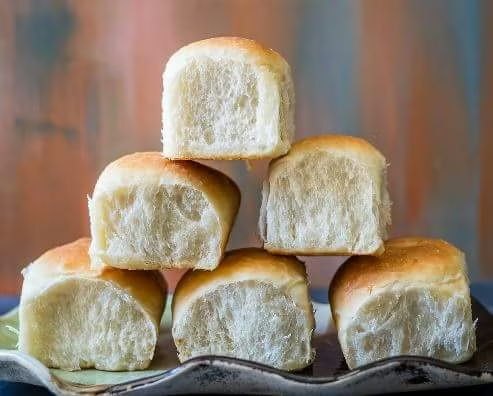
John Cena, but make it pastry
These are what you know as dinner rolls. They are a breakfast staple across Zambian households, loved for their softness, affordability, and ease of sharing. They come in trays of 12 to 24 rolls and are commonly referred to as John Cena's because of how they resemble the six-pack abs of the famous wrestler John Cena.
It might catch you off guard at first, but once you notice the resemblance, it makes complete sense. It’s no longer just bread; it’s John Cena.
Local is Laka
From the Afrikaans word lekker, meaning nice, pleasant, or enjoyable, laka has become a popular term in Zambian slang used to describe something that is genuinely good. It’s often heard in the phrase “Local is laka,” a quiet nod to the idea that local products and experiences hold their own.
You’ll also hear it in everyday greetings. “Laka laka?” someone asks casually, and the response comes just as easily: “Best best.” It’s simple, but it carries a profound sense of belonging.
Don’t forget your Mbasela
Mbasela is a widely used Zambian colloquial term believed to come from the idea of something “paid by the seller” or simply added on by them. It refers to a small, free extra included in a purchase, usually without being asked for. In everyday settings, especially in markets, it captures that familiar moment when a seller quietly tops up what you’ve bought, an extra tomato, a bit more relish, or a handful of vegetables, turning a simple transaction into something a bit more personal.
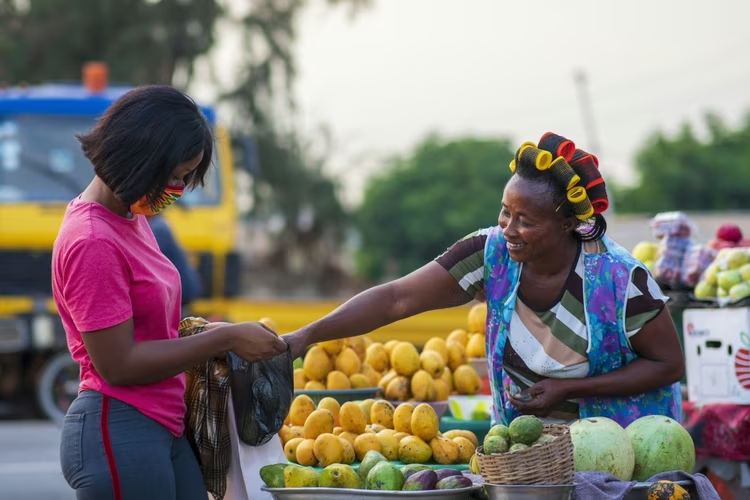
Over time, the meaning goes beyond markets. It can refer to any kind of bonus or addition, whether it’s extra time, a freebie, or even customer reward points, like in branded promotions such as “Kwik Mbasela.” It sits alongside similar expressions like "kadyonko," all pointing to the same idea: something added at the end, not expected but always appreciated.
Kopala Swagger
Kopala is a well-known Zambian slang term referring to the Copperbelt Province and the people and culture associated with it. The name is thought to have come from a localised pronunciation of “Copperbelt,” gradually evolving into Kopala over time. Today, it carries more than just geographical meaning. Referring to someone as “Ba Kopala” often suggests a certain lifestyle, one shaped by quick thinking, resilience, and the fast pace of mining towns like Ndola, Kitwe, and Mufulira.
Kopala has also taken on a broader cultural identity, influencing music, language, and style. It shows up in what many call “Kopala swagger,” a confident, street-smart way of carrying oneself, and in dance and music that blend Bemba rhythms with Afrobeats and Amapiano.

Eksay
Eksay (or ekse) is a widely used slang expression in Zambia, with roots in the Afrikaans phrase meaning “I say.” In everyday use, it works as a reaction word, expressing surprise, disbelief, excitement, or simply drawing attention. It works much like “wow,” “seriously,” or “listen,” depending on tone and context.
At the same time, it can also be used informally to address someone, almost like saying “my guy” or “friend,” especially in casual conversation. You might hear, “Eksay, where are you going?” where it’s less about emphasis and more about familiarity. That flexibility is what gives the word its nuance; it shifts meaning easily based on how and where it’s used.
I’ll have a Zambian Airways and chips, please
Listen, don’t be surprised if you hear this at your nearest chicken takeaway spot; it’s actually a thing. “Zambian Airways” is what many people jokingly call chicken wings, a nickname that comes from their shape, as if they could actually take off.
Ask around, and you’ll find that for some people, the phrase brings chicken to mind faster than it does aviation.