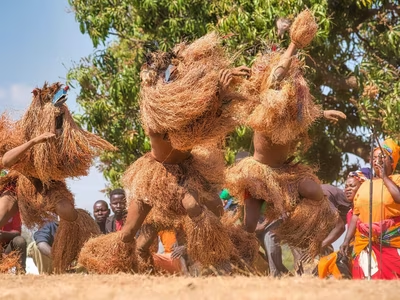
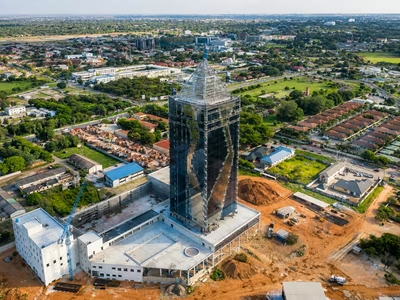
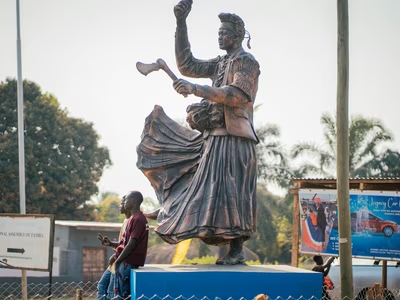
Circus Zambia is set to take centre stage at the Edinburgh Festival Fringe with their high-octane, heartfelt theatrical performance of Afronauts. Based on the true story of Edward Mukuka Nkoloso’s space programme, a school teacher who was a revolutionary and who dared to dream that a newly independent African nation could go to space. Today, contemporary artists are reclaiming his legacy as a powerful symbol of imagination, resistance, and narrative sovereignty. As Circus Zambia prepares to take Afronauts to Edinburgh, questions of ownership, representation, and who gets to tell African stories have become increasingly urgent.
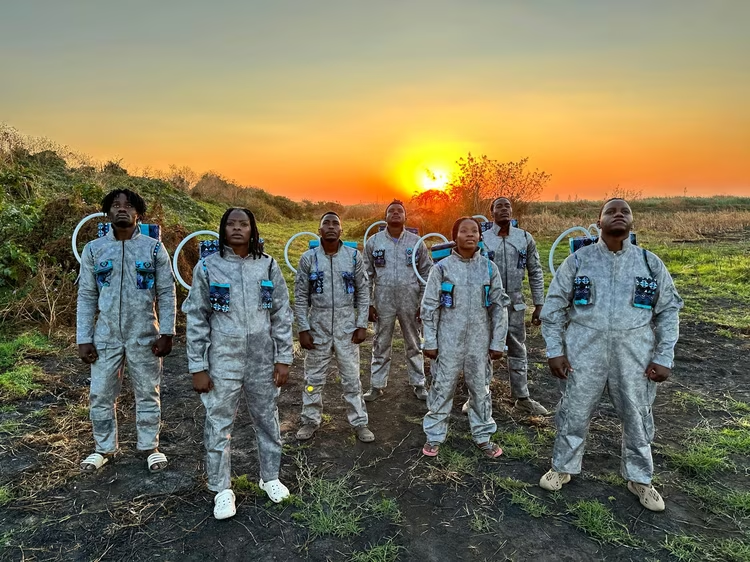
Adam McGuigan, the Co-Production partner at Wake The Beast, a performance company, explains the importance of Circus Zambia showcasing Afronauts on Global stages. “As the first Zambian Circus performing at one of the biggest festivals in the world, the Edinburgh Festival Fringe, we are carrying the stories, dreams, humour, creativity, and ambition of our people with us.“Zambia Ku Chalo” means that the voice of Zambia belongs on the global stage. It means we are not waiting for permission to dream, create, or contribute. We are already doing it.”
Beyond celebrating Circus Zambia's global achievement, the production also raises deeper questions about how Zambia tells its own stories. Ngosa Chungu, a documentary filmmaker who is documenting the journey to the festival, shares, “I think that the concept of Zambia Ku Chalo is really powerful, and it's a great way to show just how far people can come. While global cultures have well-defined narratives- the ambition of the American Dream, the historical legacy of the British, or the modern, resilient 'Miracle on the Han River' that fueled South Korea's rise from the Korean War and the 1990s IMF crisis. The concept of a 'Zambian Dream' remains largely unwritten. There isn't a globally recognised archetype of what it means to strive and succeed in the Zambian context.”
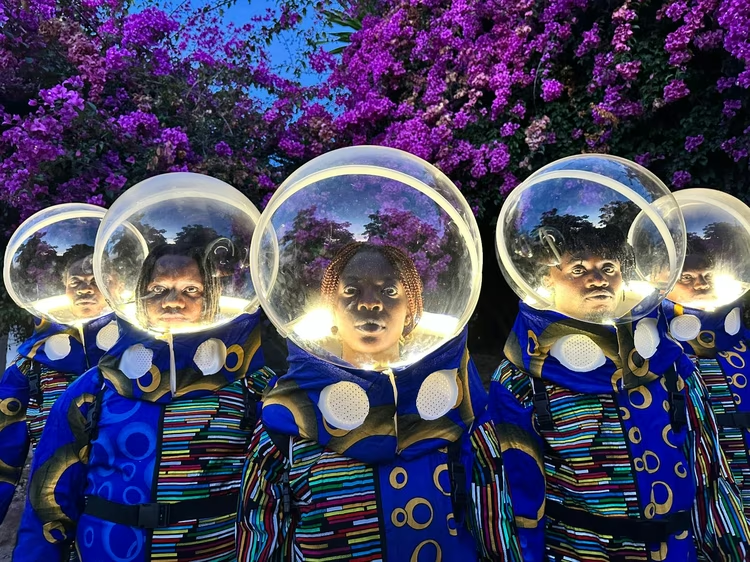
Circus Zambia’s masterful theatrical piece challenges the Western caricature of Nkoloso and reinterprets his Afronauts space programme as an anti-colonial and metaphorical act of protest. Speaking on the treatment of Nkoloso and his space programme, Adam shares, "Historically, Western media treated Nkoloso as a curiosity or a joke. Our starting point was to ask what that response reveals about Western assumptions rather than about Zambia. Afronauts is a genuine co-production with Circus Zambia, developed over many years of collaboration in Zambia. From the outset, we prioritised speaking with Nkoloso's son and engaging with Zambian perspectives on his legacy. Zambian artists have been central to shaping the story, themes and perspective. Rather than filtering Nkoloso through a Western lens of scepticism, we explore what his vision meant to a newly independent nation full of possibility, ambition and hope. Our aim is not to tell Zambia's story for Zambia, but to create a platform where Zambian artists can reclaim and reframe a story that has too often been misunderstood.”
For decades, Edward Nkoloso’s space program has been dismissed as a historical joke. Ngosa remarks, "Nkoloso's story is an anti-colonial story. This documentary’s main aim is to decolonise the way we view him, because right now, we are viewing him through a Western lens. We take everything a little too literally, but we are a culture of metaphors and allegories. Some of his ideas may have been out there, and he had to improvise greatly, but that is the tamanga spirit; that is Zambian hustle at its finest. It’s figuring out a way to achieve your goals when you don’t have exactly what you're told you should have." Contemporary creatives like Circus Zambia and African filmmakers have re-examined his legacy with their own eyes. Audiences now have a chance with Circus Zambia’s Afronauts to dive deeper into the narrative of a man who dared to imagine a future beyond limitations for a newly independent nation.
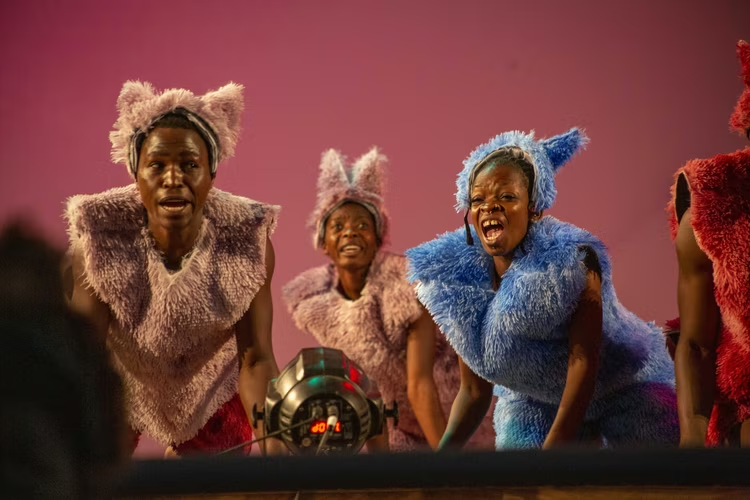
That process of reclaiming Nkoloso's legacy is not confined to historical debate. It is embodied every night on stage by Circus Zambia's performers. Nkoloso’s cadets trained in 200-litre oil drums; Circus Zambia’s acrobats train on trampolines and mats using their bodies to tell an inherently triumphant story. Gift Chansa, Co-Director & Founder of Circus Zambia, shares, “ I feel that we as Zambians should continue to change the narrative about who we are and what we are capable of. When Nkoloso said, ‘They underestimate our intelligence, but they will be surprised,’ he was planting a seed for future generations. He understood that vision always comes before belief, and that sometimes people laugh at ideas simply because they cannot yet imagine them. Today, through circus, theatre, and dance, we are continuing that same fight. We are using the human body as a tool for storytelling, resistance, and imagination. Every movement on stage challenges stereotypes about Zambia and about young people from communities that are often overlooked. Taking Afronauts to the world stage challenges the single story often told about youth from the kombonis. We are showing the world that when young people are invested in, trusted, and given opportunities, they become artists, leaders, changemakers, and innovators.”
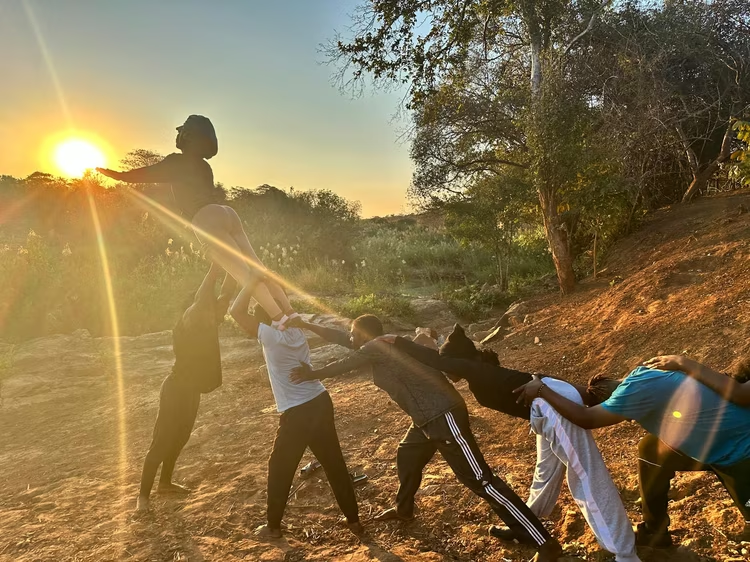
Gift shares, “I grew up in Chibolya, one of Lusaka’s kombonis(compounds), where many young people are surrounded by poverty, stigma, and limited opportunities. Often, society only sees the negative side of these communities and forgets the talent, intelligence, creativity, and resilience that are there. That is why the story of the Afronauts is important. The story is not only about space; Nkoloso was a science teacher, a freedom fighter and much more than he was described: a visionary who enabled young people to dare to dream.”
Ngosa expounds, ”What I love about Circus Zambia is that it rewrites the narrative of hope in our country. These kids came from difficult circumstances, yet they have flown higher and travelled further than those who had every advantage. We Africans love an underdog story; look at Chipolopolo’s legacy of rising from tragedy to achieve the impossible. Circus Zambia captures that same magic; it makes the grandest dreams feel achievable for the ordinary Zambian.”
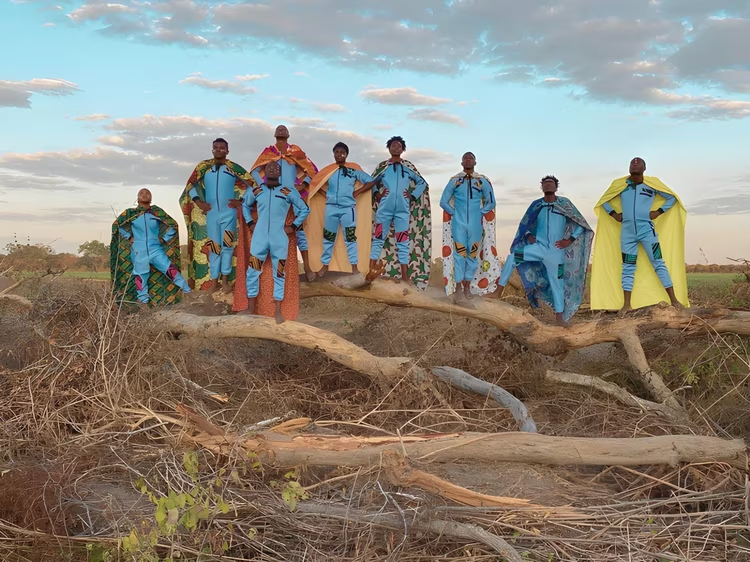
At its heart, Afronauts is about something universally human: the courage to dream beyond the limits placed upon you. Nkoloso's dream of going to space was not a mere eccentric fantasy; it was a radical act of decolonisation. Documenting this journey, all the way to Fringe Festival, is not just a companion piece to the theatrical performance; it's preserving our history, Zambians sharing our history, telling our story and preserving it on film.
Circus Zambia is poised to become the first Zambian company to showcase at the prestigious Edinburgh Festival Fringe, in the true spirit of Zambia ku Chalo. The recent controversy surrounding a British play of the same name threatens to erase the work Circus Zambia has done to carry its own story and share Zambia’s history. As filmmaker Ngosa Chungu warns: "If we as Circus Zambia do not show up and perform, the definitive telling of Afronauts on the global stage will become this British production, and the actual Zambian voice will be erased both on and offline. They have the machine to do that. But just like we have done before, I believe Zambians have the power to counter that narrative. We need our people to support us, both here at home and kuchalo (abroad)."

The battle over the narrative underscores the stark reality that theatre is not solely entertainment; it is a powerful tool that transcends and has the potential to preserve history. Decolonisation demands that we protect our historical legacy, and to do so, the work of Circus Zambia must be allowed to tell the story of the Afronauts from a uniquely Zambian perspective, reclaiming Nkoloso's radical imagination from a legacy of Western ridicule and securing our own narrative sovereignty on the global stage. Future generations of Zambians will either inherit stories filtered through foreign interpretations or told by Zambian’s themselves.
Facebook: @circuszambia
Website: www.circuszambia.org
Email: [email protected]