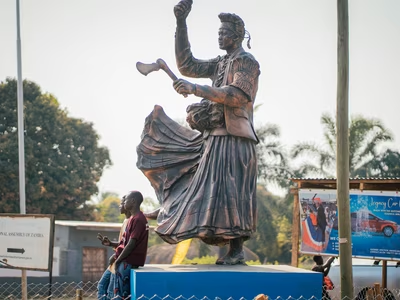
For nearly 14 years, Nkwazi has had a mission to showcase the very best of Zambia. My first introduction to the magazine was the Pompi cover of issue 63, and while it is compelling in its own way, my personal favourite inside the magazine was an overhead image of the Kuomboka ceremony.
When my turn came to direct what goes onto the cover, my mission was simple: to turn the front of Zambia’s foremost travel, lifestyle and culture magazine, into a collectable piece of art that you can display or hang on a wall. Below is a round-up of some of our favourite covers and a short story on how they came to life.
Issue 70: Cultural Repatriation
The debate around the repatriation of Zambian and African artefacts is one that has been long in the making. It is no secret that national treasures from Zambia, Benin, Egypt, Zimbabwe and Cameroon now reside a long way from home, in foreign museums, absent from their original context and true purpose. In seeking to reclaim them, several institutions, including the Women’s History Museum of Zambia, turned to a new form of restitution: cultural object repatriation through digital means. By digitising these objects, they are restoring access to a new generation and true owners through digital curation.
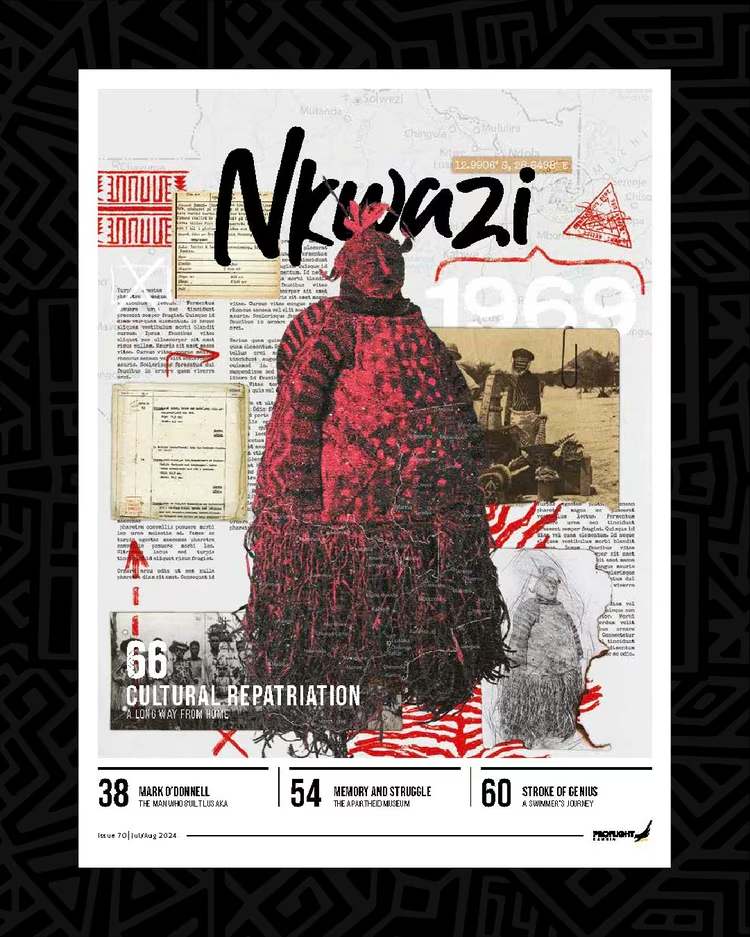
With this in mind, and following several discussions with knowledgeable parties, I knew that whatever we created needed to represent the act of placing an object back into its context, by taking images from museum catalogues, where they often exist in an empty white space, accompanied only by a descriptive card, and surrounding them with the meanings and memories that would fill all the missing gaps. Part factual and part fictional, the cover and accompanying images include maps of Zambia, historical images and sketches of makishi, as well as imagery evoking field journals.
Issue 73: After the Dream
The title of the article was inspired by an exhibition at the Lusaka Contemporary Art Centre, of the same name, which centred on the life and times of Edward Mukuka Nkoloso and his ideas and ideals for the future. When I approached the writer, the initial idea was to present future ideas of Zambia surrounding Nkoloso and, his addition, Simon Mwansa Kapwepwe. Like many articles in this magazine, the story evolved on its own into a broader meditation on Zambian identity and the ideas for the future that the founding fathers and mothers of Zambia had. Central to this was Kapwepwe’s convening of the National Conference of Culture of 1969 in an ambitious attempt to articulate a new cultural identity that encompassed all Zambians and the ideal of Zambianisation beyond the administrative act of replacing foreign nationals with Zambian citizens in various occupations.
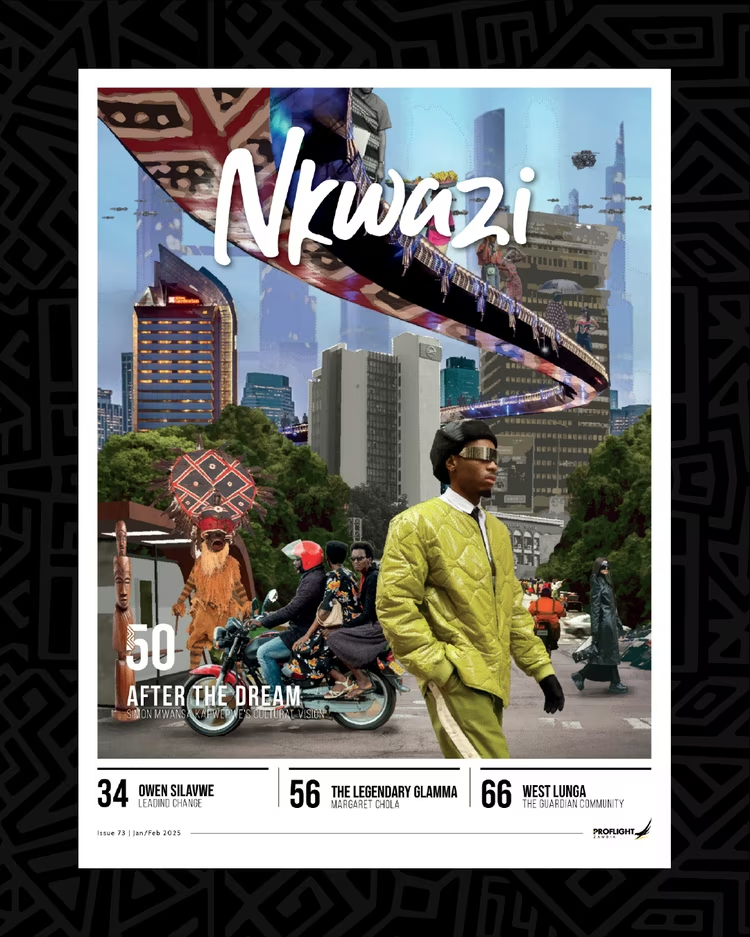
Inspired in part by reading Fola Soremekun’s paper titled ‘Zambia’s Cultural Revolution’ (1970), the central theme of the article, I began dreaming of what a futuristic Zambia might look like. One that embraces symbolic tribal languages, merging different visual aesthetics and visual languages from different cultures with futuristic elements such as flying cars and skyscrapers. Merging the informal and formal, tribal and modern fashion, all existing side by side; none conscripted to a predetermined setting. All exist side-by-side in the same frame, and the image collage was born.
Issue 75: Lost in Translation
The cover story was inspired by R. F. Kuang's novel Babel, which transforms the field of translation into a world of magic, history, language and colonialism. What I found most compelling was the exploration of how meaning is lost across translations, and the critical importance of continual re-translation to preserve the original meaning, intent and spirit of the word. This resonated deeply within a Zambian context where language extends beyond writing and the spoken word and into oral traditions and visual expressions; forms of expression that have no cross-linguistic alternatives to fully capture the nuance and depth of indigenous Zambian cultures.
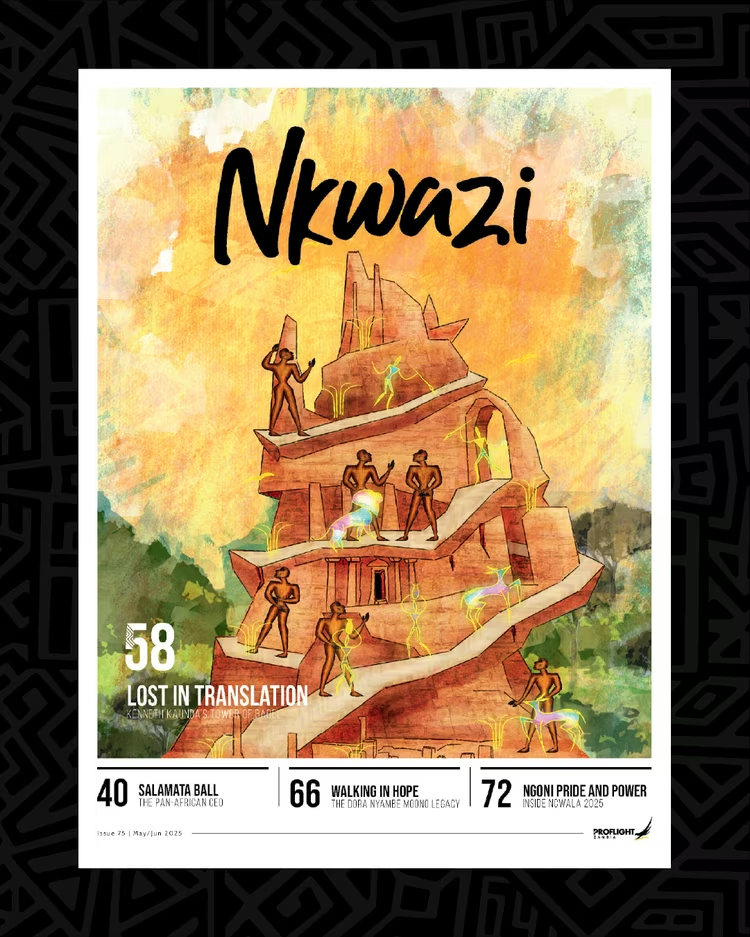
Naturally, for a people divided by language, the image of the tower came to mind. The illustrator of this cover took it beautifully literally and created ‘KK’s Tower of Babel’. The cultural tower he had to conquer in the pursuit of ‘One Zambia’. Juxtaposing ‘ghosts’ of the past depicted by rock paintings and the images of the present, the cover represents the conquered Tower of Babel, both literally and figuratively.
Issue 77: A Thought Experiment
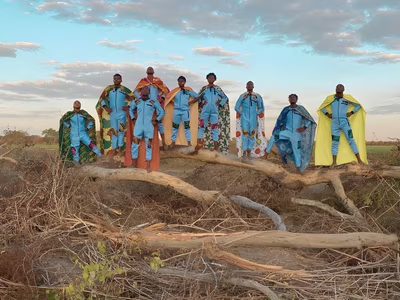
The premise of this cover and article is all in the name. It was a question I asked myself or perhaps heard someone else ask. After I first encountered the origins of the 'afronaut' years before, it stayed with me. Spurred by this idealisation of the future and my long-held love for sci-fi and space travel, I once again imagined a different future of Zambia, one in which it had won the space race. This was my chance to fully immerse myself in and dedicate an article to Edward Mukuka Nkoloso’s work and re-examine the cultural impact he has had on Afrofuturism and Africanfuturism. I wondered what this reimagined space frontier would look like. The newspaper headlines, an institute dedicated to science and space exploration, stations on the moon, but above all, it would be a Zambian in space. All these images form part of a bigger story.
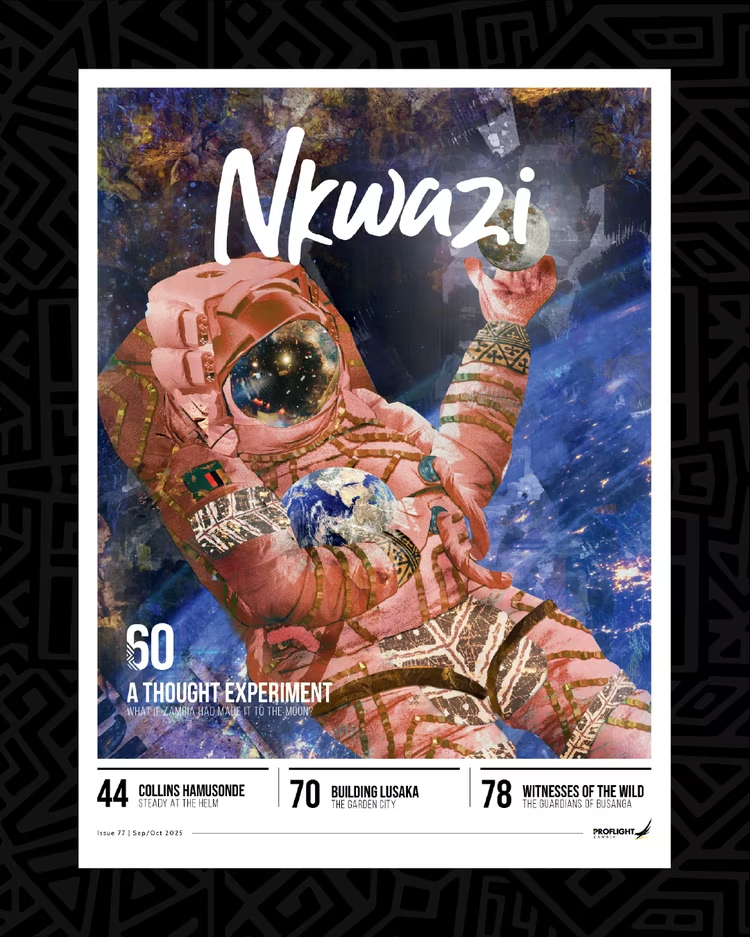
The cover is the beginning of a story; it does not exist in isolation. What we attempted was to create a space identity distinct from what already exists, one that carries Zambian patterns and prints into a spacesuit you could identify as coming from here. Did we succeed? I will leave it up to you to decide.
Issue 78: Rediscovering Tusona
One thing I love about creatives is seeing how their minds and ideas come together, and I wish I could show the inspiration for this cover and what the process was. I cannot take much credit for how this illustration came to be. Yes, I have an idea and give guidance and art direction, but at the end of the day, it is the artist’s mind that is the star. For this cover, we were hungry for something different and picked the topic of Tusona for it.
Tusona explores a writing system found among the Chokwe and Luvale of Central Africa: a mostly undocumented form that relied on mathematics and pictographs to convey stories through imagery. By calling it ‘undocumented’, I deliberately contradict the premise of the article, which challenges what is defined as ‘documented’. Tusona are often temporary in nature, often written in the sand and then wiped away once they have served their purpose of communicating.
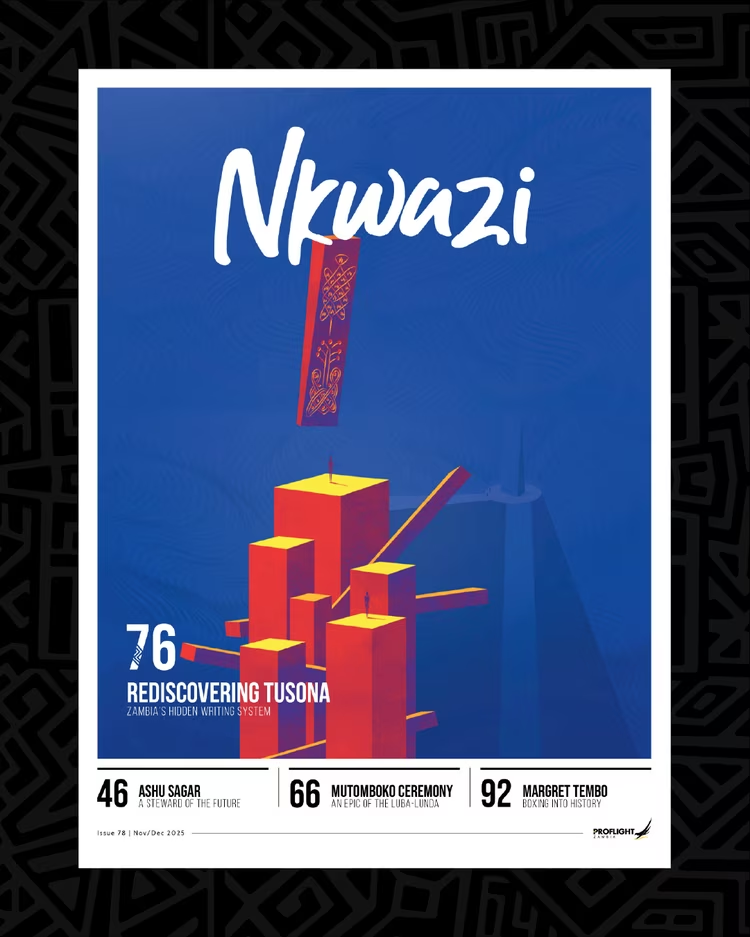
This cover attempts to interpret ‘discovery’. A lone figure in a cavern encounters a monolith on which are inscribed the sacred language. In the absence of everything else, this language, floating in space, could be a deity, imbuing the figure with new knowledge that is neither anchored to the earth nor the sky above.
What ties these covers together is not the aesthetic or a recurring motif, but a shared question: what does representing African narratives visually look like? Each issue has been its own answer to that question, created by the writers, artists, designers and photographers who bring their own minds and ideas and breathe life into our imaginings.