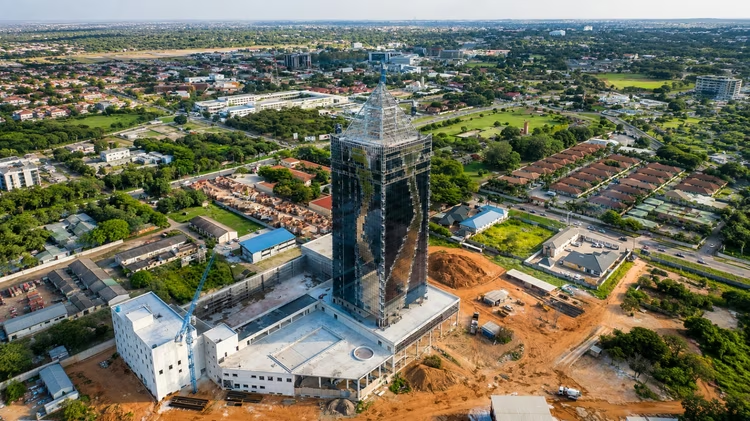
Emerging above Lusaka's skyline, a striking pyramid of reflective glass catches the afternoon sun, its mirrored façade shimmering in the light and drawing the attention of motorists, photographers and curious passers-by. On social media, it has earned a nickname of its own: "Burj Kalingalinga."
A Building That's Changing Lusaka's Skyline
I parked my car along Thabo Mbeki Road to take it all in. From where I stood, the building towered over one of Lusaka's busiest corridors, close to Great East Road, East Park Mall and several major hospitals. Cars streamed past as people slowed to look, some pointing towards the structure while others reached for their phones to take photographs. As I watched, a construction worker wheeled a load of bricks towards the site. Looking up at the towering structure, he smiled and said, "Iyi ifika makumbi, ba sister," a phrase that loosely translates as, "This building will reach the clouds."
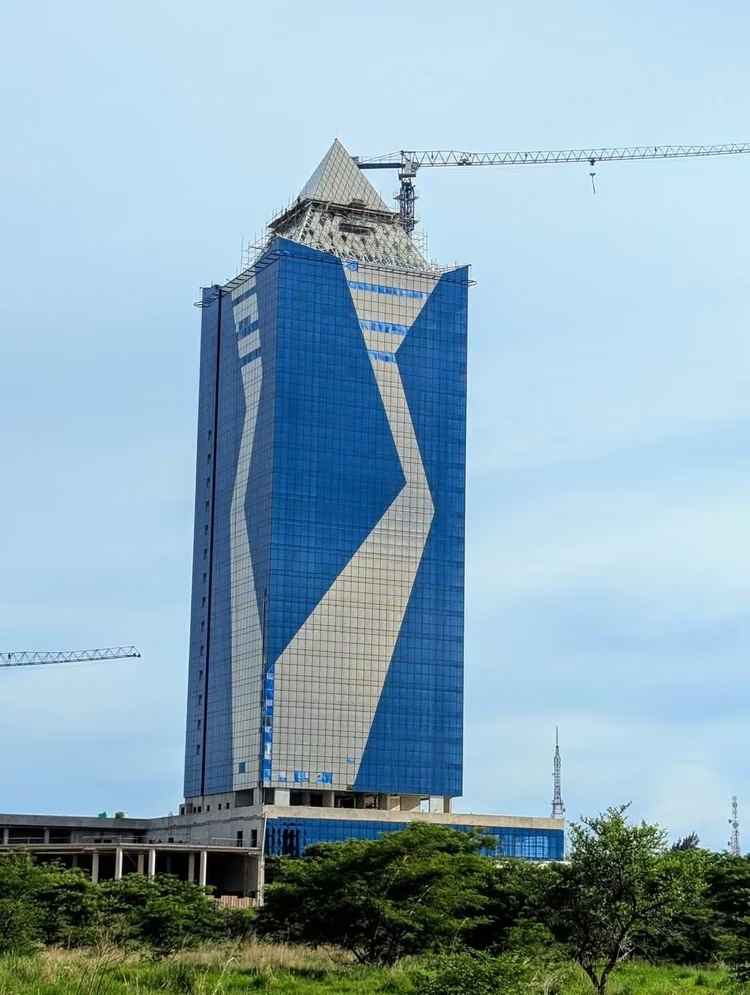
Officially known as the Hilton Lusaka Pyramid, the development was first announced in 2021 as the Pyramid Continental Hotel, a US$60 million investment by Zebra Manufacturing Zambia Limited through an agreement facilitated by the Zambia Development Agency (ZDA). Today, the project is being developed by Zebra Manufacturing Zambia Limited, a subsidiary of Dubai-based Asmara Holdings, with Hilton set to operate the hotel when it opens.
Once completed, the 27-storey hotel is expected to become Zambia's tallest building, surpassing the 23-storey FINDECO House, which has been one of Lusaka's defining landmarks for more than five decades. The development will feature 211 guest rooms and suites, restaurants, a spa, swimming pools, an executive lounge, and more than 4,000 square metres of conference and event space, positioning it as a destination for both business and leisure travellers.
Why Everyone Calls It "Burj Kalingalinga"
How, then, did a luxury hotel project acquire one of the country's most recognisable nicknames?
Before the developer's name became known, netizens had already given the building an identity. Facebook posts, TikTok videos and conversations on X were filled with comparisons between the pyramid-shaped structure and Dubai's Burj Khalifa. The nickname stuck, despite the building having no official connection to the world's tallest skyscraper. The name, however, is something of a misnomer. Despite its popular nickname, the development is not located in Kalingalinga but in Sunningdale, which is along Thabo Mbeki Road.
Perhaps the name reflects more than a local inside joke. For many Lusaka residents, this is the first building of its kind to dramatically alter the city's skyline. The fascination extends beyond its architecture. The Hilton Lusaka Pyramid represents one of Zambia's most ambitious hospitality developments in recent years. Beyond reshaping the skyline, the project was announced with the promise of attracting international business, strengthening conference tourism and with expectations that it will create significant employment during construction and once operational. Whether those ambitions are fully realised remains to be seen, but one thing is already certain: few buildings in modern Zambia have captured the public imagination quite like this one.
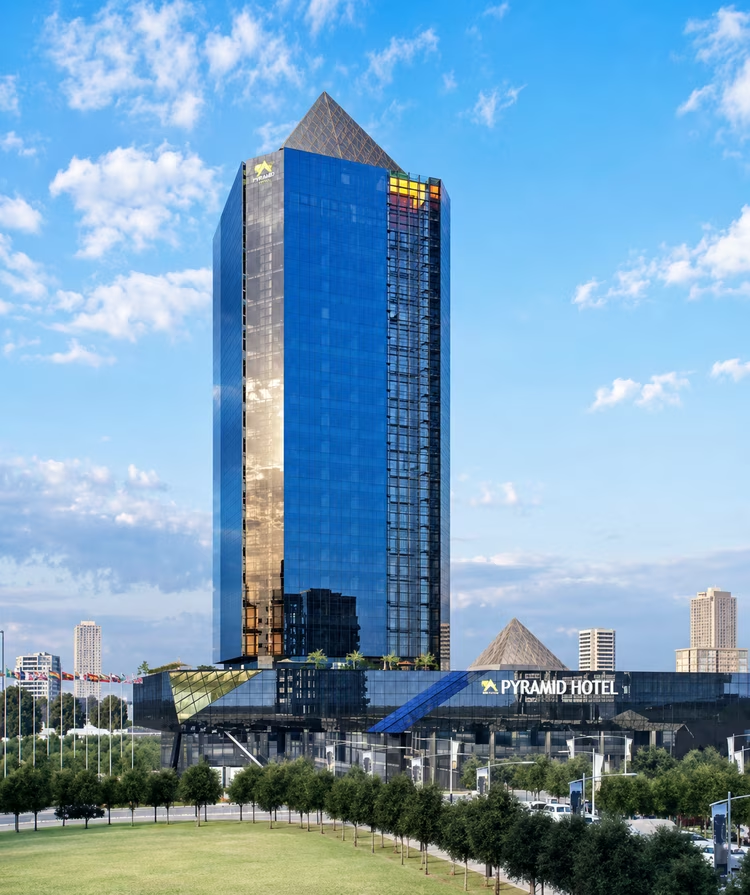
The Hilton Lusaka Pyramid has come to symbolise that transformation. Rising above the city, it represents Lusaka's growing ambitions to position itself as a regional destination for business, investment and international conferences. It speaks to a capital that is increasingly looking upwards, both literally and figuratively.
A Symbol of Lusaka's Growth
The project also comes at a time when Zambia is experiencing continued digital and commercial growth, with expanding e-commerce, increasing internet penetration and sustained investment in commercial property. E-commerce continues to expand, international brands are establishing a stronger presence, and demand for modern office space, hospitality and conference facilities is growing alongside a rising urban population. While no single building can define a city's future, developments such as the Hilton Lusaka Pyramid are visible reminders of these wider shifts.
Perhaps that is why so many Lusaka residents have become invested in the building's story. It is not because of its unusual shape or its reflective façade. It is because people recognise that it represents something larger than itself. Whether viewed with excitement, curiosity or scepticism, the building has become part of a broader conversation about what Lusaka is becoming.
As cranes continue to reshape the skyline, the Hilton Lusaka Pyramid stands as a reminder that cities are not only built with concrete and steel. They are also shaped by the stories people tell about them. And before its doors open to guests, Lusaka has already made this building part of its own story.