Earlier in 2026, a private screening of the documentary series Kingdom was held at the British High Commissioner's residence in Lusaka. It was screened for an audience of filmmakers, photographers, diplomats and other invited guests. It was a fitting occasion because Kingdom can be viewed as a form of soft power, which political scientist Joseph Nye defined as “the ability to get what you want through attraction rather than coercion or payments.” By making Zambia the setting for a story people can care about, the series contributes to that kind of influence.
Kingdom is a six-part wildlife documentary series produced by the BBC Studios Natural History Unit, filmed in Zambia's South Luangwa National Park, in a 226-square-kilometre area known as the Nsefu Sector. It follows four rival predator 'families' whose lives are linked by competition, dependence and survival. A wild dog pack's arrival changes the balance between them, creating new pressures as each family searches for food, protects its young and holds its territory. The result is a dramatic, emotionally resonant portrayal of survival that draws a global audience into the families' triumphs and losses.
The documentary's production quality is exceptional. It is beautifully made, the product of five years of filming, the longest period the BBC Studios Natural History Unit has spent filming in a single location. That timeframe is not simply a technical feat; it is the documentary's most significant creative resource. Relationships between the predator 'families' develop across seasons rather than in single encounters, and viewers watch cubs grow, alliances shift and old rivalries resurface, giving moments of drama that might otherwise feel fleeting a real sense of consequence. Sir David Attenborough's narration is deft and clever, while the series' visual and technical achievements are equally clear. The use of smaller drones, thermal imaging for night monitoring and a solar-powered base camp allows the filmmakers to observe the Luangwa Valley and its inhabitants in changing conditions, including after dark.
In this respect, the documentary deserves applause.
It is also worth acknowledging, for context, that Kingdom arrives in a well-documented landscape. Zambia, and the Luangwa Valley in particular, has been the subject of sustained international wildlife filmmaking for some years. National Geographic's Africa's Hunters aired 18 episodes, all centred on predators in the Luangwa Valley. Love Nature's Wild Dogs: Running with the Pack followed three wild dog packs in the Luangwa Valley. The BBC's own Dynasties II devoted two major episodes to Zambia's Liuwa Plain, following Kali the cheetah and Suma the hyena; Leopard Legacy documented Olimba the leopard in the Nsefu Sector itself. Kingdom is, in this respect, the latest and most ambitious chapter in an ongoing documentary relationship.
The valley is beautiful, and it is no wonder it is much sought after. But it does invite a reasonable question: what does Kingdom do with a landscape that viewers may already recognise?
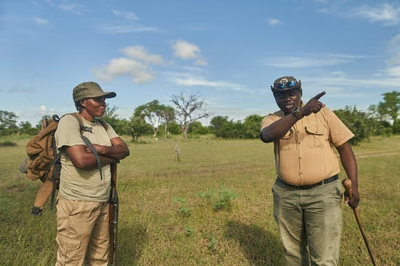
One answer lies in the production itself. More than 170 people worked on the production, including more than 90 Zambian crew members and wildlife experts. They served as expert guides, camera assistants and technical crew, while the Zambian Carnivore Programme (ZCP) contributed vital scientific data that helped the team track the 'families' in the show, bringing conservation efforts into the spotlight. Throughout the five-year production, these Zambian team members worked alongside an international team, contributing local knowledge while gaining experience on a production of unusual scale. Project Songbird, an initiative of the BBC Studios Natural History Unit, also supports the development of African talent in wildlife filmmaking. This level of local collaboration is significant for a high-budget international production, and the extent of that collaboration was evident in the work on the ground.
In the final episode, viewers are introduced to some of the human effort involved, including the production team, conservationists and anti-poaching teams in the valley. Among the methods shown are chilli bombs used to deter crop-raiding elephants and detection dogs working with anti-poaching teams, tools that make the ordinarily invisible labour of conservation tangible for an audience used to seeing only the animals themselves. It is a welcome acknowledgement that the apparent wildness of this landscape depends on the continuing work of conservationists and anti-poaching teams.
In Kingdom, we are charmed by Olimba the leopard and Storm the wild dog. Olimba, the leopard mother, is shown raising a new litter of cubs even as Storm's pack unsettles the established order around her, giving the series a steady emotional anchor amid the wider power struggle between lions, hyenas and wild dogs. We follow their struggles. The personification of animals and their struggles against adversity is a familiar storytelling tool, and it is used effectively. By returning to named individuals, the series gives us a way into a complicated network of relationships that we can follow beyond a single scene.
Binyavanga Wainaina's observation in his 2005 Granta essay, How to Write About Africa, reads like a description of Kingdom's own approach: animals in such narratives “...must be treated as well rounded, complex characters. They speak (or grunt while tossing their manes proudly) and have names, ambitions and desires.” The formula is familiar, if predictable, but the series gives it depth through the time spent returning to the same animals.
Recognising the people directly involved in protecting this landscape and making the production possible adds to an appreciation of the documentary. A more accurate image emerges: this landscape's apparent wildness on screen is the product of a sustained collective effort, bringing together scientific understanding, practical experience and the craft of telling a story through film.
Kingdom is a well-crafted series that strengthens Zambia's international profile and offers a welcome example of local collaboration in a high-budget wildlife production. Its greatest achievement is the way five years of observation allow relationships, rivalries and uncertainty to develop across the series. The collaboration behind the camera adds another layer to that achievement, revealing the Zambian expertise and collective effort that helped bring the kingdom to life.
Image captions (in order)
Top: Hyenas approach the film crew with curiosity at sunset.
Top Right: The Luangwa Valley is home to one of Zambia's largest populations of African wild dogs.
Right: Samson Moyo, one of the local filmmakers benefiting from Project Songbird.
Top: A crew member pilots a smaller drone to minimise disturbance to wildlife.
Top Left: Crew members are interviewed about their experience in the season finale.
Left: A giraffe receives much-needed care from a team of conservationists.