Mwansa’s children have never left Zambia. Yet the way they move through the world suggests a much wider one.
They speak with accents not too different from American television shows, picked up at the international school they attend. In the evenings, they take French lessons. In the car, they blast K-pop. On weekends, they attend birthday parties where the guest list looks more like a United Nations meeting than a typical gathering in Lusaka.
Without intending to, Mwansa has raised children shaped by a cultural environment very different from her own.
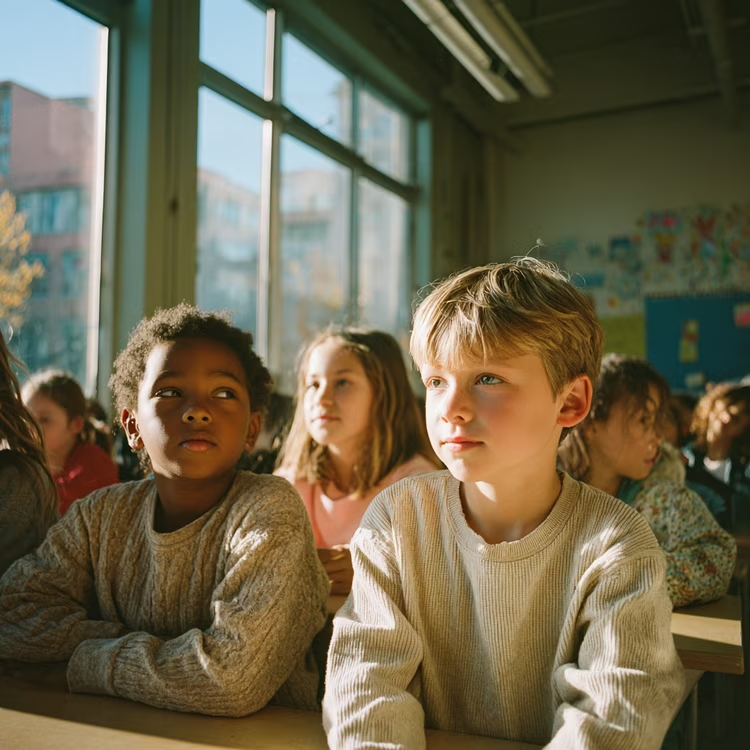
Across Zambia’s urban centres, families are increasingly raising what could be described as an “In-Between Tribe”, children growing up with strong Zambian roots while absorbing powerful global influences through education, travel, media and diverse social spaces.
They are not quite the traditional “third culture kids” who grow up outside their parents’ homeland, but they are formed right here in Zambia as they move between cultural worlds.
Growing Up Between Cultures
For many of these children, difference feels normal.
Their classrooms bring together students from different nationalities and backgrounds. Their online spaces expose them to music, fashion and ideas from every corner of the world. Their friendships cross cultural lines with ease.

Because of this, they often develop a comfort with diversity that previous generations encountered only later in life. Language becomes a tool rather than a barrier. English is often effortless, sometimes accompanied by French or other international languages, and communication across cultures feels natural.
This cultural flexibility can open doors. Global confidence, ease of networking, and the willingness to question authority are often rewarded in international universities, remote work environments, and global industries.
Zambia itself has long produced cultural fusions. Zamrock remains a powerful example of how global sounds and local identity can merge to create something uniquely Zambian. In many ways, this new generation may continue that tradition, blending influences into creative outputs that reflect both home and the wider world.
When Generations Struggle to Connect
But living between cultures can also create distance.
For some families, the differences appear first in language. A child who speaks fluent English and French may hesitate when trying to greet an elder in their mother tongue. Conversations with grandparents become slower and sometimes uncomfortable.
Simple cultural moments, such as a proper greeting, a traditional ceremony, or even navigating a chilanga mulilo, may feel unfamiliar.
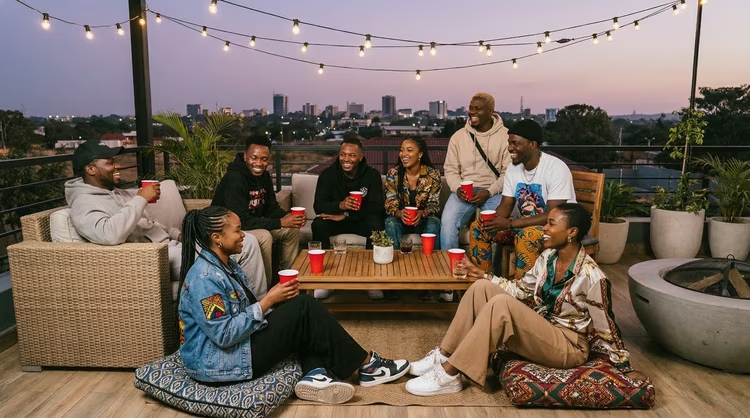
For parents, this can create unease. The fear is that those influences may replace the culture they hoped to pass on.
Yet for the children themselves, it is more often about growing up in an environment where multiple cultures coexist.
The Quiet Cost of Living Between Worlds
There is also a social tension that comes with looking Zambian but sounding different.
In public spaces, questions sometimes follow:
“Why do you speak like that?”
“Where are you really from?”
At times, they may be charged different prices in markets or treated as outsiders in places where they expect to belong.
Navigating these situations requires constant adjustment, shifting language, tone or behaviour depending on the environment. Over time, that kind of cultural code-switching can become exhausting.
Exposure to global culture can also create a subtle dissatisfaction with local realities. When young people consume global media daily, the idea of life elsewhere can begin to appear more appealing than life at home.
If left unchecked, this can lead to an unintentional romanticising of the outside world while overlooking the richness within Zambia itself.
The Future May Look Like Them
Despite these tensions, the rise of this “74th Tribe” may signal something important about Zambia’s future.
These young people are comfortable navigating both local and global spaces. They can speak the language of international institutions while still understanding the rhythms of home. They move between cultural references naturally.
Rather than weakening Zambian identity, their experiences may reshape it.
Just as earlier generations absorbed influences that eventually became part of the country’s culture, this generation may produce new blends of language, creativity and ideas that reflect a changing Zambia.
Identity Built From Many Worlds
Zambia’s emerging 74th Tribe is boarding planes but not changing passports.
Perhaps their existence should not be seen as the erosion of culture, but as the gradual construction of something new.
An identity formed not by choosing one world over another, but by learning how to belong to several at once.