Zambia's Historic Lunda Celebration
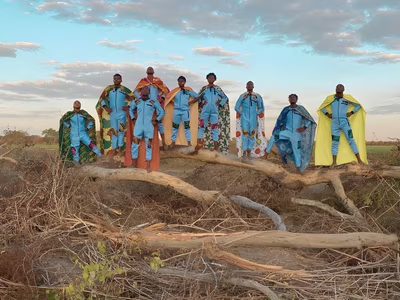
It is not always that we are able to experience the beauty of tradition. When we are able, it then becomes our obligation to enjoy the fullness of our ethnicity and nourish our spirit with the traditions that bind us to the land we live in and to the people who surround us. Meet the people and experience the stories that have been kept through a living archive just as bright as the moment they transformed into the very tradition that has become its essence. Mutomboko ceremony can easily be defined as such. It occurs annually in the modest town of Mwansabombwe in Luapula Province in the northern part of Zambia. It is said to be a landmark year, marking 300 years of the Lunda people of Zambia on the Luapula River, stitching another memorable panel onto this quilt of rich and significant tradition that belongs to everyone appreciative of Lunda culture. Anyone who wants to immerse themselves in the variety of Zambian ethnic culture and tradition, the Umutomboko ceremony is a great place to start your dive into Zambia’s cultural richness.
The History Behind the Umutomboko Ceremony
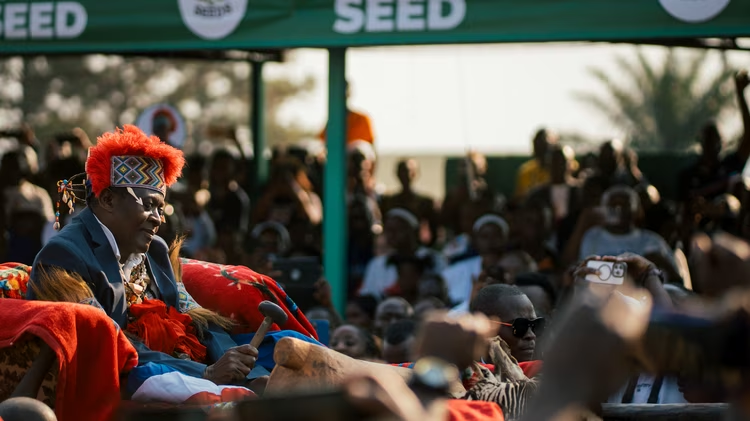
This ceremony celebrates a historical event that dates all the way back to the 17th century. Umutomboko, which means “dance of victory”, reminds people og how Mwata Kazembe led the Lunda people eastwards from the Lunda Kingdom into what is now Luapula Province, crossing the Luapula River before establishing a powerful kingdom centred around present-day Mwansabombwe. So each year, the chief Mwata Kazembe performs a “dance of conquest” in honour of the rich history that precedes the modern day.
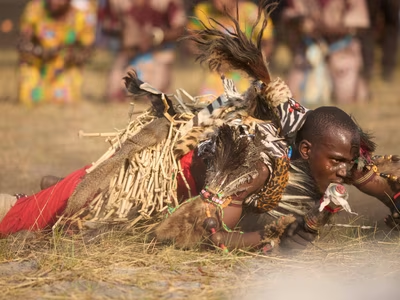
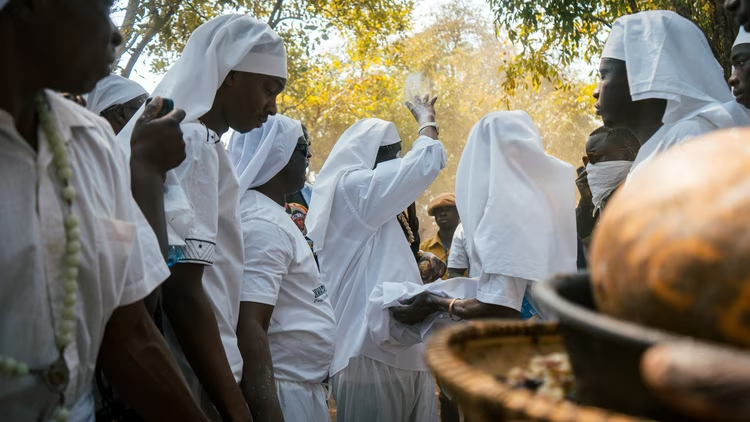
It is important to understand that, just as all traditional ceremonies you might attend, the ceremony functions and exists as far more than a performance. It is a ritual renewal and revamp of the kingdom itself as well as its cultural standpoint and significance. All that goes on leads to: the Mwata, carried on a royal palanquin called the Muselo, performs the Mutomboko dance itself, pointing his ceremonial sword, the Mpoko, to the four directions before plunging it into the earth and throwing soil skyward, a gesture that once symbolised his triumph over all rivals. The Mpoko is a symbol of authority and strength.
The 2026 Mutomboko Ceremony is scheduled for Saturday, 25 July 2026, in Mwansabombwe District, Luapula Province, with related rituals, the installation of sub-chiefs, and community festivities taking place the day before. This year carries extra significance: organisers are marking the 300th anniversary of the Lunda Kingdom's establishment in the area, so expect a larger-than-usual turnout and a heightened sense of occasion.
Planning Your Visit to Mutomboko 2026
For visitors, a few essentials make the experience smoother and more respectful. Pack light, breathable clothing, closed shoes for dusty grounds, and a hat for the open sun. A chitenge cloth is a welcome, respectful way to dress festively. Keep a respectful distance from the royal family unless guided by organisers, mirror the crowd during solemn moments, and always ask before photographing individuals. For first-time visitors, a simple plan might look like this. On the first day, you arrive in Mansa, settle into your accommodation, and visit the local museum for context on Lunda history. In the afternoon, head to Mwansabombwe to watch the smaller rituals and the installation of sub-chiefs. On day two, arrive early at the ceremony grounds to secure a good spot, spend the day watching the dances build up to the Mwata's performance in the late afternoon, then head back to Mansa for the evening. During the festival, you'll also find stalls selling grilled meat and roasted maize, along with local millet beer, which is part of the ceremony as much as it is a party drink. If a local family offers you food or a drink, it's a genuine welcome; feel free to join in.
Things to See Around Mwansabombwe and Luapula Province
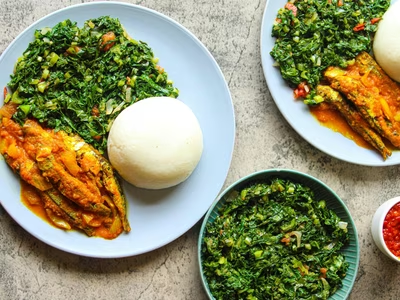
Beyond the ceremony grounds, Luapula rewards travellers who stay a few extra days. Ntumbachushi Falls, just twenty minutes away, offers swimmable natural pools, while the more remote Kabwelume Falls suit those willing to handle rougher roads. Lakes Mweru and Bangweulu draw birdwatchers hoping to spot the rare shoebill stork, and the Mansa Museum again offers useful historical context before the ceremony itself. Food lovers should try fresh lake bream, nshima, and ifisashi, along with the ceremonial millet beer that flows freely during the festivities.
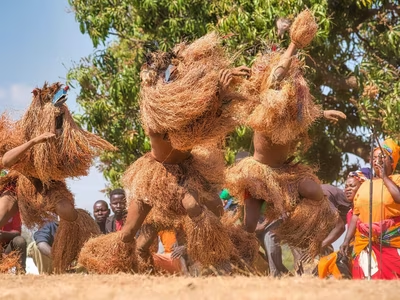
For photographers, arriving early secures a good vantage point before the crowds build, and a zoom lens helps given the distance kept from the royal party. The golden light of late afternoon, when the main dance typically takes place, adds striking depth to the beadwork and regalia, though it's worth checking on drone restrictions beforehand. You'll usually be kept some distance from the Mwata and his family during the main rituals. Don't forget to photograph the crowd too. The singing, dancing, and colour around the arena are just as memorable as the ceremony itself.
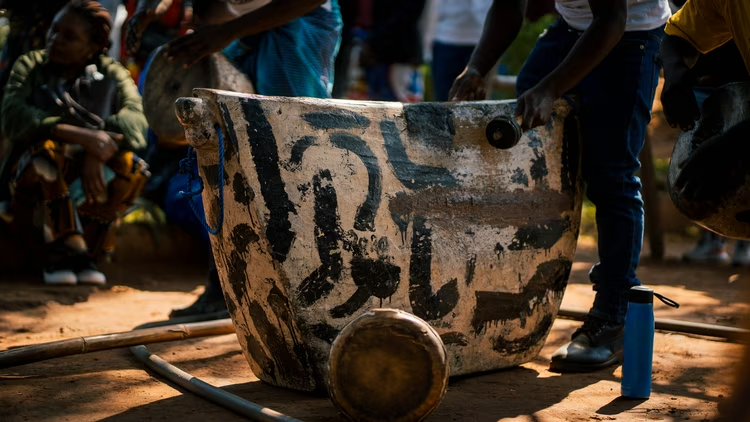
Mutomboko isn't a polished tourist spectacle; it's a living ritual that asks visitors to arrive with patience and respect rather than expectation. In its 300th anniversary year, attending offers a rare chance to witness not just a performance of history, but its ongoing continuation. Going to Umutomboko means more than watching history. It means watching a kingdom keep writing its own story and is something to deeply cherish.