Dating and Relationships in Zambia Today
For a generation raised on WhatsApp, Instagram and TikTok, meeting a potential partner can begin with something as simple as a message or a swipe. Yet even in this fast-moving world of digital introductions, many Zambians are still trying to figure out how modern dating fits alongside cultural expectations that have existed for generations.
Relationships in Zambia have always carried meaning beyond the couple themselves. Traditionally, marriage represented the joining of two families, strengthening a clan and extending lineage. Elders often played a central role in guiding relationships and sometimes even introducing potential partners.
Compatibility, at least in the modern sense, was not always the main concern. Many older couples say they grew into love gradually, learning partnership over time rather than searching for it at the beginning.
Today, however, the landscape looks very different.
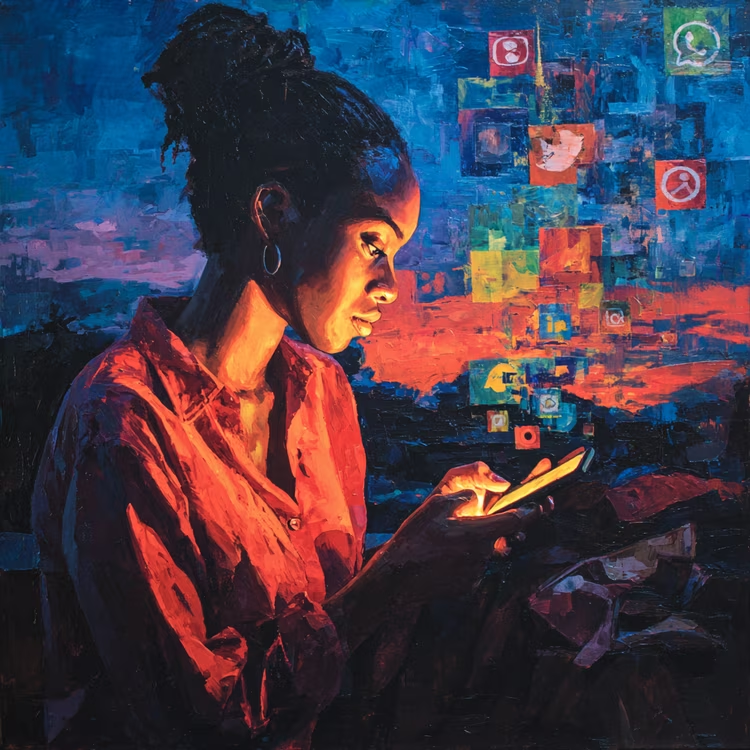
Dating Apps vs Traditional Introductions
Young people now control most aspects of their relationships. They decide who they meet, how they communicate and whether a connection develops further.
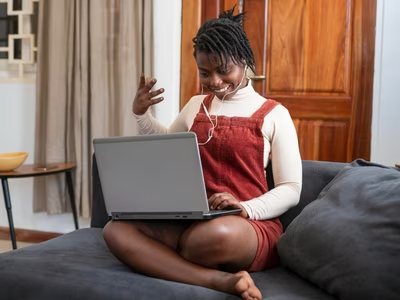
Dating apps such as Tinder and Bumble, along with social media platforms like TikTok and Instagram, have created entirely new ways for people to meet. For some, the appeal is obvious. Online spaces allow introductions without the awkwardness of formal setups or the pressure of immediate expectations.
One Lusaka-based professional shared anonymously that he met his current partner through Instagram after months of exchanging messages. “We spoke online for nearly three months before meeting. By the time we met in person, it felt like we already knew each other.”
Still, many relationship counsellors say digital spaces can only go so far. A Lusaka marriage counsellor explains that online conversations often allow people to present ideal versions of themselves. “Eventually, real life has to enter the picture,” she notes. “How people behave face to face tells you far more about compatibility than any chat thread.”
For this reason, traditional introductions have not disappeared entirely. Friends, family members and church communities still play a role in helping people meet potential partners.
Money, Expectations and the “Girlfriend Allowance” Conversation
One of the more noticeable shifts in modern relationships is how openly finances are discussed.
In earlier generations, financial responsibility was often clearly defined. The man was expected to provide for the household, while the woman focused on managing the home and raising children.
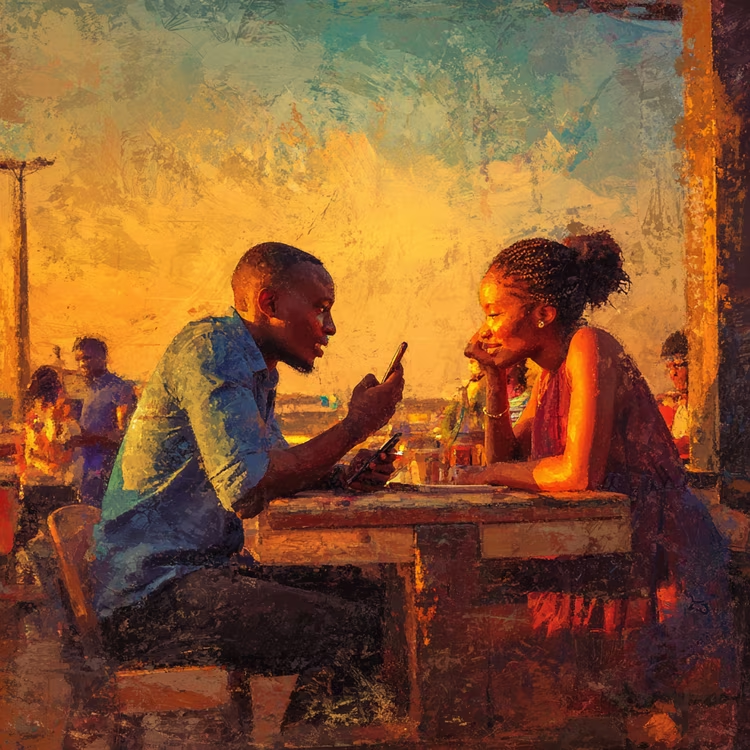
Today, many couples are navigating very different realities. Two professionals may be building careers at the same time, sharing expenses and negotiating responsibilities in ways their parents did not. Yet cultural expectations around financial roles still linger.
During a conversation, one man said that even if his partner earns well, he still prefers to carry the larger expenses. “If I am paying rent and most of the bills, it feels like I am doing my part as a man,” he explained.
Another topic that surfaces increasingly in online discussions is the idea of a “girlfriend allowance.” Some women argue that financial gestures demonstrate commitment and effort. Others say the idea risks turning relationships into transactions.
A relationship counsellor notes that the debate often reflects broader questions about expectations.
“Money in relationships is rarely just about money. It usually represents appreciation, effort, or security,” she explains. The key, she adds, is communication. Couples who openly discuss expectations early tend to avoid many conflicts later.
Balancing Careers and Partnership
Another major change is the timing of marriage.
Many people today are choosing to marry later than previous generations. Career development, further education and relocation opportunities often take priority during the early adult years.
One reader submission summed it up clearly: “My parents married in their early twenties. At that age, I was still trying to decide which career path to follow.”
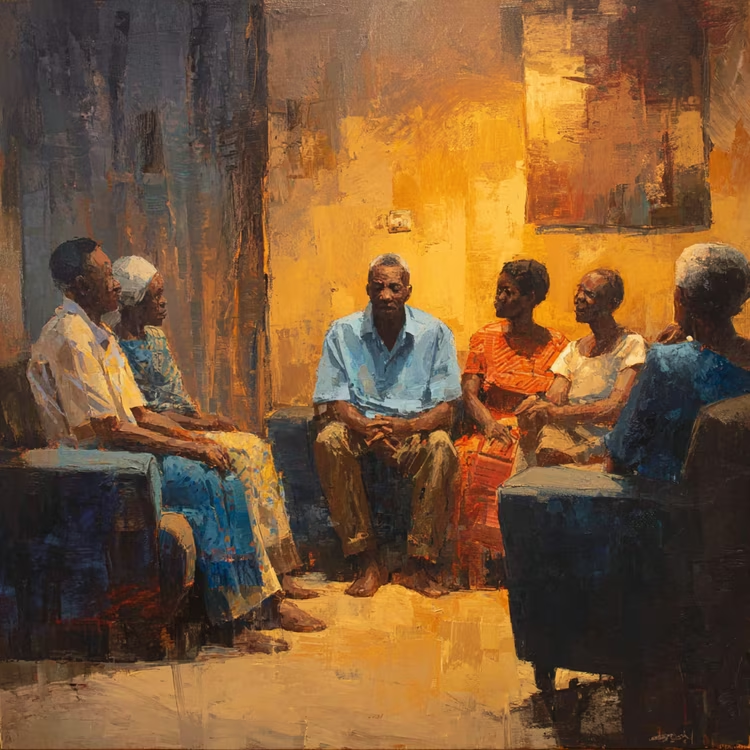
When both partners are focused on professional growth, relationships require different kinds of negotiation. Relocation opportunities, demanding work schedules and financial planning all influence the decisions couples make together. Marriage is increasingly viewed as a partnership where both individuals bring ambitions and responsibilities into the union.
Changing Gender Roles in Modern Relationships
While traditional expectations still exist, gender roles are gradually shifting.
Many women today are financially independent and pursuing careers that previous generations did not always have access to. This independence changes the dynamics of relationships in subtle but important ways.
Some couples share responsibilities more equally, while others prefer to maintain certain traditional roles. The difference is that these arrangements are often discussed rather than assumed. At the same time, younger generations place greater emphasis on emotional well-being in relationships.
Older generations often speak about the endurance of the idea of shipikisha, staying in a marriage even when circumstances are difficult. Many younger people now prioritise emotional safety and personal peace alongside commitment.
This does not necessarily mean relationships are weaker, but that expectations around partnership are evolving.
Tradition Still Shapes Modern Love
Despite these changes, cultural structures remain important.
Family involvement continues to play a role in many relationships. Parents and elders are still consulted before marriages, and lobola remains a significant part of formalising unions.

Premarital counselling is also common. Some couples seek guidance from church leaders, while others attend traditional counselling sessions where cultural expectations and marital responsibilities are discussed.
In many cases, couples combine both.
These traditions provide a framework that helps relationships navigate challenges even as modern influences reshape how couples meet and build their lives together.
Love Between Two Worlds
Dating and relationships in Zambia now exist between two worlds.
On one side is tradition, family guidance, cultural expectations and long-established ideas about marriage. On the other is a rapidly changing environment where technology, careers and global influences shape how people meet and what they expect from partnership.
Most couples today are not choosing one over the other. Instead, they are learning to navigate both at the same time. And somewhere between a WhatsApp message, a family introduction and a conversation about who pays which bill, modern Zambian relationships continue to find their own way forward.