However, some schools of thought argue that the true foundation of a society is not political sovereignty but its arts and culture. Their destruction scatters and divides a people, creating conditions in which they are more easily subdued and controlled. The reverse of this reasoning is just as true.
President Kenneth Kaunda formally introduced the philosophy of Humanism in April 1967, which emphasised the restoration of dignity, the promotion of worthy African customs and traditions and the belief that Africa has something to give to the world.
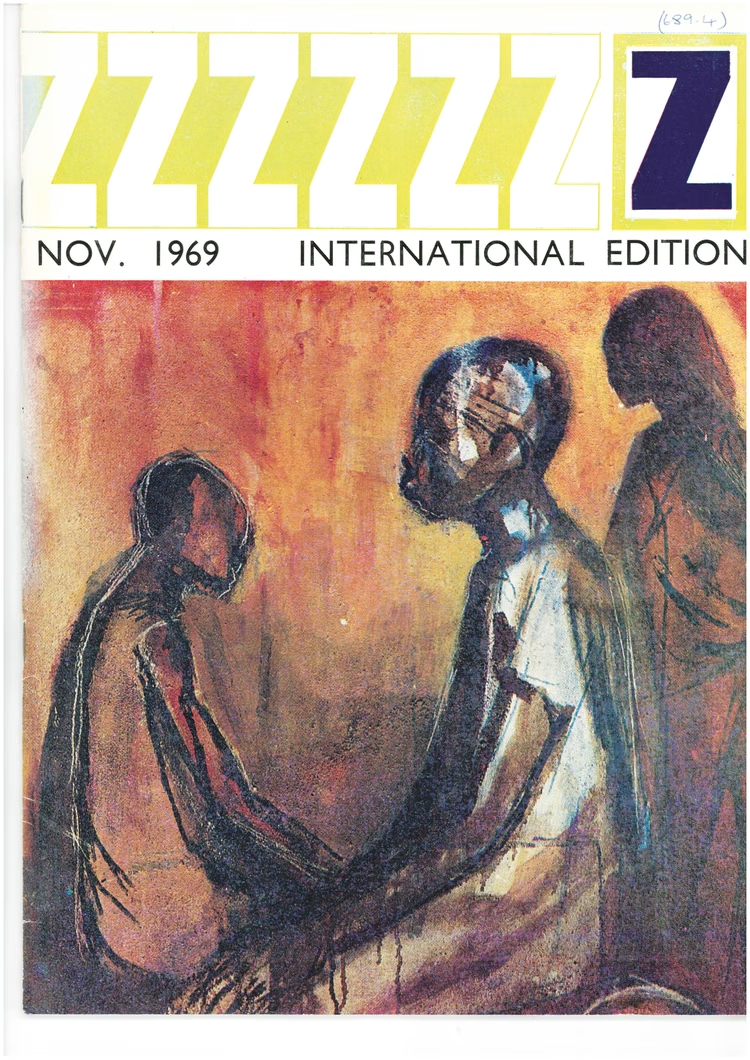
The events and discourses leading up to the 1969 Cultural Conference were no accident. Most independence leaders and young African intellectuals recognised all too well the value of art and culture in fostering national cohesion and development.

At the conference, Simon Mwansa Kapwepwe stated that the task at hand for the nation was “to establish an identity and a system of doing things the Zambian way”. He acknowledged that borrowing ideas from outside was inevitable, “but to accept all without discrimination is going too far”. Zambia, he argued, should be distinctive, just as flamenco and kente are reminiscent of Spain and Ghana respectively. The committee for the promotion of the arts called for the establishment of a School of Art, scheduled to open in early 1970; the encouragement of African drama and music; and the use of Zambian motifs in architectural designs, thereby fostering an atmosphere in which the arts could flourish.
The land allocated for the establishment of the School of Art remains undeveloped along Thabo Mbeki Road, standing as a stark visual reminder of the failure and waning momentum of this national project. In the early years following independence, funds for artistic initiatives, including an annual National Arts Festival and bursaries to study abroad, were made available, but establishing a self-reliant art ecosystem has continued to require sustained investment.
According to Zambian art historian Andrew Mukuka Mulenga’s 2016 MA dissertation, Contemporary Zambian Art, Conceptualism and the ‘Global’ Art World, the mining company Anglo American similarly funded annual nationwide children’s painting competitions, encouraging future generations to recognise the integral role of art and expression in culture and nation-building. Anglo American’s patronage ended amid the nationalisation of the mines in the early 1970s. As copper prices fell later in the decade, government and corporate sponsorship for the visual arts declined sharply. In her 2004 book, Art in Zambia, Gabriel Ellison states that much of the country’s art scene was consequently marginalised, with most activity based in Lusaka and dependent on individual initiatives and organisations, including the Lusaka Artists Group (1976–81), the Lechwe Trust (established in 1986) and Mpapa Gallery (1978–96).
In a 2021 article published in the Journal of Southern African Studies, Enid Guené examines how cross-border migration shaped new forms of visual culture on the Central African Copperbelt, particularly through the movement of Katangese artists into Zambia. Drawing on Jules-Rosette’s The Messages of Tourist Art, Guené highlights the differences between art and curatorial institutions on both sides of the Copperbelt and traces how Congolese migrants formed influential collectives such as the ‘Kanyama Circle’. Easel painting developed later on the Zambian Copperbelt than on the Congolese side, and these migrant artists introduced new forms while playing a pivotal role in shaping Zambia’s painting scene, which received a significant boost in the 1990s.
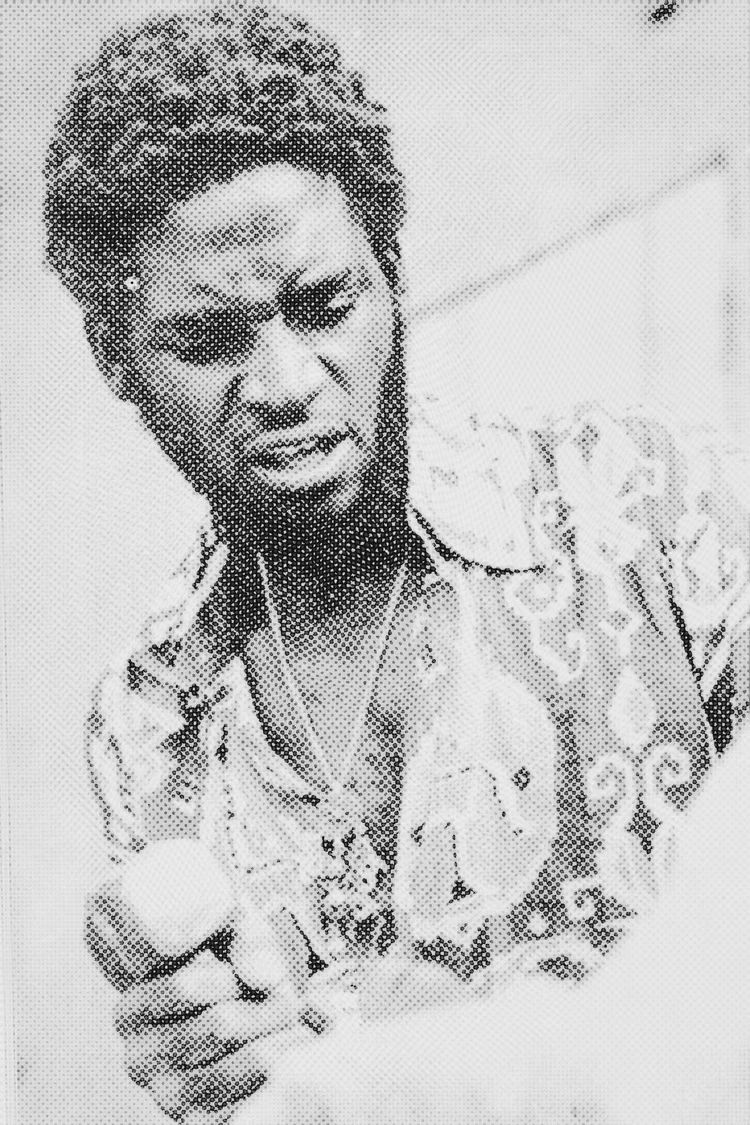
A 1973 exhibition in Lusaka earned him a scholarship from the Papal Nuncio to study in Perugia, Italy. His later life remains poorly documented. He is credited with conceiving the original design for Zambia’s Freedom Statue, later cast in bronze by British sculptor James Butler, while one of his best-known drawings is The Message Man.
While the immigration of Congolese painters was by no means the sole factor influencing Zambia’s visual arts development, its impact is undeniable and under-documented.
These artists helped democratise an art form previously largely confined to middle- and upper-class elites, creating demand for styles and content that had either not existed before or had taken different forms. Moreover, they imparted invaluable lessons in artistic entrepreneurship and market adaptability to a generation of young Zambian artists.
Formal institutions remained limited, but artists themselves increasingly became teachers, mentors and organisers.
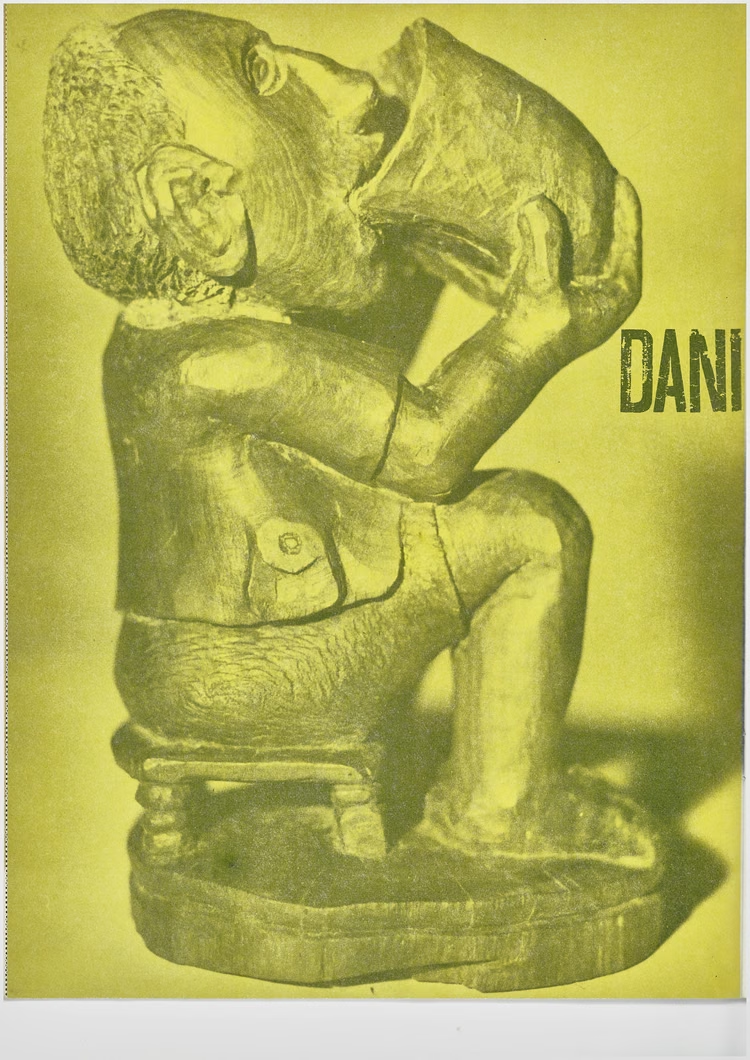
One of the artists most responsible for advancing art careers in Zambia was Friday Tembo. Though he had no formal art education, he developed one of the most distinct visual languages in Zambian sculpture. He went on to establish an informal school, Ulendo Studios, where many young artists were trained, some of whom moved into formal employment after his passing. Others, such as Rabson Phiri, went on to have enduring art careers. His influence can be seen in the styles of many Zambian sculptors and painters today.
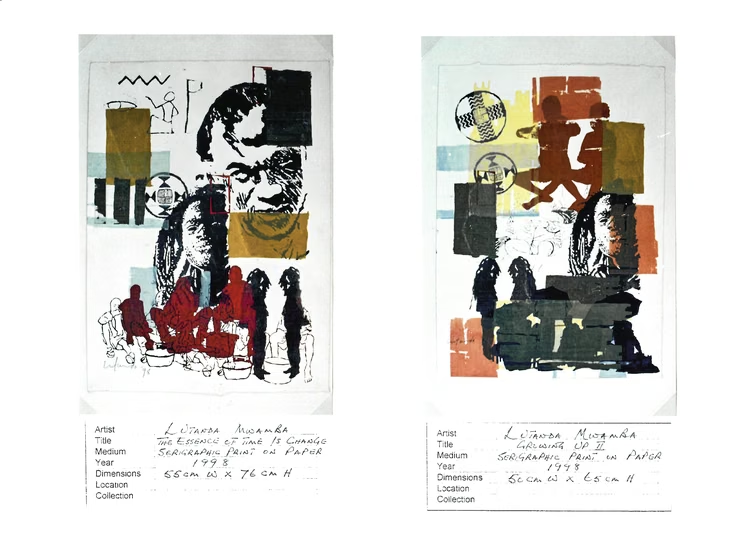
Friday Tembo’s influence is a stark example of how the lineage of Zambian art has taken shape over the years. Older-generation artists have often adopted the role of mentors to emerging artists, helping them develop their practice and navigate the art world. This broader thread of mentorship and influence runs across generations, from artists such as Lutanda Mwamba and Stary Mwaba to Daut Makala, Isaac Kalambata, Anawana Haloba and others.
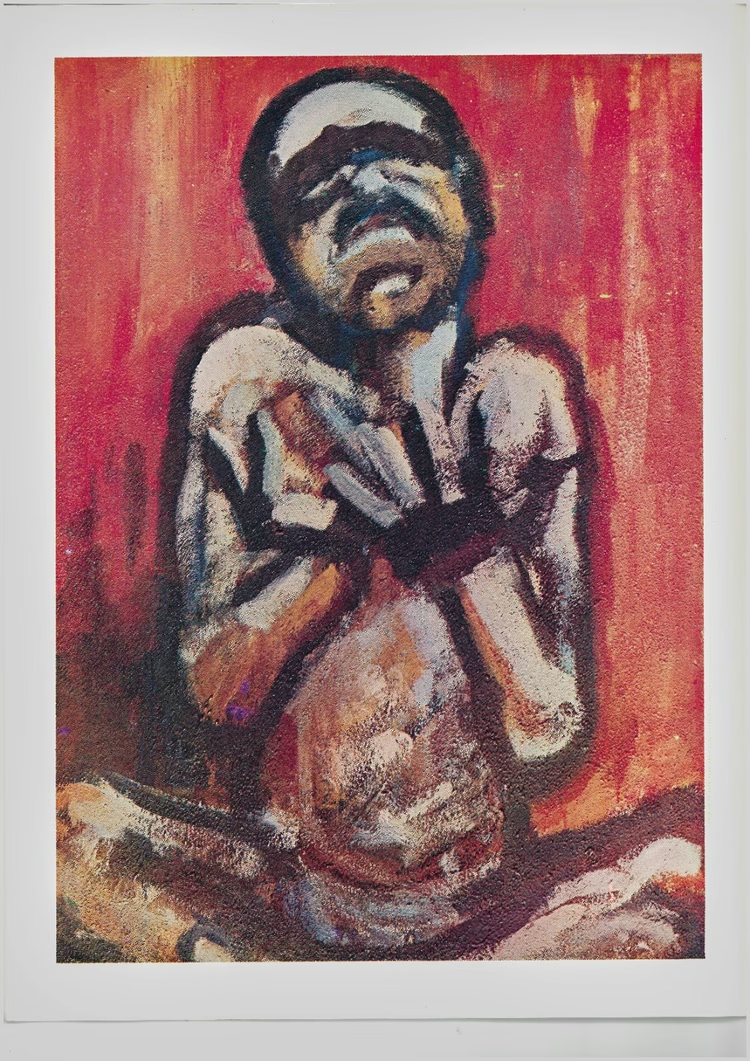
By the late 1980s, artist mentorship, collective organisation, institutional funding and growing public visibility had converged to create what could be considered a golden age of Zambian visual art. At the centre of this transformation was Martin Abasi Phiri.
Upon returning from Beijing, where he had studied at the Central Academy of Fine Arts, Phiri devoted nearly all his remaining years to teaching and championing social interests beyond art. Before terms like ‘artist-run spaces’ or ‘collectives’ became common in Zambia, Phiri, together with his art students at Evelyn Hone College, advanced the idea of collective progression. This concept became the basis for the formation of the Zambia National Visual Arts Council (VAC), and he later made substantial contributions to the establishment of the National Arts Council.
Within a few years, the VAC expanded across the country, opening branches wherever active artists were based, many of whom had been students in Phiri’s art classes at Evelyn Hone College. As Mulenga wrote in a 2017 essay for Contemporary And magazine: “Phiri led the new council with the sustained wit of a shrewd politician, garnering funding allies among the diplomatic community and foreign development agencies who appeared to be at his beck and call, ushering in an era of arts funding that has never been replicated ever since.”
Under Phiri’s leadership, the VAC secured property and land in the Copperbelt, Chipata and Livingstone, establishing spaces that became sanctuaries and sources of informal art education for self-taught, formally educated and emerging young artists. The council became a great equaliser in the visual arts, providing artists with access to knowledge and skills and making art accessible to the general public.
Perhaps the most public and defining example of this effort to make art accessible was the Meridien Bank Building, now the COMESA Headquarters, which was completed and officially opened in 1993. The building drew inspiration from traditional Zambian village architecture, with the insaka, the communal gathering space, serving as its focal point.
The building was conceived not merely as a commercial structure but as a grand gallery intended to showcase the best of Zambian art. Central to the building’s design were dedicated spaces for artworks in various media: inside, it featured walkways and a gallery for two-dimensional works, while outside, a courtyard was designated for sculptural pieces from the collection. Perhaps most notably, and still standing today, is The Elephant, an approximately 4.5-metre-tall stone sculpture commissioned from the late Flinto Chandia in 1991.
Chandia showed an innate ability to work in three dimensions from childhood and was carving proficiently by secondary school. He later obtained a Diploma in Fine Art in London in 1983.
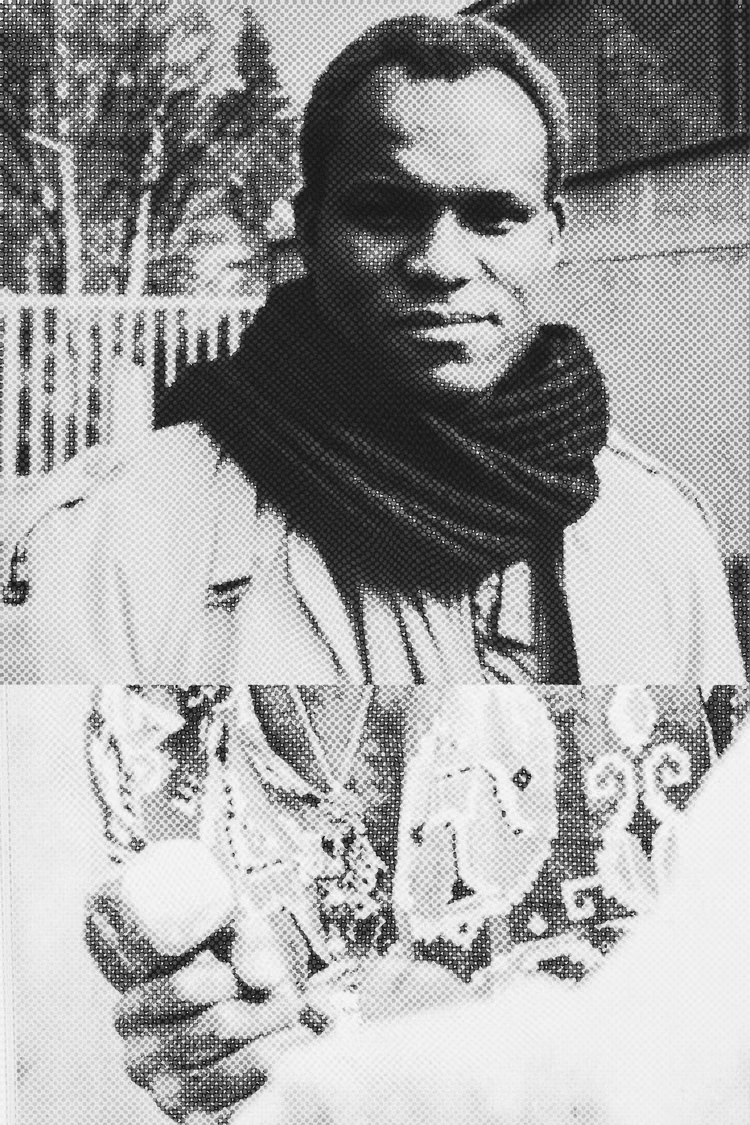
Sponsored by the Zambian government, he studied at Makerere University from 1967 to 1971, earning a BA in Fine Arts before completing an MA in Düsseldorf in 1975. He taught at UNZA and Evelyn Hone College, became a University Artist and is one of Zambia’s most celebrated painters.
The human figure and organic natural forms served as points of departure for his sensual abstractions. He transformed stone and wood into works that engaged both the eye and the sense of touch through their interplay of surface textures and finishes. Though exposed to international artistic trends, he retained a distinctive African character that gave his work strength and vitality. In 1998, he received the Ngoma Award for Best Three-Dimensional Artist.
Although fewer institutions with a similar commitment to the development of Zambian arts and culture exist today, the continued presence of Chandia’s sculpture shows how art and architecture can preserve cultural memory. It also remains a reminder of a period when artists, institutions and patrons worked together to give Zambian art a visible place in national life.