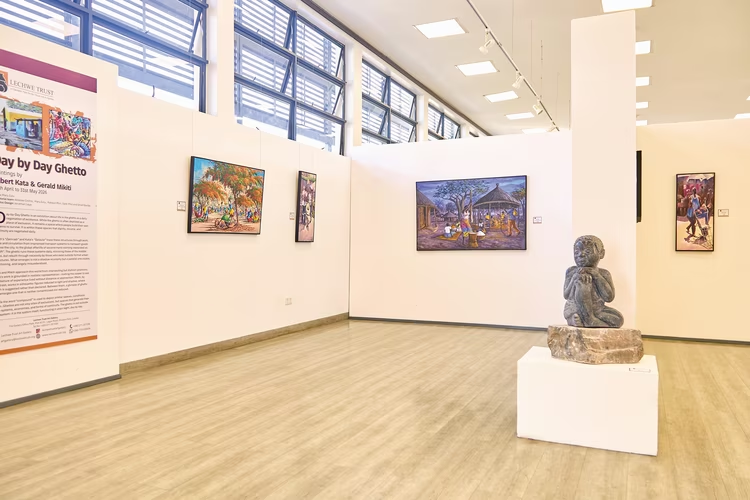
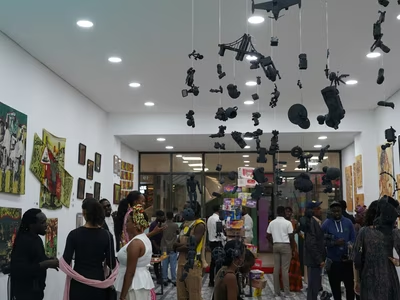
The rustle of trees in Rhodes Park and the quiet buzz of Gallery Office Park shift pace as one enters Lechwe Trust Gallery. We are now surrounded by the kafwafwa of street scenes: marketplaces, vendors, wheelbarrows, people bartering, children playing, minibuses hooting. Rhythms from the ‘Day by Day Ghetto’ duo exhibition by Albert Kata and Gerald Mikiti offer varied scenes from Lusaka’s informal economy, a stark contrast to the neighbourhood from which it is viewed.
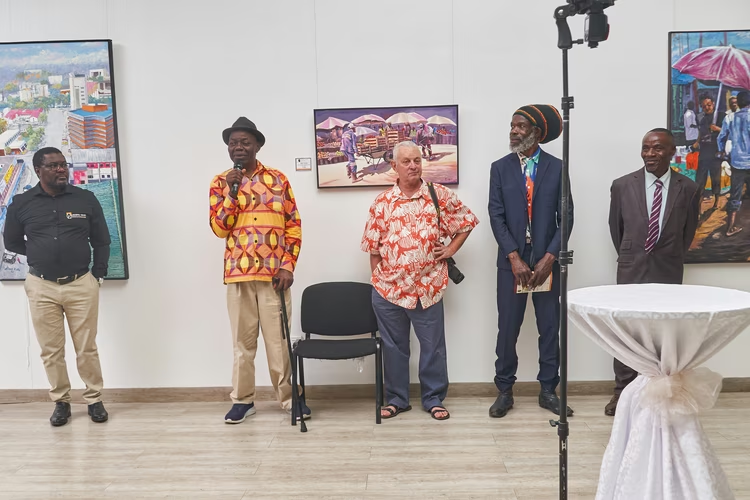
The exhibition text by Mary Zulu outlines how the ghetto might be considered a site outside the system, when in reality, it is the system: one built and negotiated daily by traders who exist outside the formal sector. This exhibition walks a tightrope between scene and observation, portrayal and representation. I spoke to her about the exhibition before its closing, and she highlighted the two perspectives the scenes present: that of the spectator and that of the subject. As spectators and viewers, there is an immediate distance between us and the life we see. We digest a bird’s-eye view of this invisible yet loud economy. Yet the other perspective, not overtly present in the exhibition but suggested throughout, is that of the subjects who exist in the ghetto daily. Zulu points out that the safety net of paid leave, which exists for those in the formal sector, for example, is not a luxury available to the subjects we see depicted in ‘Day by Day Ghetto’. There is little room to negotiate a day without labour, and for many, this cycle repeats across generations, all in order to survive.
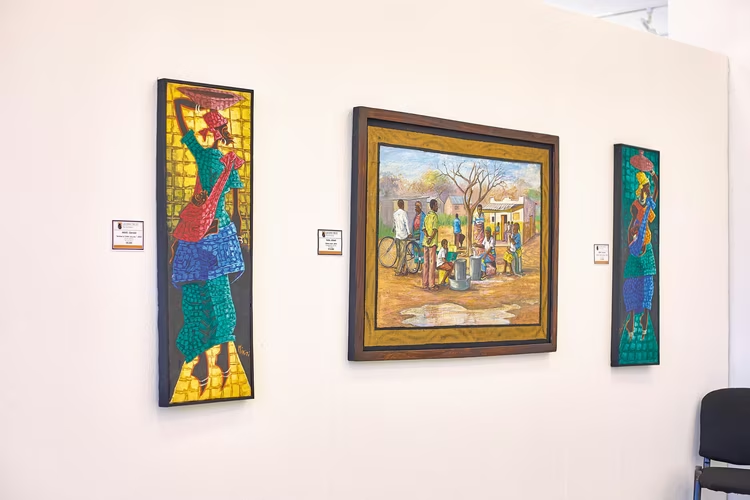
Mikiti and Kata offer glimpses into the residential life of the ghetto, too: children fetching water, people outside a bar in Chibolya and an evening scene around a fire. Women appear prominently throughout: selling vegetables, caring for children and braiding hair, underscoring their central and often overlooked role in both domestic and economic life. Mikiti’s familiar depictions of violet jacaranda and red flamboyant trees recall artworks commonly found in Lusaka’s craft markets, making their appearance in a gallery setting feel jarring. The inclusion of works of this nature, ironically, reflects the various formal and informal spaces through which art circulates to different audiences.
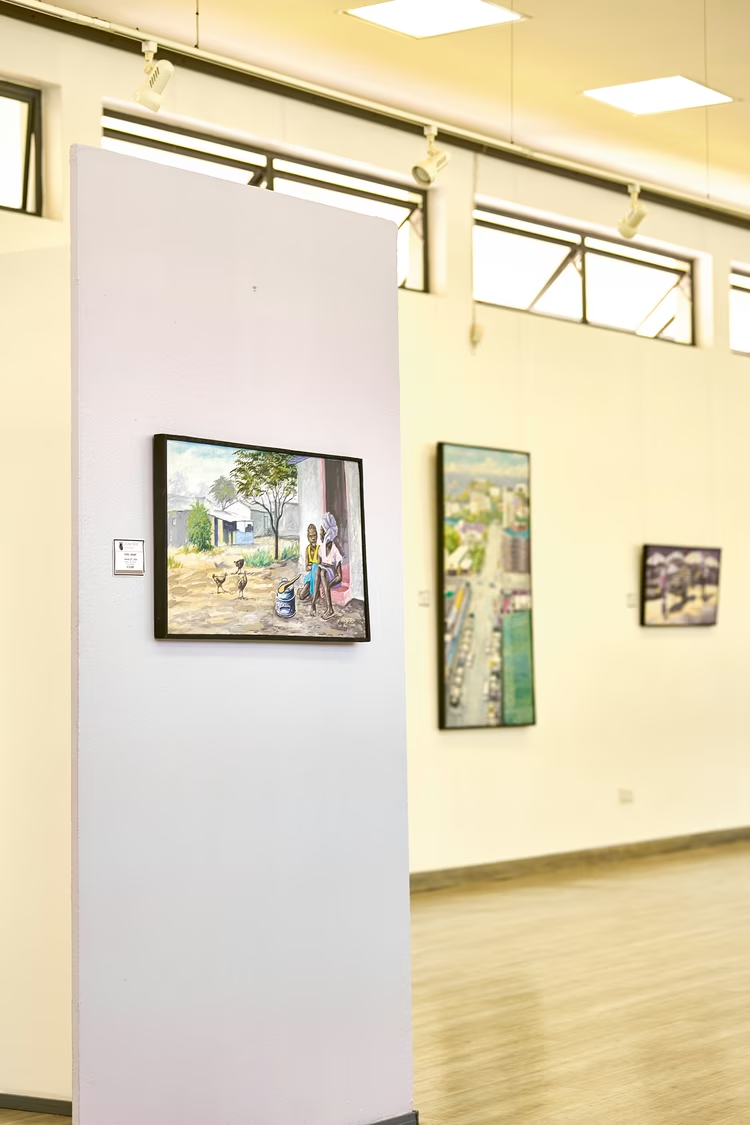
These scenes reverberate and repeat in several forms on the gallery walls. The exhibition strives to present a balanced portrayal of everyday life in the compounds. However, one aspect of the selection and arrangement of works invites further thought. Pieces depicting daily life appear alongside those depicting wildlife, seemingly disconnected from the exhibition’s central theme and title. If the intention is to reflect the monotonous routine of everyday life, the exhibition would have benefited from a stronger sense of repetition and rhythm, which would have been made more explicit by placing the artworks with greater intent. It is unclear whether the inclusion of this polarity is a deliberate move to reflect the chaotic nature of the ghetto or merely a lapse in curatorial decision.
At the same time, these departures from the exhibition’s premise may invite viewers to consider how livelihoods and homes are rarely confined to a single geography. Many residents of Lusaka maintain connections to families, cities, towns or villages outside the capital. Read in this light, the curatorial inconsistency created by the inclusion of rural scenes and animals, devoid of the infrastructure familiar to cityscapes, begins to suggest histories and motivations of migration and movement.
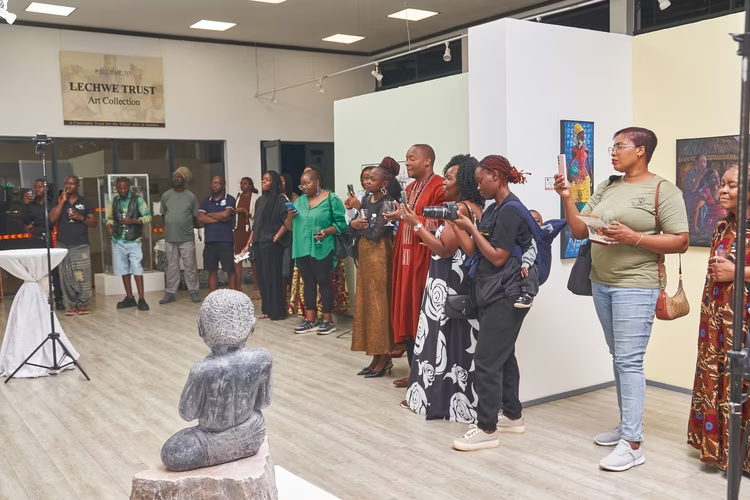
Such movement is true for the artists themselves. Both Kata and Mikiti hail from the Copperbelt and relocated to Lusaka 30 to 40 years ago. Albert Kata spent around six years in South Luangwa between 1986 and 1992, during which his paintings reflected his observations of wildlife and village scenes, mostly aimed at the tourist market he encountered there.
In separate conversations with the artists, who happen to be close friends, I noticed that the subject matter of their paintings changed according to where they lived at the time. Arriving in Lusaka in 1992, Kata now teaches art to children at the Kanyama Arts Centre through the Kanyama Youth Programme. Located off Kalusha Bwalya Road, close to City Market, the scenes from ‘Day by Day Ghetto’ reflect his everyday observations. Some of the paintings in the exhibition emerged from quick sketches or on-site photographs in Kanyama, which he would finalise in his studio. Thus, proximity to the ghetto for both Kata and Mikiti emerges in their paintings as a sensitive, intimate reflection, rather than a spectacle, of contemporary life in Zambia’s capital. This proximity gives the work an authenticity and credibility that avoids romanticising resilience.
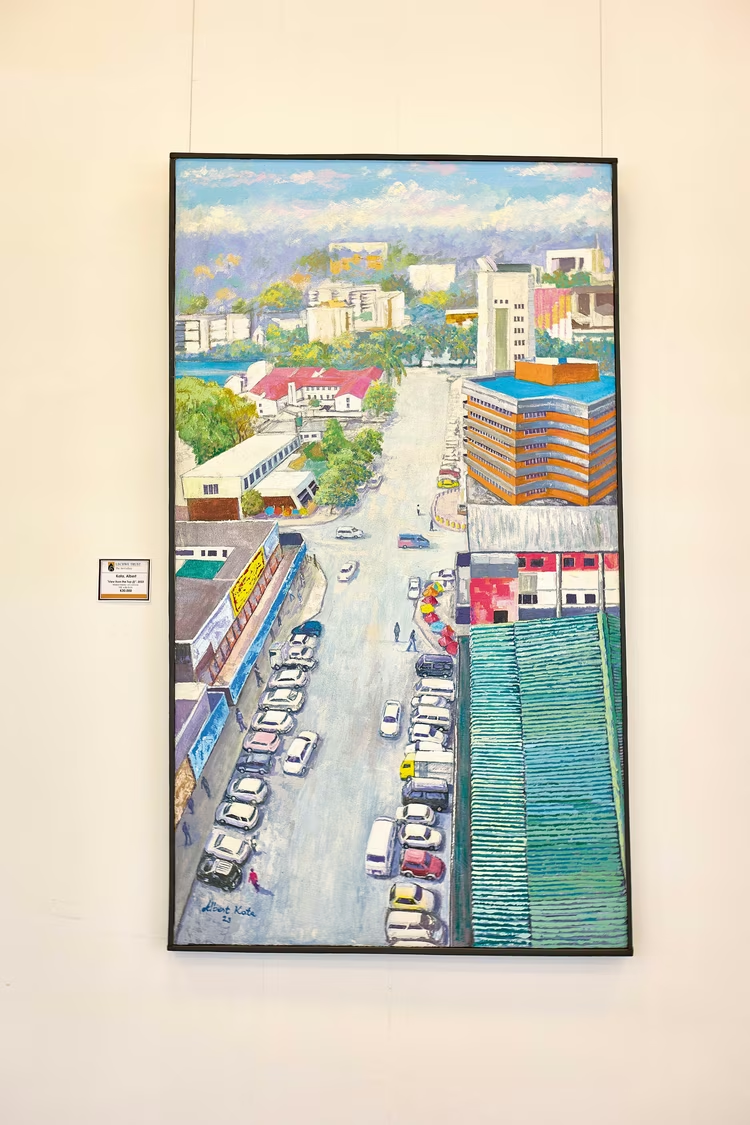
‘Day by Day Ghetto’ ultimately raises questions about life in Lusaka today. The exhibition offers us a moment of pause in one of the city’s most affluent neighbourhoods, inviting the spectator to reflect on class politics and how they spend their everyday lives.
The exhibition interrupts the rhythms of the spectator’s day with scenes from another’s, drawing attention to the inequalities, labour and resilience that underpin the city’s economy. While its curatorial execution occasionally falls short of its ambitions, ‘Day by Day Ghetto’ succeeds in foregrounding conversations that remain urgent, especially in a moment when questions of labour, survival and urban inequality remain unresolved. It reminds us that the ghetto is a central aspect of any city: the economies of care, labour and survival depicted on the gallery walls reverberate, reminding us what, and who, keeps the city moving.