The average Zambian has never stepped into an archive or had the privilege of seeing photographs of pre-colonial Zambia. What survives of these archives is fragmented and thinly documented. Occasionally, the public catches glimpses through grainy photographs or archival footage broadcast on national television, but these images are few and repeatedly recycled.
This shows just how little has been preserved and how remarkable the survival of studios like Prabhubhai Vila’s Fine Art Studios is. Founded in the 1950s, the studio not only disrupted segregation by opening its doors to indigenous Zambians but also created a visual record of everyday life during that time period. It is a reminder of how important the work of preservation is when it comes to accurately displaying the events of the past.
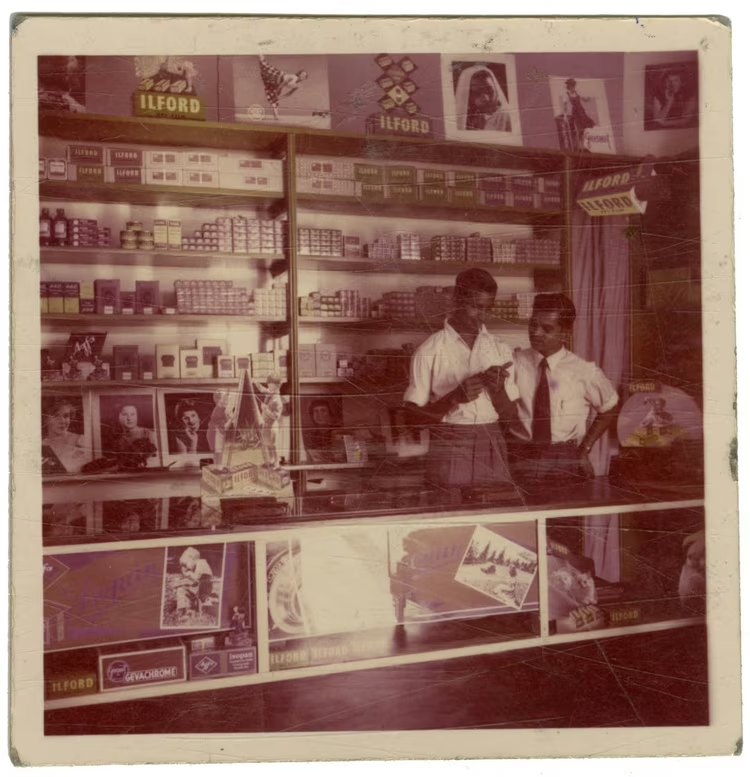
Who Was Prabhubhai Vilas?
Prabhubhai Vilas was an Indian photographer who established his photography business, Fine Art Studios, in Northern Rhodesia during the 1950s. At a time when the country’s racial segregation restricted access to portraiture, it became one of the earliest commercial studios known for welcoming Black Zambians during the colonial period. In practice, the studio challenged aspects of the racial hierarchies that shaped colonial Northern Rhodesia. The studio offered visibility for those excluded from colonial structures.
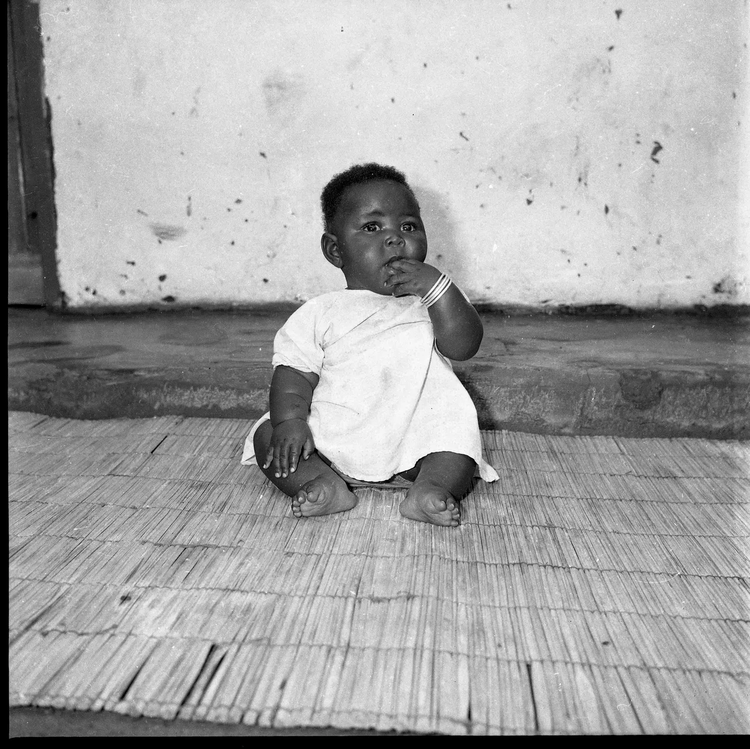
Vilas’ work extended beyond photography into painted portraits and hand-coloured prints. His images captured public figures and ordinary people, with every portrait taken with great care. The studio also displayed portraits of figures such as Mahatma Gandhi alongside photographs of Kenneth Kaunda, reflecting the symbolic connections between India's independence movement and Zambia's own liberation struggle. Other notable portraits taken were those of Edward Mukuka Nkoloso, a World War II veteran and independence fighter, who is also famous for founding the country’s unofficial space programme called the “Afronauts”. Vilas portrayed Black Zambians as protagonists and not simply colonial subjects; couples, workers and even children, posed with wide smiles before Vilas’ lens.
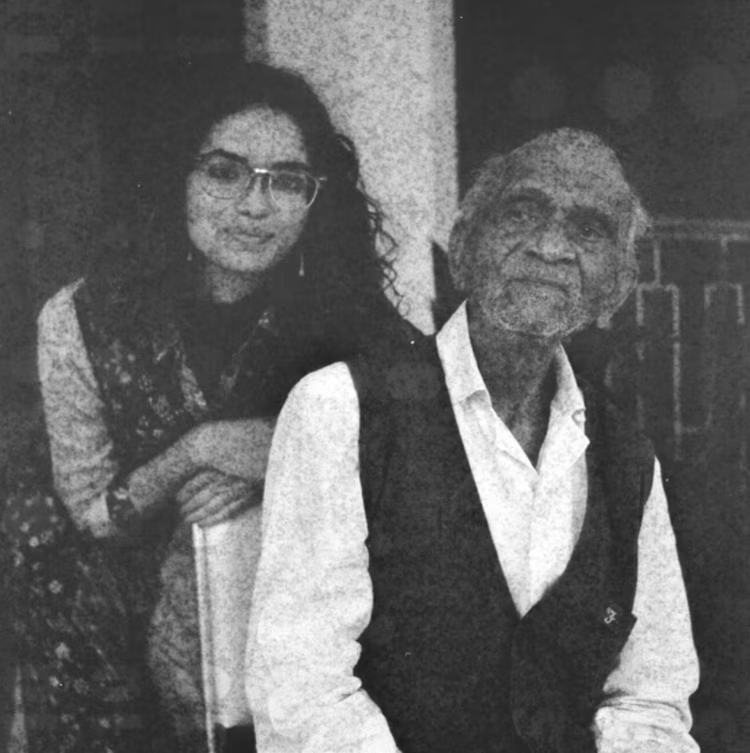
While Vilas anchors this narrative, he is not the only character in this story; apprentices such as Alick Phiri, who later opened Kwacha Photo Studio, and other contemporaries across Lusaka contributed to an informal archive of everyday life. These portraits remind us that archives belong not only to institutions but communities as well. Vilas created a space where multiple voices could be imagined.
Building Zambia's Visual Archive
What does the preservation of Vilas’ studio mean for Zambia today? In an era where digital platforms dominate, the act of reclaiming these archives is more than preservation; it is about resonance and recognition. For young Zambians scrolling through Instagram, these images are not just relics but mirrors. They move beyond colonial imagery that reduced indigenous Zambians to racial stereotypes, but instead present them as they truly were, which is not so different from young Zambians now: ambitious and full of purpose and dreams.
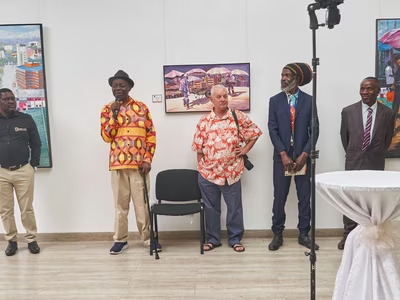
The gallery’s location between Cairo Road and Chachacha Road is also a poetic symbol of a bridge connecting spaces that were once divided by race and commerce and now connected by an inclusive photo studio. Vilas’ Indian background adds another layer, showing how diasporic communities contributed to Zambia’s visual culture. Under Northern Rhodesia’s colour bar, Indian traders and professionals were positioned between white settlers and Black Zambians, neither fully included nor fully excluded.
After independence, this community assumed new significance in the nation‑building project, contributing to commerce, civic life, and cultural production. This is a reminder that Zambia’s story has always been layered and interconnected. For young Zambians today, these images are not only about recognising history but about understanding that identity has long been shaped across communities, and that preservation ensures these negotiations are not lost to time.
Many surviving negatives remain fragile, while others have already been digitised to prevent further deterioration. This fragility emphasises the urgency of preservation but also raises questions: what does it mean to inherit an archive that is partial, fragmented, or decaying? How do we read absence alongside presence?
For the average Zambian, the archive is still an unfamiliar space. Few have seen images of Lusaka before independence, and fewer still know that studios like Vilas’s existed at all. Yet this scarcity is precisely why Fine Art Studios matters: it demonstrates that archives are not luxuries but necessities in a city where colonial segregation once dictated who could be photographed and where. Vilas’s work stands as both a refusal of erasure and a lesson in preservation.
What remains of his studio a rare cultural treasure, fragile, contested, but invaluable. To inherit it today is to recognise that our visual history is not guaranteed. It must be safeguarded, digitised, and shared so that future generations do not inherit silence but images that affirm belonging.