More than six decades after independence, true freedom in Zambia remains elusive. Cultural values such as collective responsibility can appear to matter less than quick cash, epitomised by ‘ka something’ backhanders for routine service. While blame for economic hardship often falls on foreign mineral exploitation, weak governance and poor policy execution are also central to the debate. Mealie meal has become a real gauge of political legitimacy. After steep increases earlier in the decade, prices have recently eased. In June 2026, ZamStats recorded national average prices of K272.66 for a 25 kg bag of breakfast mealie meal and K222.19 for a 25 kg bag of roller meal. Meanwhile, the statutory gross monthly wage for a Category I general worker, K2,313.10, falls far short of the Jesuit Centre for Theological Reflection’s April 2026 Basic Needs and Nutrition Basket of K12,051.64 for a family of five in Lusaka.
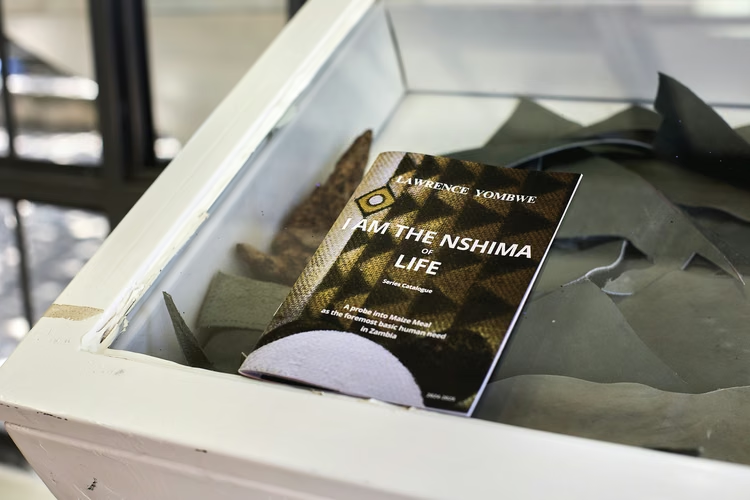
It is within this climate that‘I Am the Nshima of Life’ emerges. What role can art play in shaping national consciousness? How can art become a vehicle for confronting inequality and imagining alternative futures? Through his distinctive use of materiality, the bag of mealie meal becomes Lawrence Yombwe’s central protagonist.
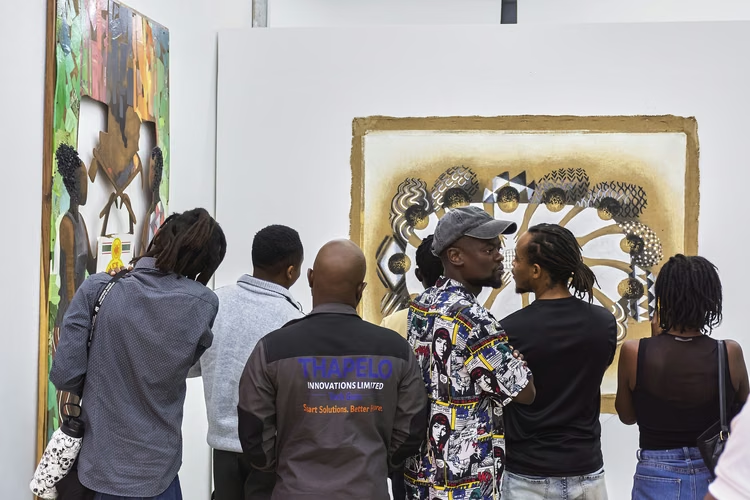
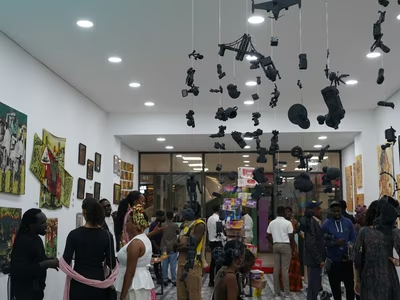
Art has a unique capacity to create spaces for difficult conversations outside formal structures. The Lusaka Contemporary Art Centre is one such space. It is an artist-driven, research-based institution dedicated to fostering national identity through decoloniality. Works like ‘I Am the Nshima of Life’ remind us why such spaces are necessary for national development. Unlike parliamentary debates, artworks communicate through symbolism, emotion and personal interpretation. They allow artists to address sensitive issues and can drive campaigns by bringing people together.
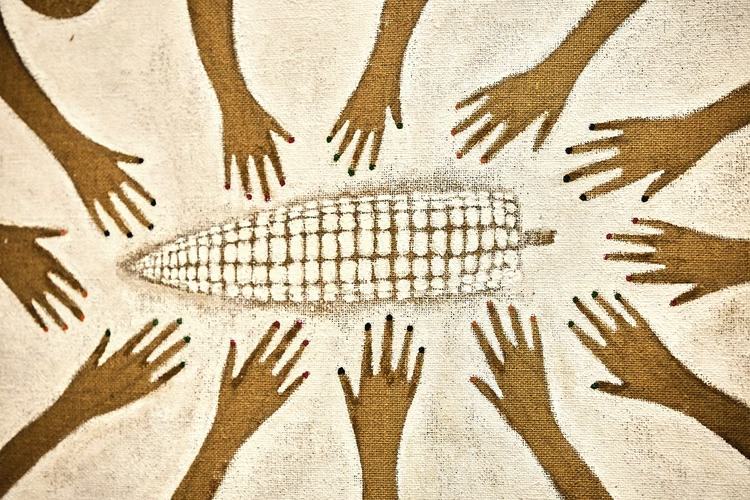
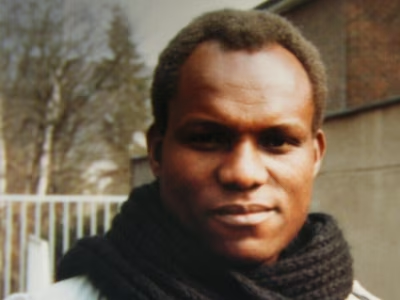
Born in Kalulushi in 1956, Yombwe has spent over four decades developing one of Zambia’s most distinctive artistic voices. He began as a self-taught artist and held his first solo exhibition at the Copperbelt Museum in 1979. He is widely recognised for incorporating Mbusa symbolism, drawn from the sacred emblems used in Bemba girls’ initiation and marriage ceremonies, into richly textured compositions. Working from his Wayi Wayi Art Studio & Gallery in Livingstone alongside his wife, fellow artist Agness Buya Yombwe, he demonstrates how art can serve as both a cultural archive and a tool for social reflection, civic participation and critique.
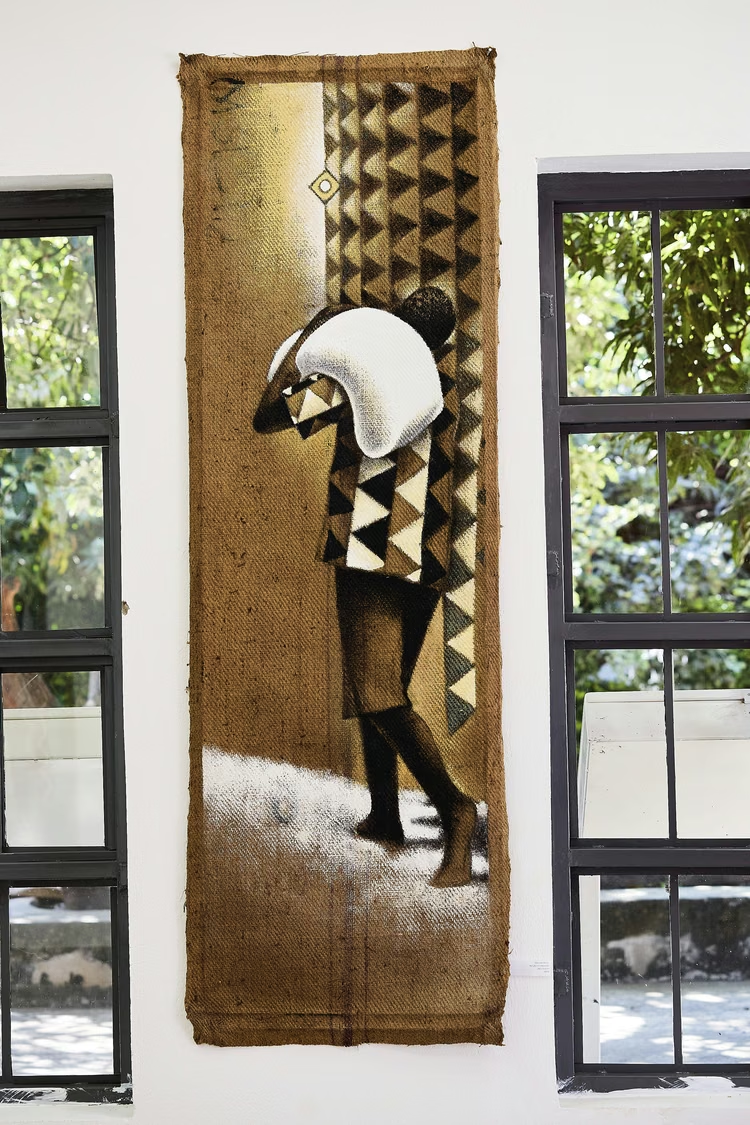
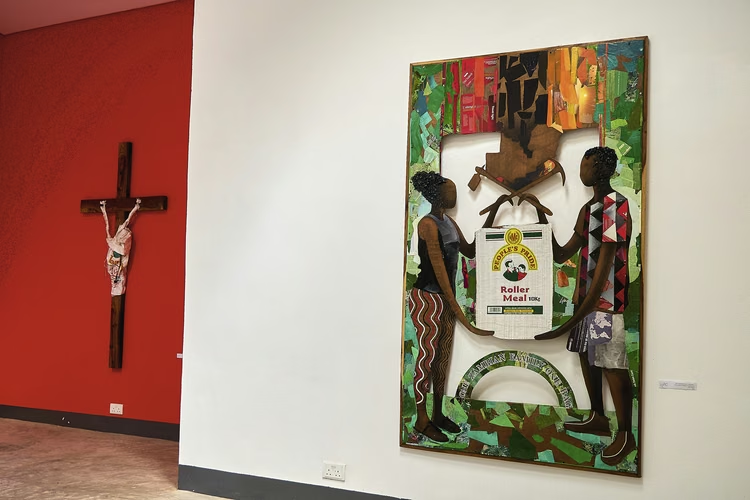
Throughout the series, the humble bag of mealie meal is transformed into a powerful symbol that carries both meaning and materiality. It represents nourishment and survival, but also inequality, political promises, economic vulnerability and the aspirations of struggling households. In this simple object, Yombwe translates statistics into human experience.
The series addresses food security and access as pressing concerns for ordinary Zambians. While discussions about mealie meal prices and inflation often unfold through policy statements, Yombwe approaches these realities through visual language. His work invites audiences to engage not merely as observers but as participants in a conversation about dignity, survival and accountability.
In ‘One Zambian Family, One Bag 1’, the artist reimagines Zambia’s Coat of Arms through collage. Using charcoal fragments, magazine cuttings and bank advertisements, he replaces the traditional shield with a 10 kg bag of roller meal. The national motto is altered from ‘One Zambia, One Nation’ to ‘One Zambian Family, One Bag’, suggesting a decline in unity across social classes. This humorous but powerful gesture unsettles familiar national symbolism and questions the true meaning of solidarity proclaimed at independence.
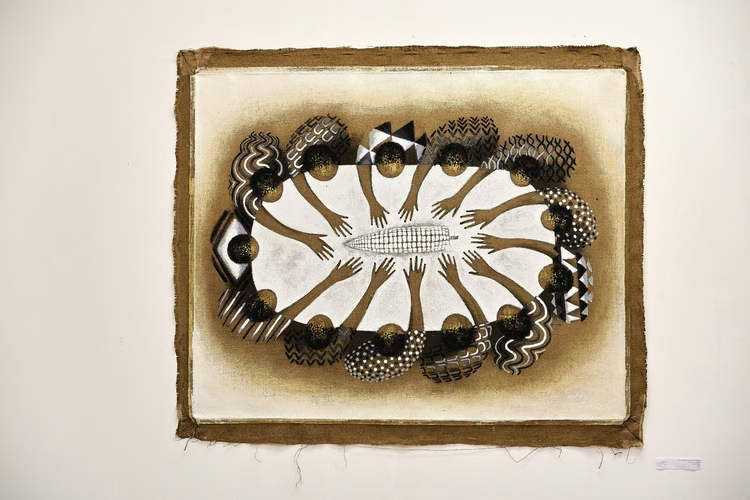
Yombwe continues this theme in ‘One Zambian Family, One Bag 2’, painted on hessian cloth, a material associated with food storage and transport. Drawing inspiration from the Last Supper, he presents thirteen figures gathered around a table that evokes scarcity and provision. The disciples are reimagined as Zambian youth adorned with Mbusa iconography that reflects diverse life experiences and social realities. The figures have the Zambian flag painted on their fingernails. In doing so, Yombwe places traditional communal values in dialogue with Zambia’s identity as a Christian nation. The composition places an eye-shaped figure representing divine presence, observation and accountability at the head of the table. The symbolism extends beyond religion into governance, posing questions about responsibility, distribution and collective welfare.
Perhaps the most striking work is the installation from which the series derives its title: ‘I Am the Nshima of Life’. Composed of a wooden crucifix with an empty bag of roller meal in place of Christ’s body, it borrows from the biblical declaration, ‘I am the bread of life’. Yombwe’s work is provocative, translating the metaphor into a distinctly Zambian Christian context. This approach confronts political and religious institutions with questions about their responsibilities to society.
The work poses a difficult question: what happens when the thing that sustains daily life becomes inaccessible to those who need it most? Rather than attacking religion, the work calls attention to the relationship between faith and social responsibility. It asks whether spiritual teachings can remain meaningful if communities continue to struggle with hunger. With this visual substitution, Yombwe transforms the crucifix into a site of contemporary reflection, linking morality, governance and survival.
The installation is significant because it shifts public discourse from abstract economic language to lived experience. Inflation rates, exchange rates, subsidies and agricultural policies become embodied in an object that every Zambian understands. The work exposes the human consequences of policy decisions while inviting citizens to consider their own role in shaping society. Its strength lies in its openness. It prescribes no answer, leaving each viewer to arrive at their own interpretation.
Through Mbusa symbolism, Yombwe draws upon indigenous knowledge systems while adapting them to contemporary realities. Symbols traditionally used for instruction and moral guidance are transformed into tools for civic engagement and democratic participation. In this sense, it embodies decolonial thinking. By refusing to separate cultural heritage from present-day concerns, he emphasises the importance of local knowledge systems in understanding modern political and economic challenges. It also serves as a bridge between generations, opening a conversation about lived realities across economic circumstances. Yombwe’s practice suggests that culture is not static but a living resource capable of helping societies interpret and respond to changing conditions.
As Zambia moves toward its next chapter, the questions raised by Yombwe’s work become increasingly relevant. Political actors will undoubtedly continue to promise economic improvement and lower food prices, yet ‘I Am the Nshima of Life’ reminds us that accountability begins with our willingness to critically examine the realities that shape everyday existence.