A few weeks ago, Lusaka came to a stop.
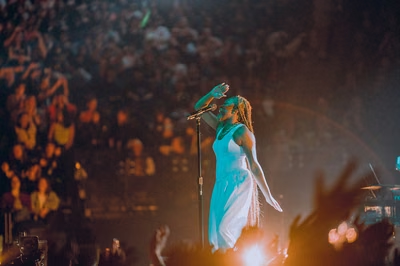
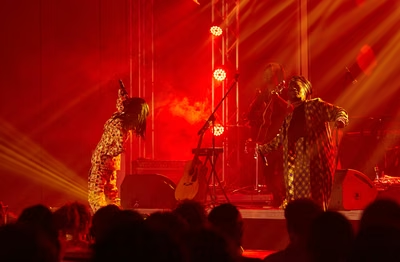
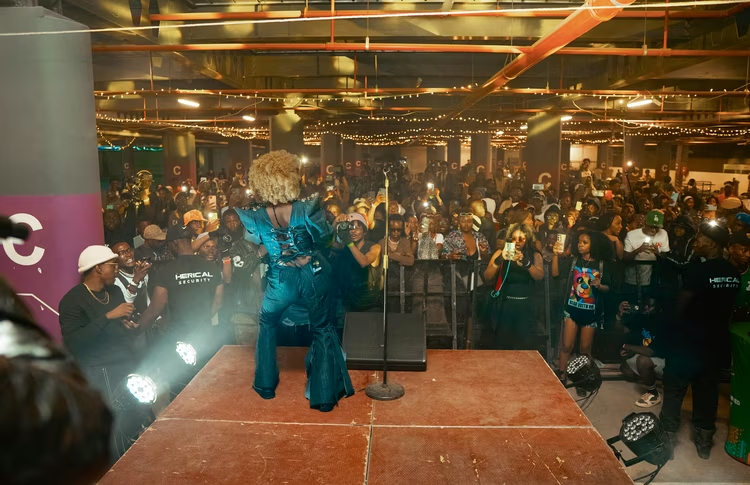
At the Manda Hill footbridge along Great East Road, Sampa The Great appeared in the middle of the city, dressed in an avant-garde blazer in the colours of the Zambian flag. She looked part rock star, part national emblem. Leather shorts, rockstar boots and an energetic band behind her. For a moment, one of Lusaka’s busiest roads became a stage.
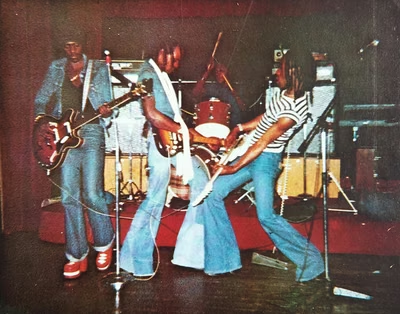
The spectacle immediately drew attention, curiosity and debate. Then “Simon Says” started playing, its blend of hip-hop, African rhythms and psychedelic sounds filling the space around the performance. It was familiar and new at once, an intersection of rock, hip-hop and the unmistakable sound of Zamrock, carrying traces of the music pioneered by WITCH and other musicians who turned psychedelic rock, jazz, traditional rhythms and the sounds around them into something distinctly Zambian. And, as she has done before, Sampa appears to be entering another phase of her musical evolution.
Sampa The Great’s Nu Zamrock and the Sia Collaboration
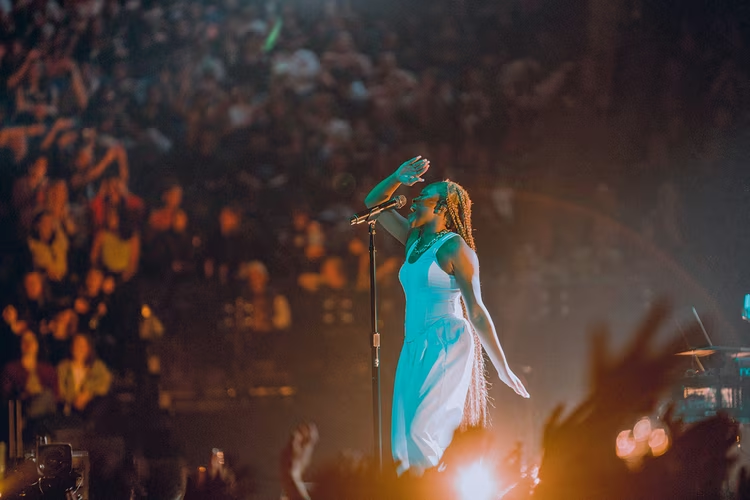
Now, as she prepares to release Nu Zamrock on 30 October 2026, the vision is clearer. “Supernova”, featuring Australian singer and songwriter Sia, sits at track ten on the much-anticipated 16-song album. The pairing is unexpected. Sampa, whose work has moved between hip-hop, poetry, soul and traditional African music, is paired with Sia, one of the world's most recognisable pop artists. The interesting part of “Supernova” is not only the presence of Sia, the Australian singer-songwriter behind “Chandelier”, but what the collaboration could mean for the future of Zamrock.
“I’ve stepped into my power, into my sound, into my purpose. I’ve claimed this thing, Nu Zamrock, as something of my own, something I’m shaping in real time,” Sampa says. It is a declaration of ownership, but also of movement. Nu Zamrock captures Sampa’s evolution into an artist fully in command of her voice, her roots and the direction in which she wants to take them.
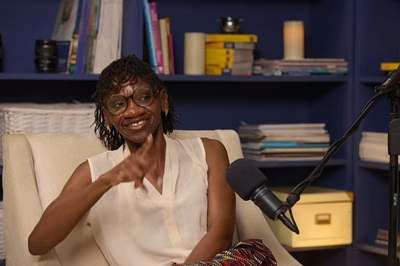
“Supernova”, featuring Sia, is another step in that process. According to Sampa, the collaboration came together while she and producer Cadenza were working on the track and thinking about how they could bring in harmonies that would complement the song. Her sister Mwanjé suggested Sia; Cadenza reached out, and Sia subsequently recorded her own lyrics and harmonies for the track. Sampa's interview with Wonderland provides the details behind the collaboration.
The song creates an opportunity to introduce Sampa’s version of Nu Zamrock as a genre to a new set of global listeners before they encounter the Zambian musical lineage beneath it. This is no new territory for Sampa. Her music has already found its way into major international spaces, with “Never Forget” featuring in the trailer for Black Panther: Wakanda Forever. Each moment has placed a piece of her Zambian musical identity somewhere larger than its original setting. “Supernova” takes that conversation a little further.
How Sampa The Great Is Taking Zamrock to a Global Audience
Her career has repeatedly involved bridging between Zambia and Australia, Africa and the diaspora, hip-hop and traditional music, while negotiating the expectations placed on African artists and the freedom to create unfamiliar, compelling and ambitious music. As Above, So Below was part of that process, bringing together different pieces of Sampa’s identity and placing Zambia at the centre of the conversation.
Sampa has described Zamrock as part of her family legacy, and the new album grew out of a deeper discovery of that lineage. Her uncle George Kunda, known as Groovy Joe, was a founding member of WITCH. The album’s visual material has also begun to foreground inheritance, family and transmission between generations. That is what makes the phrase “Nu Zamrock” more interesting than a simple genre label.
This idea of preserving and reimagining Zamrock is already part of Zambia’s wider cultural conversation. Nkwazi’s “Reviving Zamrock” explores how musicians, curators and cultural institutions are helping to preserve the genre and pass its legacy to a new generation.
What Is Zamrock? A Look at Zambia’s 1970s Rock Movement
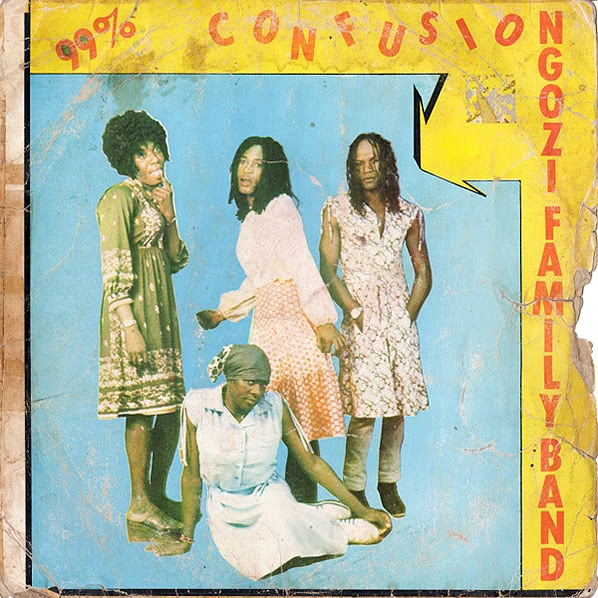
Zamrock emerged in Zambia in the 1970s, during a period when musicians were absorbing international rock while developing sounds shaped by local rhythms and political and cultural life. The music of WITCH, Amanaz, Musi-O-Tunya and artists such as Paul Ngozi eventually became treasured by collectors and listeners far beyond Zambia, even as some of that history remained less visible within the country itself.
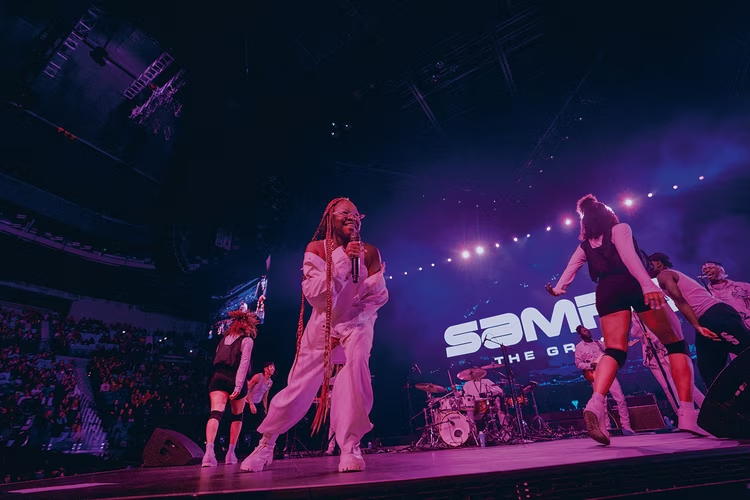
Sampa’s approach is different from archival revivalism. She is not trying to recreate the 1970s. She and her collaborators spent time listening to old Zamrock alongside rap music during a week-long writing and jamming session in Botswana. The material was then developed further in Los Angeles with Cadenza. That process says something about what “Nu Zamrock” means and intends to do.
The old records are source material, but so are hip-hop, soul, contemporary production and Sampa’s own musical vocabulary. The result can carry the shape of an older tradition without becoming a relic that cannot connect with today.
The story of Zamrock is also part of a much larger story about Zambian culture and heritage. Across music, art, architecture and tradition, generations of Zambians have continued to reinterpret what it means to create something distinctly their own.
Zamrock was always an act of looking outward while remaining rooted at home. Its musicians listened to the world and made something local from what they experienced and heard. Decades later, Sampa is doing something similar, but from a different perspective. She has absorbed hip-hop, soul and global contemporary music, brought it back home, and challenged the standard of what happens when those sounds meet the music inherited from her family and country.
What Makes Sampa The Great’s Nu Zamrock Different?
There are many people responsible for Zamrock’s continued life, from the musicians who made it, to the collectors and archivists who preserved it, and the contemporary Zambian artists who continue to reinterpret its vocabulary. Sampa now occupies an important place in that story, with the advantage of an audience of considerable size and diversity that has already followed her across borders.
Her work also sits within a broader generation of Zambian artists using music to explore identity, gender and culture. Nkwazi’s profile of Zambian hip-hop artist Bomb$hell is another example of the magazine’s exploration of the artists shaping Zambia’s contemporary music scene.
And this is why “Supernova” raises a new perspective. It could become a major pop record, introduce new listeners to Zamrock, or become one of the most striking collaborations in international pop. At this stage, the possibilities remain open.
The question now is whether the world is ready to hear what Sampa The Great believes Zamrock can become.