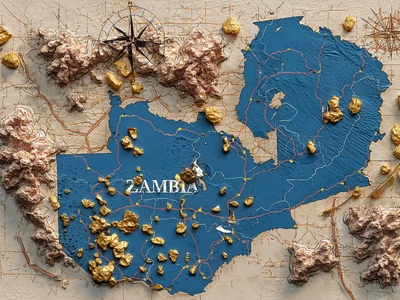
But beneath the new estates, businesses and infrastructure is a more complicated story: informal settlements are expanding, housing demand is rising, and the pressure on land and the environment is growing. As copper brings more money into North-Western Province, Solwezi faces a bigger question — can its urban development keep pace with its economic growth?
In Solwezi, copper is changing more than the mining industry. It is changing where people live, what land costs and what the town looks like. New housing estates, businesses and infrastructure are appearing alongside rapidly expanding settlements, as thousands of people seek opportunities in one of Zambia's most important mining regions. The money is flowing. The question is whether the town can grow quickly enough to keep up.
Copper mining is driving Solwezi's rapid growth
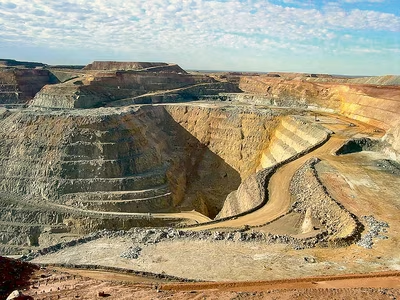
The big change in Solwezi comes from the copper mines around it. Kansanshi Mine, run by First Quantum Minerals, is the biggest copper mine in Africa by production and sits right next to the town. Further west, First Quantum's Sentinel mine operates in the Kalumbila area, while Barrick's Lumwana mine is also located in North-Western Province. Zambia's copper production rose sharply in 2025, continuing the country's push towards higher output, and these mines in North-Western Province were a big reason why. Barrick is also investing heavily in expanding Lumwana, with its planned expansion expected to significantly increase the mine's production capacity.
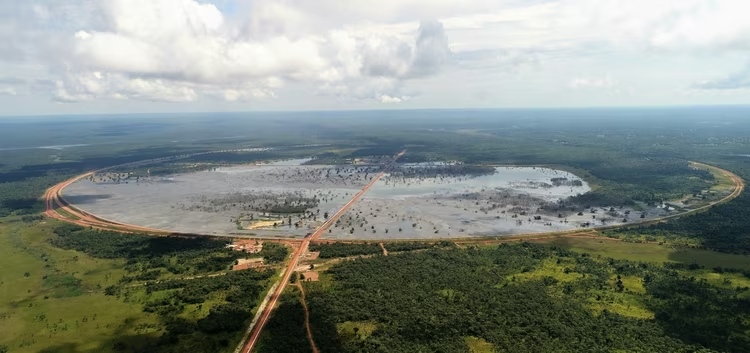
The economic impact extends beyond the mine itself. Kansanshi spends money on local and Zambian suppliers, while mine employees and contractors create demand for accommodation, transport, food, repairs and other services. Because of this, small businesses in Solwezi have grown fast. Car repair shops, delivery services, guesthouses, and other small companies. All this extra money, the growing population, plus mine workers who need somewhere to live, is what is pushing up house and land prices. The rising population is increasing demand for rental housing across the town's growing residential areas.
Solwezi's land prices are rising with demand
The clearest sign of the boom is land prices. Land on the edge of town, once used mostly for small farms, is now worth a lot of money. People who own this land, many of whom used to sell it cheaply, now understand its value and are asking much higher prices.
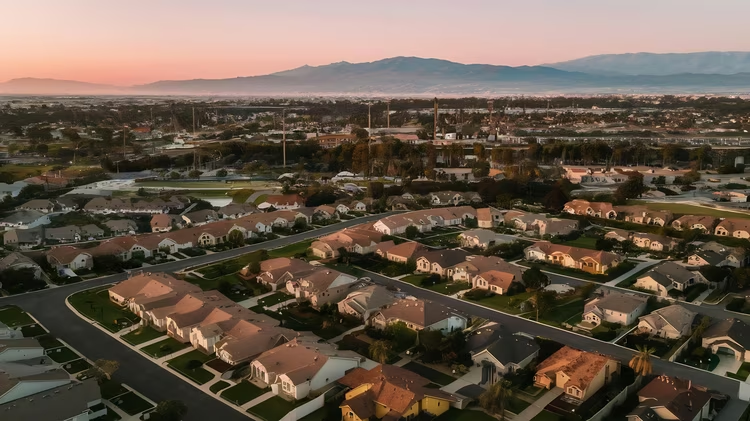
Land near Kansanshi Mine is especially popular. Around the mine, developers are building modern residential estates with roads, electricity, water, and security. Some are aimed at professionals working in the mining sector and other industries, adding another layer to Solwezi's growing property market. Companies from Zambia and other countries are investing in these new estates. For local landowners, selling or renting out land to these developers has become one of the best ways to earn money.
Solwezi's housing boom has a downside
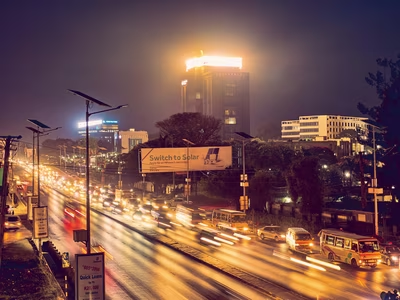
But not everyone is sharing in this wealth. There aren't enough proper houses for everyone moving to Solwezi to look for work. So while nice estates are being built, informal settlements. Areas built without planning or proper permission are also growing quickly nearby. The changes are visible beyond residential developments. New retail, hospitality and recreational businesses have followed the growing population, giving Solwezi more of the amenities associated with a larger urban centre. The town is increasingly attracting professionals and businesses that once might have treated it as a temporary stop rather than a long-term base.
But that growth has also exposed a housing gap. Demand for secure, serviced accommodation is rising, while lower-income residents can struggle to find affordable housing in areas with reliable water, electricity, roads and sanitation.
The town is seemingly growing past its transient status. New developments increasingly offer amenities such as electricity, water, roads and security. Be it security, water, or fittings. Though that is putting a strain on housing availability, private housing projects as well as public housing projects are increasing in planning and implementation. Mining investment, private development and local government planning are all shaping Solwezi's future.
Many people come to Solwezi hoping to find mine jobs, but not everyone gets hired. Those who don't often end up settling wherever they can find space, even if they don't have proper rights to the land.
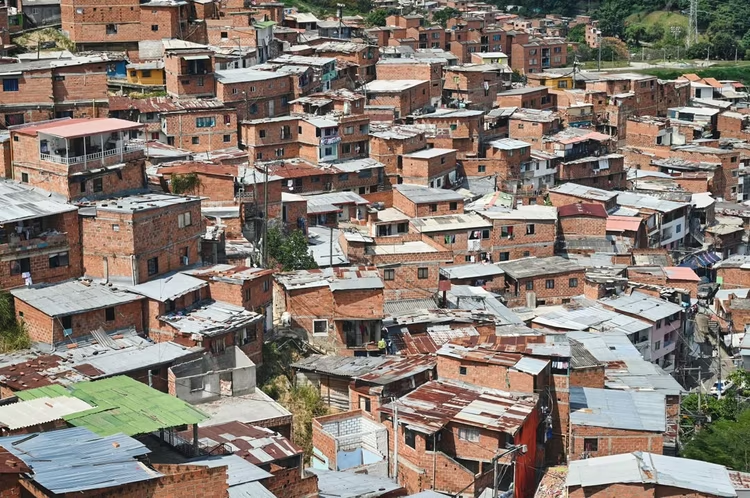
A growing divide between planned and informal settlements
This creates a town of two very different worlds side by side: modern estates with electricity and clean water, next to poorer settlements where people don't have secure rights to their land and could be forced to leave at any time. Researchers have also raised environmental concerns around rapid urban expansion, including deforestation, charcoal production and cultivation near waterways. As settlement spreads, pressure on surrounding ecosystems can increase.
Jokes about how sandy the town is seem not to be deterring anyone moving into town. Nothing lasts, am I right? The expansion of just where you can live against the number of people relocating is creating a demand-driven price that may allow landowners or those looking to own land in Solwezi to cash in their investments.
Can Solwezi turn mining wealth into lasting urban growth?
Solwezi shows what often happens in towns built around mining wealth. The money comes in faster than the town can plan for it. Roads, schools and clinics are being developed alongside the town's expansion, but access to infrastructure remains uneven. Private investment has played a major role in shaping some of the new residential and commercial areas, while public planning has the difficult task of connecting a rapidly expanding town. Whether Solwezi becomes a well-planned mining town or stays a mix of fancy estates and messy, unplanned growth will depend on how well the town plans its land use in the years ahead.