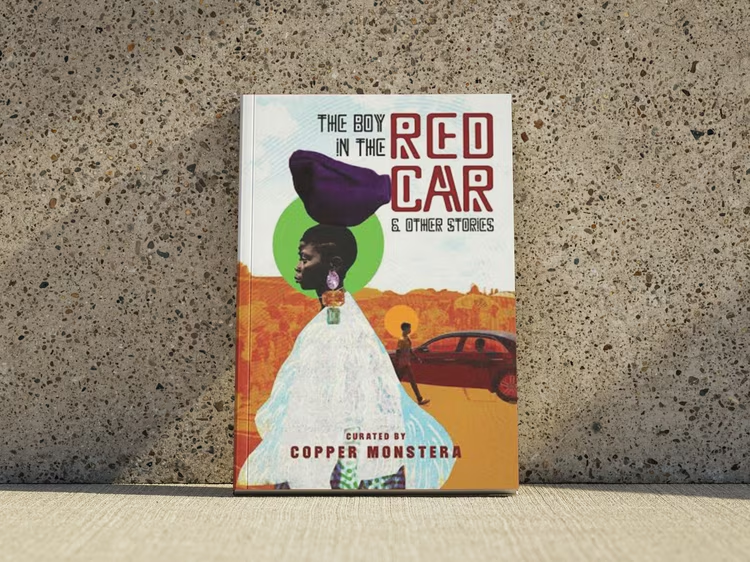
The Boy In The Red Car & Other Stories
Launched in Lusaka on 18 July 2026, The Boy in the Red Car & Other Stories brings together 13 short stories by Zambian writers, exploring themes including money, love, ambition, sexuality, family and survival. This anthology consists of stories titled:
- “A Woman’s Share” by Musonda Mukuka,
- “Numbers” by Mukandi Siame,
- “The Grifters” by Mwinji Siame,
- “Writing for Her” by Musonda Nsakanya,
- “Yasano” by Bwalya S. Kondwani,
- “Five Minutes” by Chipo Nyakunzu,
- “The Mysterious Marketeer” by Thomas Chisengantambu,
- “A Pinch of Sugar” by Thandizwe Chishala Chibale,
- “The Street Hustler” by Immaculate Regina Sikanyika,
- “Gold Dust Woman” by Shanon Mutanga,
- “Starting from Scratch” by Doreen Mwenda,
- “Her Sweetie, Her Sugarcane” by Natasha Omokhodion-Kalulu Banda and
- The title story, “The Boy in the Red Car”, by Nchimunya Simbwendele.
“… What I love most about the book is how unstereotypical it was. The stories move through survival, espionage, sexuality, and family, funny, punchy, and genuinely well-crafted, offering angles on money that fiction rarely takes the time to explore, especially through an African woman’s lens …” Financial literacy expert and author of Catching F.I.R.E., Jane Mazimba, shared her thoughts on the anthology after attending its launch in Lusaka.
What this could mean for Zambian publishing
Having recently lost the authority to issue International Standard Book Numbers (ISBNs) due to mismanagement by local administrative bodies—this, paired with the high cost of publication, discourages many local authors from taking that final step into the literary world. However, the curator of this book, Copper Monstera, is an independent Zambian-based publishing house founded by acclaimed author of “No be from hia” Natasha Omokhodion-Kalulu Banda herself. The publication of such a book shows the resilience of Zambian authors despite the setbacks cast upon them by the economy and certain irresponsible higher-ups in the industry. This could encourage a new wave of not only Zambian anthologies, but all sorts of published works from the already established—as well as aspiring literary creatives from across the country to the local people and the rest of the world.