There is something about discovering a book that feels like it was written just for you, the kind of story that reaches across the page and grabs you by the collar and refuses to let go until you have turned the very last page. I have been lucky enough to read three such books recently, each from a different corner of the continent, each written by an African author with something urgent and necessary to say, and I cannot stop thinking about any of them. Chilu Lemba's Finding My Voice, Keith Hamusute's The Ghosts Came To Dinner And Never Left, and Adaobi Tricia Nwaubani's I Do Not Come to You By Chance are the kind of books that stay with you; they change something in how you see the world, and they make you want to press them into the hands of everyone you know.
Finding My Voice
You have probably heard Chilu Lemba's voice before, even if you did not know it was him. He is the award-winning Zambian-born voiceover artist whose voice reaches millions of households across Africa every single day, the voice behind brands like Nissan, SuperSport, Old Mutual, and the Eyewitness News brand on Talk Radio 702 and Cape Talk. But Finding My Voice is not about the voice you hear on the radio or TV; it is about the boy who grew into that voice, the journey that shaped him into the man he became, and the country that shaped him right alongside.
The memoir takes us back to Zambia in the 1980s and 1990s, a country that was itself finding its feet after independence. Lemba writes about growing up with his siblings, the friendships he forged, the games they played, and the household routines that defined his childhood. He takes us through his school years, his early forays into music and radio, and the challenges he had to surmount along the way. What makes this book so special is not just the story itself but the way it is told; Lemba's written voice is as distinctive as his verbal voice, authentic, expressive, funny, and thought-provoking.

This is not a celebrity memoir full of name-dropping and self-congratulation, and Lemba is refreshingly honest about his struggles and disappointments along the way. He opens up about challenging episodes in his life, though he restrains himself from revealing too much when it comes to relationships with family and friends. The book focuses on his life up to his early twenties and ends with his move to South Africa, leaving you wanting more. And perhaps that is the point; this is not the whole story, just the beginning of it.
If you grew up in Zambia during that era, this book will evoke powerful nostalgia, especially for the games you played and the household routines. If you did not, it offers an insider's view of what life was like in a country undergoing profound change. Either way, it is a book that will inspire and motivate, revealing the man behind that deep, rich voice in a way that feels both intimate and honest. The audiobook, narrated by Lemba himself, is seven hours and four minutes of listening pleasure, and honestly, hearing him tell his own story adds a layer of authenticity that the printed page alone cannot capture. You can find Finding My Voice at Aristata, Blackwells, AbeBooks, Clarke's Books, and as an audiobook on Storytel and AudiobooksNow.
The Ghosts Came To Dinner And Never Left
Keith Hamusute is a banker and public policy lecturer based in Lusaka, Zambia, and his debut novel The Ghosts Came To Dinner And Never Left won the Best Fiction Award at the 2021 Scribes awards. The title alone is enough to make you pause, and the book more than delivers on its promise.
Set in the immediate Zambian pre-independence period, this is a sweeping and often ironic tale of a quest for identity. The story follows a fledgling journalist, a child abandoned by his mother, and a budding youth politician whose lives are changed when they find themselves caught up in the Lumpa uprising. Hamusute weaves together personal stories with the larger historical forces that were shaping Zambia at the time, creating a narrative that feels both intimate and epic. In the ensuing soul-searching and quest for meaning, their entire worldview is challenged.
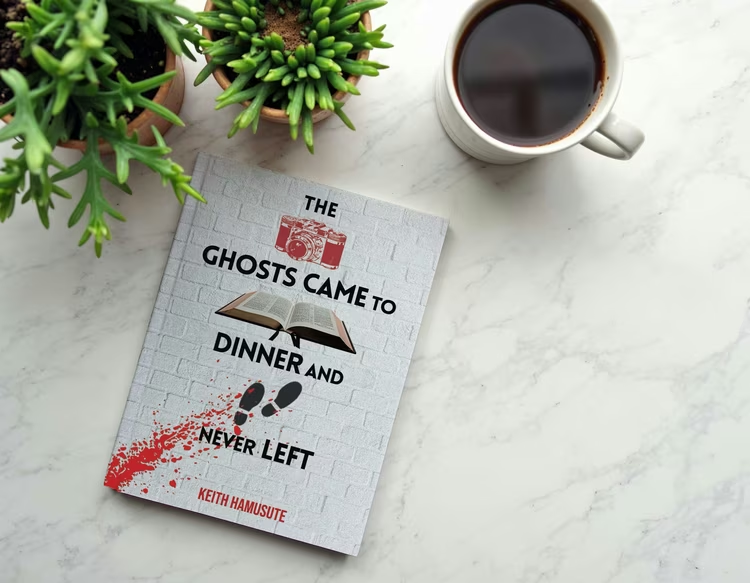
Writing a book, Hamusute has said, is a lonely process fraught with self-doubt and impostor syndrome. But once the book is done, new fears replace the old ones: the fear of how it will be received, whether it will find its readers, whether it will matter. The Ghosts Came To Dinner And Never Left matters because it tackles a period of Zambian history that does not get enough attention in fiction. It is a book about the ghosts of the past, the ones that show up uninvited and refuse to leave, the ones that shape who we are whether we acknowledge them or not.
Published by Write Lake in Lusaka in 2021, this 253-page novel is available through various booksellers and library catalogues, including Yale University Library. If you are looking for fiction that is rooted in Zambian history but speaks to universal themes of identity, belonging, and the weight of the past, this is the book for you.
I Do Not Come to You By Chance
Adaobi Tricia Nwaubani's debut novel I Do Not Come to You By Chance is one of those books that makes you laugh and wince in equal measure. Published in 2009, it won the Commonwealth Writers' Prize for Best First Book in Africa, the Betty Trask Award, and was a finalist for the 2010 Wole Soyinka Prize for Literature in Africa.
The novel follows Kingsley Ibe, a newly minted engineering graduate from an upstanding Nigerian family who cannot find a job. Being the opara of the family, he is entitled to certain privileges, but times are hard in Nigeria, and jobs are not easy to come by. When a crisis plunges his family into financial distress, he turns to his uncle Boniface, known as Cash Daddy, a 419 email scam kingpin, in desperation. What follows is a journey into the dark underbelly of Nigerian cybercrime, told with humour, wit, and a surprising amount of heart.
Nwaubani grew up in southeastern Nigeria among the Igbo people, the major culprits of 419 scams, so she knows this world intimately. But she does not write about it with judgement or condescension. Instead, she humanises the people behind the scam emails we all receive, showing us the desperation, the ambition, and the moral compromises that drive them. The book is satirical and sad, every dialogue well-written, and it offers a loving and honest depiction of Nigerian culture that is both fascinating and eye-opening.
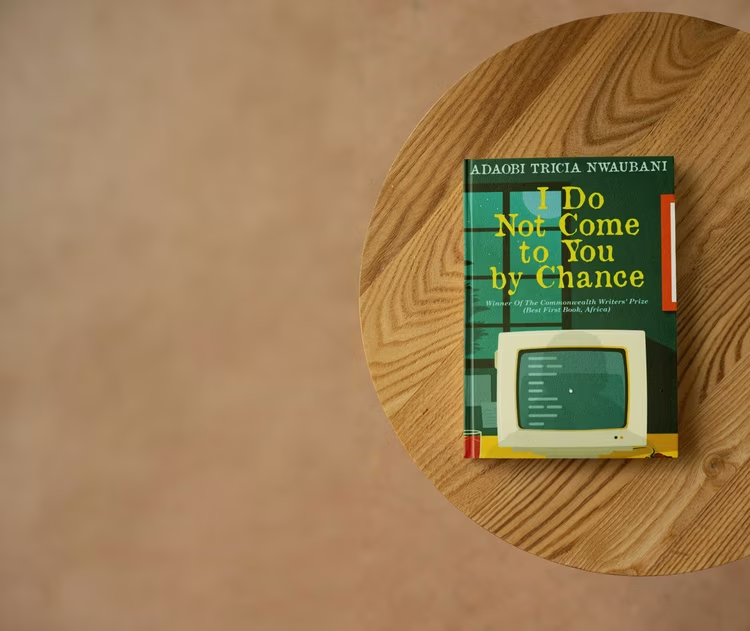
What makes this novel so compelling is the moral tension at its heart. Kingsley is not a villain; he is a young man trying to save his family, caught between his education, his principles, and the brutal realities of poverty. As he slowly loses his ideals and his self-respect while gaining worldly advantage, the reader is forced to ask uncomfortable questions about what they would do in his situation. It is a modern morality play, painful at points, thoroughly engaging, often very funny, and surprisingly moving.
You can find I Do Not Come to You By Chance at most major booksellers and online retailers, including Hachette Books, which published the 416-page first edition. It is also available as an ebook and audiobook.
Why These Three Books Belong on Your Shelf
What connects these three books, beyond their African origins, is their willingness to tackle difficult subjects with honesty and heart. Lemba writes about finding your place in the world when the world itself is changing. Hamusute writes about history and identity, about the ghosts that refuse to stay buried. Nwaubani writes about morality and survival, about the choices we make when the system is stacked against us. They are all, in their own ways, books about voice, about finding it, about using it, about what happens when you lose it.
These are not books that offer easy answers or neat resolutions. They are messy and complicated and real, the kind of books that stay with you long after you have turned the last page. If you are looking for your next great read, something that will challenge you, move you, and maybe even change the way you see the world, these three are an excellent place to start.
So go ahead. Add them to your cart, your wishlist, your library queue. Find a quiet corner, pour yourself something warm, and settle in. You will not regret it.